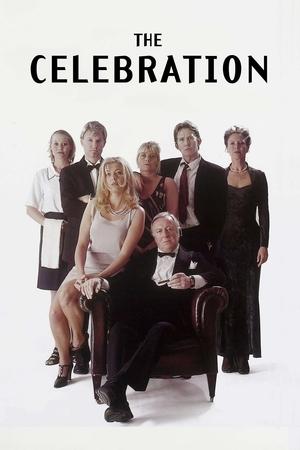
The family of a wealthy businessman gather to celebrate his 60th birthday. During the course of the party, his eldest son presents a speech that reveals a devastating secret that turns the night into a battle of truth and denial.
Racism. Toxic stress. Birth outcomes. How are these things intertwined? The short film, Toxic: A Black Woman's Story, seeks to explore that question - Peer into the world of the film's lead protagonist, Nina. An elite lawyer, loyal wife, and loving mother of a teen boy, Nina is navigating life (and a pregnancy) to the best of her ability. But sometimes the forces on a woman - especially a black woman - can be too much to bear. Follow Nina in this day-in-the-life drama, and see the world through the eyes of a successful black woman who must navigate an unjust world while trying to protect the world she has created for herself and her family.
United States, September 1st, 2016. American football player Colin Kaepernick kneels during the national anthem, protesting police brutality against black people. Part of the population regards the gesture as an unacceptable affront to the flag. Later, he loses his place on his team. Today, however, he is considered by many as a true hero.
Co-directed by Blackwood and Julien, the first full-length feature film by Sankofa Film and Video offers a radical and necessary interrogation into what constitutes 'post-colonial' identity at a time of political and social restlessness in Britain. Set within an isolated desert landscape contrasted with recognizable scenes of the intensity of family life, this vanguard work demonstrates the richness and variety of the black experience; it is a poetic and hard-hitting commentary on the complexities of race, gender and sexuality.
Two convicts—one white, one black—escape while chained to each other.
Spurred by a white woman's lie, vigilantes destroy a black Florida town and slay inhabitants in 1923.
Filmed in the coal country of West Virginia, "Matewan" celebrates labor organizing in the context of a 1920s work stoppage. Union organizer, Joe Kenehan, a scab named "Few Clothes" Johnson and a sympathetic mayor and police chief heroically fight the power represented by a coal company and Matewan's vested interests so that justice and workers' rights need not take a back seat to squalid working conditions, exploitation and the bottom line.
This semi-autobiographical film by Barry Levinson follows various members of the Kurtzman clan, a Jewish family living in suburban Baltimore during the 1950s. As teenaged Ben completes high school, he falls for Sylvia, a black classmate, creating inevitable tensions. Meanwhile, Ben's brother, Van, attends college and becomes smitten with a mysterious woman while their father tries to maintain his burlesque business.
Nombeko Mayeki is a young woman from Soweto who finds herself caught in an international whirlwind from South Africa to Sweden. A heroine born in the slums of South Africa, she rises from obscurity to become the key player in an international nuclear conspiracy, accidentally saving the Swedish monarchy and averting global catastrophe with her quick-witted resourcefulness.
Two brothers are torn apart after they steal a bag of money and are hunted down by a ruthless killer.
After young Kirra leaves her Australian home to summer with her grandfather in South Africa, she soon discovers a baby orca stranded in the lagoon near her grandfather’s rundown seaside amusement park. She names the lonely whale Willy--and embarks on a great quest to lead the little guy back to his anxious pod.
A South-African preacher goes to search for his wayward son who has committed a crime in the big city.
A male army deserter and a black male dock worker join forces against a corrupt manager, in a corrupt environment, and as their connection blossoms they must face the oppressive and morally decaying city they live in.
Celestine has a new job as a chambermaid for the quirky M. Monteil, his wife and her father. When the father dies, Celestine decides to quit her job and leave, but when a young girl is raped and murdered, Celestine believes that the Monteils' groundskeeper, Joseph, is guilty, and stays on in order to prove it. She uses her sexuality and the promise of marriage to get Joseph to confess -- but things do not go as planned.
In 1977, Judy Heumann leads over a hundred disabled people to take over the San Francisco Federal Building, kicking off a 28-day sit-in.
A young Iranian man is desperately trying to meet women who can secure his stay in Denmark. As time runs out, he falls in love and his past catches up with him. The film deals with themes of race, class, and the struggle for a better life.
A pathetic police chief, humiliated by everyone around him, suddenly wants a clean slate in life, and resorts to drastic means to achieve it.
A black saxophonist and small time crook is picked up by police on suspicion of murder. His problems multiply when the investigating officer lets his own issues influence the subsequent interrogation.
The plot centers on students involved in the Soweto Riots, in opposition to the implementation of Afrikaans as the language of instruction in schools. The stage version presents a school uprising similar to the Soweto uprising on June 16, 1976. A narrator introduces several characters among them the school girl activist Sarafina. Things get out of control when a policeman shoots several pupils in a classroom. Nevertheless, the musical ends with a cheerful farewell show of pupils leaving school, which takes most of act two. In the movie version Sarafina feels shame at her mother's (played by Miriam Makeba in the film) acceptance of her role as domestic servant in a white household in apartheid South Africa, and inspires her peers to rise up in protest, especially after her inspirational teacher, Mary Masombuka (played by Whoopi Goldberg in the film version) is imprisoned.
A dream becomes a nightmare: Shortly after the Iranian doctor Murath Tehrani and his German wife Claudia moved into a chic villa on the outskirts of Leipzig, threatening couple flutter into the house and Claudia is harassed by anonymous callers with xenophobic slogans. First, the woman tries to hide the threat from her husband. But not even the police can help her. Suddenly, every stranger approaching the house appears as a threat. Psychological pressure is also increasing the pressure on the harmonious marriage of the young couple. But Murath and Claudia are unwilling to be driven out of their homes by aggressive racists.