Making-of documentary of Gus Van Sant's 'My Own Private Idaho'.
As a child, Michael Stock was sexually abused - by his own father. 25 years later he is still looking for inner peace. In conversations with his family and friends and his own reflections, he paints an ever clearer, if contradictory picture of what happened and of the consequences for each of the family members. Old family films seem to show a happy family - excerpts from Michael's first feature film hint at his extreme adult life, overshadowed by his lifelong trauma. Yet in spite of the intense drama, the film doesn't have an atmosphere of anger and hatred but rather a surprising air of hope and love of life. Michael's aim is not to accuse the "perpetrator" but to understand. In the end, he takes his video "Postcard" to his father. With the camera running, he confronts him with his past.
The film follows Agustina as she finds the videotapes that her father Jaime recorded before the accident that took his life. The family secrets surrounding Jaime push Agustina to get involved. Her search will reveal a story marked by sexuality and political activism.
This provocative documentary uncovers a lost chapter in Canadian military history: how the Armed Forces dealt with homosexual behaviour among soldiers, during and after World War II. More than 60 years later, a group of five veterans, barely adults when they enlisted, break the silence to talk about how homosexual behaviour "was even more unmentionable than cancer." Yet amidst the brutality of war, instances of sexual awakening among soldiers and officers were occuring. Initially, the Army overlooked it, but as the war advanced, they began to crack down: military tribunals, threats of imprisonment, discharge and public exposure. After the war, officers accused of homosexuality were discharged. Back home in Canada, reputations and careers were ruined. For the young men who had served their country with valour, this final chapter was often too much to bear. Based on the book Courting Homosexuals in the Military by Paul Jackson.
Built upon a 14 hour interview, McKellen: Playing the Part is a unique journey through the key landmarks of McKellen's life, from early childhood into a demanding career that placed him in the public eye for the best part of his lifetime. Using an abundance of photography from McKellen's private albums and cinematically reconstructed scenes, a raw talent shines through in the intensity, variety and devotion to that moment in the light.
The film focuses on gay men who align themselves with hard-core right wing views, skinheads and Nazis. Rosa von Praunheim stated of the subjects featured in the documentary, “Some may be shocked that I do not take a stand in my film and do not portray gay neo-Nazis as monsters, but as people living their lives in dramatic contradiction.”
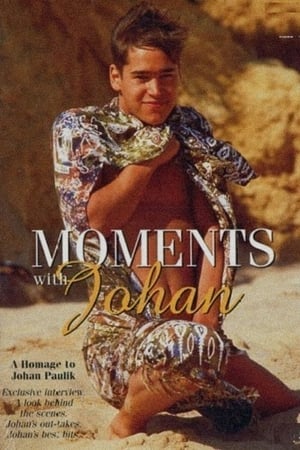
A look behind the scenes of the Czech gay porn boom.
A reflective look at the arrival and impact of AIDS in San Francisco and how individuals rose to the occasion during the first years of the crisis.
An exploration of the interconnected experiences of queerness and illness, this film navigates personal and collective journeys through medical spaces, sexual violence, and survival, displays the profound impact on body and identity.
Marcelo, a 40-year-old dandy, has a memory like no other. Monologuing between coffee and gay hookups, he holds court on a wide range of topics: his status, his Catholic grandmother, and his unusual sexual fantasies. At times, he takes himself for Genghis Khan or poet-philosopher Novalis.
A decade after being ostracized for coming out to his strict, Southern Baptist family, rising country star Brandon Stansell is going home.
World-renowned Drag Queen Miz Cracker helps a Texas family that’s experiencing strange occurrences after renovating their 1892 home. As a lover of the paranormal, can Miz Cracker solve their ghost problem and help them coexist peacefully with the spirits?
A story of two coalitions – ACT UP and TAG (Treatment Action Group) – whose activism and innovation turned AIDS from a death sentence into a manageable condition. Despite having no scientific training, these self-made activists infiltrated the pharmaceutical industry and helped identify promising new drugs, moving them from experimental trials to patients in record time.
In June 2003, the Episcopal Church in New Hampshire came under fire when it became the first to elect an openly gay man, Gene Robinson, as a bishop. Since that flash point, Robinson has been at the center of the contentious battle for LGBT people to receive full acceptance in the faith.
Chris & Don chronicles the lifelong relationship between author Christopher Isherwood and his much younger lover, artist Don Bachardy, and it combines present-day interviews, archival footage shot by the couple from the 1950s, excerpts from Isherwood's diaries, and playful animations to recount their romance.
The parallel lives of writer Truman Capote (1924-84) and playwright Tennessee Williams (1911-83): two friends, two geniuses who, while creating sublime works, were haunted by the ghosts of the past, the shadow of constant doubt, the demon of addictions and the blinding, deceptive glare of success.
A quiet sense of impending change threads together scenes from director Aragon Yao’s own life. Calls from his parents in China inquiring after his marital status blend with calls from his boyfriend asking about his job prospects, each underscoring the reality that the student visa that brought him to Europe will soon end. With time running out, Yao faces tough questions about his relationship with his family, culture, and his sense of self. Seeking release, he turns to drag. Shifting between observational footage, paper puppetry, and poetic symbolism, Yao explores expressions of sexual identity in this essay about queerness, immigration, and performance.
The Advocate for Fagdom unites the puzzle pieces one by one. Testimonies are combined with rare archive images. Art galeries present movie extracts that are succeeded by images shot on location. And the other way round. Writers, film makers, art galeries owners, actors and actresses, photographers, producers, friends and loved ones all join in a game of interpretation, analysis or simple anecdotes. John Waters, Bruce Benderson, Harmony Korine, Gus Van Sant, Richard Kern, Rick Castro and others deliver their impressions, theories and confessions. Everything blends into the fascinating portrait of a singular person blessed with singular talents. A complex personality at war not with a system but all systems. The portrait of a man constantly moving between his punk attitude and extreme sensibility.
Over the course of a year, film follows Vancouver Pride Society president Ken Coolen to various international Pride events, including Poland, Hungary, Russia, Sri Lanka and others where there is great opposition to pride parades. In North America, Pride is complicated by commercialization and a sense that the festivals are turning away from their political roots toward tourism, party promotion and entertainment. Christie documents the ways larger, more mainstream Pride events have supported the global Pride movement and how human rights components are being added to more established events. In the New York sequence, leaders organize an alternative Pride parade, the Drag March, set up to protest the corporatization of New York Pride. A parade in São Paulo, the world's largest Pride festival, itself includes a completely empty float, meant to symbolize all those lost to HIV and to anti-gay violence.
"100 Years of Men in Love: The Accidental Collection" is a documentary focusing on a unique, moving and joy-filled collection of vintage photographs of men in love from the 1850s to the 1950s. Taken when male partnerships were often illegal, the photos were found at flea markets, in shoe boxes, family archives, estate sales and old suitcases.