One dark night during the early phases of WWII, the Italian Royal Navy submarine Cappellini sinks an armed merchant ship sailing with lights out. At that moment, its commander Salvatore Todaro makes a decision that was destined to go down in history: to save the 26 shipwrecked Belgians who otherwise would have drowned in the middle of the Atlantic Ocean and disembark them at the nearest safe harbor. To make room for them on board his submarine, he is forced to navigate on the surface of the water for three days, visible to the enemy forces and endangering his life and that of his men.
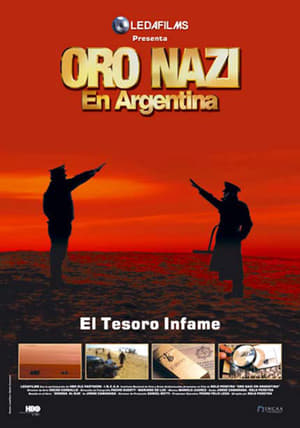
For more than a decade, Reichsmarschall Hermann Goering, Adolf Hitler's right-hand man during the infamous Third Reich, assembled a collection of thousands of works of art that were meticulously catalogued.
During World War II, many Japanese immigrants in Santos, Brazil, were forced to move to another place. Matsubayashi draws attention to the fact that 60% of the immigrants were from Okinawa. Based on testimonies from interviewees, this film reveals the hidden historical relationship between Okinawa and Brazil.
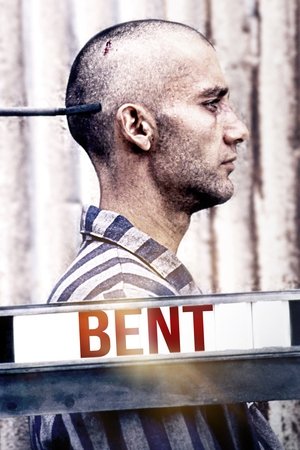
Germany, 1929. Helmut Machemer and Erna Schwalbe fall madly in love and marry in 1932. Everything indicates that a bright future awaits them; but then, in 1933, Adolf Hitler and the Nazi Party rise to power and their lives are suddenly put in danger because of Erna's Jewish ancestry.
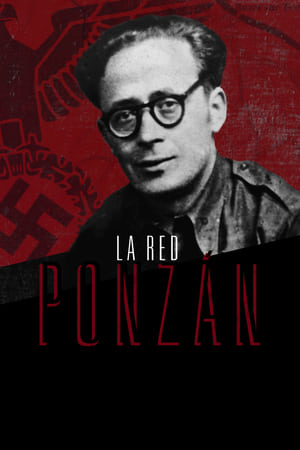
The Spanish journalist Manuel Chaves Nogales (1897-1944) was always there where the news broke out: in the fratricidal Spain of 1936, in Bolshevik Russia, in Fascist Italy, in Nazi Germany, in occupied Paris or in the bombed London of World War II; because his job was to walk, see and tell stories, and thus fight against tyrants, at a time when it was necessary to take sides in order not to be left alone; but he, a man of integrity to the bitter end, never did so.
Vivre dans l'Allemagne en guerre
A young jewish man is attacked by a group of nazis somewhere by the sea
The little known story of one of the worst non-combat disasters in the history of the US Navy, …AS IF THEY WERE ANGELS is a story of courage, heart, sacrifice and the heroism of miners & fishermen of 2 small towns, who risked their lives to save nearly 200 American sailors, shipwrecked on the rugged cliffs of Newfoundland. Narrated by Peter Coyote, it’s a deeply layered tale of navigation errors, courts martial mistakes, a steep loss of life, and resonates today as if the very telling of its deep humanity offers a lifeline for our fractured times.
"Letters from Europe" brings to light the words of men and women who gave their lives resisting the Nazi and fascist conquest from 1939 to '45 across the European continent. The moving goodbyes penned by a few of those sentenced to death are sometimes true spiritual testaments that explore the meaning of civic responsibility, human existence, fraternity, and life and death. Their words, which the film mingles with footage of the present day, can perhaps restore meaning to a humanist ideal and to the ever-changing idea of a united Europe.
Filmmaker Rosanne Ehrlich unearths hundreds of letters her father wrote her mother while he was away from home, fighting in WWII, and shares them in this documentary that blends narration with, archival footage.
Evocation of the Oradour-sur-Glane Massacre on 10 June 1944, when 642 of its inhabitants were slaughtered by a Nazi Waffen SS company, based on a visit to Diors' Museum of the Three Wars" and archive photographs.
In 1939, as the world stood on the brink of World War II, Hartheim Castle, Austria, was at the centre of a turning point of history. It had been a centre for those with physical or mental disabilities. But from 1939 to 1944, it acted as a pilot scheme for the 'final solution.' Hartheim: the top secret Nazi school for mass murder.
Tony Robinson’s VE Day: Minute By Minute will take a unique look at a pivotal day in the history of the modern world, delving into the key events that made VE Day such a momentous twenty-four hours. This is the story of what happened on that most celebrated and important day, including original interviews with historians and veterans who tell their stories and share their first-hand experiences. Using unseen archive footage and stills, plus never told accounts from veterans who were there, this one-off special will chart the moment the clock struck midnight, to 24 hours later, when fighting officially stopped across Europe. Up and down the country it was dawning on people that they were waking up not with fear or anxiety, but with relief and excitement. This was a Great Britain no one had experienced for six years. A Britain at peace. At almost no notice street celebrations were being prepared and tens of thousands were flocking to London and other city centres.
Quando i tedeschi non sapevano nuotare
LETTERS, a dramatic historical fiction written by Mrs. Evelyn Merritt in 2010, tells the story of U.S. soldiers and their loved ones through their correspondence beginning with the Civil War and ending with the War in Iraq. Sahuarita High School students adapted the Readers’ Theatre play into a movie, reasoning the student actors would be kept safe from Covid-19 by filming them individually, and afterward the footage could be reassembled into a screenplay following the original dialogue.
Frank mezi námi
After WWII had ended, it was realized by the American Allies that there were children whom Hitler trained to be soldiers between the ages of 9-17. They were the "Hitler Youth". As the adult German soldiers were taken as prisoners of war, so were the children. These boys were taken to France and reeducated by being taught democracy and treated better than the adult POWs. This story recounted by a former "baby cage" prisoner at the age of 92.
The compilation documentary We Will Remain Faithful is a testimony to the Czechoslovak resistance during the Second World War. The film covers the period from the end of the First Czechoslovak Republic to the victorious Allied advance in 1944. Director Jiří Weiss compiled it from archival footage, his own authentic and subsequently staged war footage, and material from both Allied and enemy newsreels.
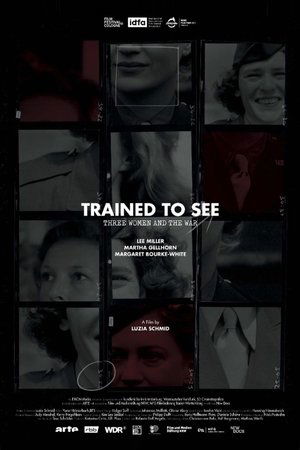
The true story of photographer Elizabeth "Lee" Miller, a fashion model who became an acclaimed war correspondent for Vogue magazine during World War II.
Karlag, short for Karaganda Corrective Labor Camp, was one of the largest labor camps within the Soviet Gulag system. Established in 1931, it was located in the Karagandy Region of Kazakhstan. The film will explore the hardships faced by people during the 1930s-1950s and the resilience of human dignity despite the daily struggle for survival. The atmosphere of Karlag will be conveyed through costumes, props, and sets created after extensive research in archives and museums.