A feature-length documentary focusing on the acclaimed work and eclectic career of maverick filmmaker Larry Cohen, writer-director of "Black Caesar," "It's Alive," "God Told Me To," "Q," "The Stuff," and many more.
Harris produced and directed television programs for Playboy Television between 1995 and 1999, such as Ron Harris' Camera Up-Close & Dangerous, Ron Harris' Star Shapes, a series of seven one-hour specials and Naturals a series of five one-hour specials.
Ron Harris produced and directed television programs for Playboy Television between 1995 and 1999, such as Ron Harris' Camera Up-Close & Dangerous, Ron Harris' Star Shapes, a series of seven one-hour specials and Naturals a series of five one-hour specials.
1st LUVITA FAN-CONCERT 〈AWAKENING〉
Taking its lead from French artists like Renoir and Monet, the American impressionist movement followed its own path which over a forty-year period reveals as much about America as a nation as it does about its art as a creative power-house. It’s a story closely tied to a love of gardens and a desire to preserve nature in a rapidly urbanizing nation. Travelling to studios, gardens and iconic locations throughout the United States, UK and France, this mesmerising film is a feast for the eyes. The Artist’s Garden: American Impressionism features the sell-out exhibition The Artist’s Garden: American Impressionism and the Garden Movement, 1887–1920 that began at the Pennsylvania Academy of the Fine Arts and ended at the Florence Griswold Museum, Old Lyme, Connecticut.
An exploration of the Cultural Revolution that depicts both its chaotic later years – through the story of a squad of Red Army guards running amok in the countryside – and its continuing legacy in today’s China.
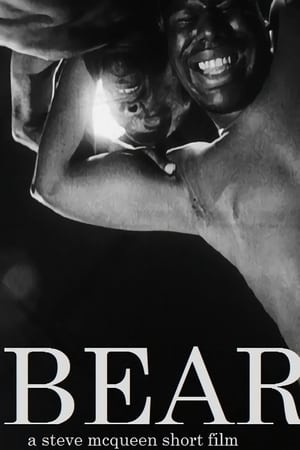
Bear (10 minutes, 35 seconds) was Steve McQueen's first major film. Although not an overtly political work, for many viewers it raises sensitive issues about race, homoeroticism and violence. It depicts two naked men – one of whom is the artist – tussling and teasing one another in an encounter which shifts between tenderness and aggression. The film is silent but a series of stares, glances and winks between the protagonists creates an optical language of flirtation and threat.
In the present work, the artists appears lying on his back, his eyes mostly closed, dreamingly listening to a walkman that plays, a recording of 'The Best of Lou Reed and the Velvet Underground'. The artist can hear the music through his earphones, but as viewers we are only privy to the sound of his voice that whispers the melody. As we listen to the hypnotic interpretion of the familiar songs - as emblematic for pop music history as 'Psycho' is for film - we are forced to mentally 'reconstruct' the remaining orchestration, instrumentation and vocals. We must attempt to reassemble something we already know to be a fact by negotiating the sticky mess of interpretation, meaning, and memory.
Poème Électronique is an 8-minute piece of electronic music by composer Edgard Varèse, written for the Philips Pavilion at the 1958 Brussels World’s Fair. The Philips corporation commissioned Le Corbusier to design the pavilion, which was intended as a showcase of their engineering progress. The pavilion was shaped like a stomach, with a narrow entrance and exit on either side of a large central space. As the audience entered and exited the pavilion, the electronic composition Concret PH by Iannis Xenakis (who also acted as Le Corbusier's architectural assistant for the pavilion's design) was heard. Poème électronique was synchronized to a film of black and white photographs selected by Le Corbusier which touched on vague themes of human existence.
Filmed during the production of the Columbia Pictures western "Mackenna’s Gold," this short work presents a non-narrative visual study of the Arizona desert. Rather than documenting the film set itself, "6-18-67" assembles landscape images, time-lapse photography, and ambient sound into an abstract record of place and duration.
Butterfly as verb. The monarch migration and an unearthed cassette tape correspondence form a storm speaking towards motherhood, loss, expectation, care and legacy. An elegy. An ode to uncertainty. A cry for radical optimism and a reordering of splendor.
In an abandoned shopping center outside of Cleveland, the story of the last remaining grocery store is told through recent google reviews.
Set in Charlottesville during the early 1990s, "Pride" follows an aspiring writer as she finalises stories for the latest issue of "Pride", a student run newspaper at the University of Virginia. Over a hectic two-day period, she puts the finishing touches on the upcoming issue. Despite the looming deadline, she moves with a calm confidence.
Portrait of the Italian sculptor Donatello (1386-1466), a precursor of the High Renaissance who considerably influenced sculptural art with his innovative way of conceiving space. Donatello is already a legend in his own lifetime. The sculptor is the forefather of the High Renaissance and pioneer for artists such as Raphael or Michelangelo. His bronze sculpture of the "David" or the "Pazzi Madonna" in marble are icons of art history and testify to his sculptural power of renewal.
In 1971, graduate student Gloria Orenstein received a call from Surrealist artist Leonora Carrington that sparked a lifelong journey into art, ecofeminism and shamanism. This short film uses art, animation and storytelling to celebrate this wild adventure. Now more than 40 years later, award-winning Dr. Gloria Feman Orenstein is a feminist art critic and pioneer scholar of women in Surrealism and ecofeminism in the arts. Her delightful tale brings alive an often unseen history of women in the arts.
In the small town of Kansk, the Krasnoyarsk Territory many years in a row there is an international festival of short experimental films, which has a strong reputation throughout the world. "Russia as a dream" is an international project, shot by a team of authors and united directors, artists, poets. Each of the guests of the 14th International Kan Video Festival held in 2015 was invited to participate in the creation of a general film, the theme of which was the relationship of man and landscape, civilization and nature, reality and sleep.
A filmmaker recalls his youth in the town of Onomichi. In the present, he shoots a film in Onomichi alongside his cast, crew and family.
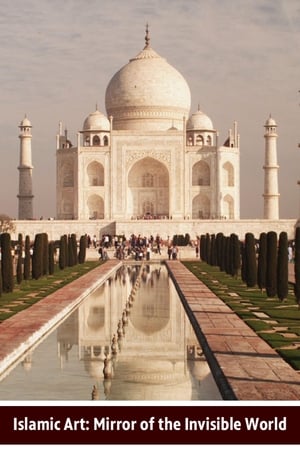
This ninety-minute film takes audiences on an epic journey across nine countries and over 1,400 years of history. It explores themes such as the Word, Space, Ornament, Color and Water and presents the stories behind many great masterworks of Islamic Art and Architecture. Narrated by Academy Award winning performer Susan Sarandon, this dazzling documentary reveals the variety and diversity of Islamic art. It provides a window into Islamic culture and brings broad insights to the enduring themes that have propelled human history and fueled the rise of world civilization over the centuries
A meditative journey, using and manipulating archival silent film footage, that investigates the look of the "New Woman" in Chinese silent screen.
A young artist struggles to capture the beauty of a young woman who has been recently crippled and bound to a wheelchair.