Documentary on the Belgian comic book series.
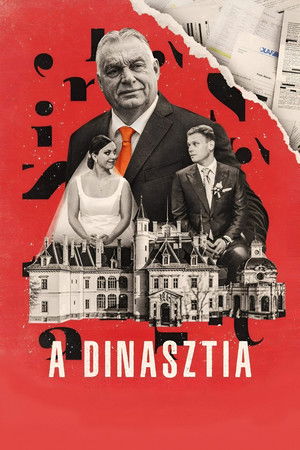
The Dynasty by the Direkt36 investigative center tells the story of the business dealings of the Prime Minister’s family over several decades. With hidden camera footage, it also shows the luxurious world built by Viktor Orbán’s son-in-law István Tiborcz and his daughter Ráhel Orbán.
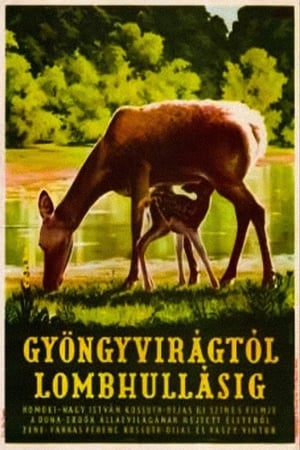
The film presents the wildlife of the Gemenc flood area sanctuary, arranging the episodes of each selected species into little etudes: how the fox steals the chicken from the pen, how the roused deer flees jumping across a huge abyss, how the sturgeon sticks to the bottom of the water, how the adoption of an orphaned fawn takes place. Wildlife is wound into striking novellas by shedding light on the inner life of the forest’s inhabitants.
Captured by the Red Army during World War II, Hungarian soldier András Toma was admitted to a Soviet psychiatric hospital. After disappearing from prisoner-of-war records, he was presumed dead in Hungary. Because his name was incorrectly recorded in medical documents and he spoke only Hungarian—mistaken by staff for incoherent speech—Toma spent decades misunderstood and isolated in the institution. Fifty-three years later, a visiting Slovak doctor recognised his language, triggering an investigation by Hungarian authorities. Toma was repatriated in 2000, believed to be the last prisoner of war from World War II to return home.
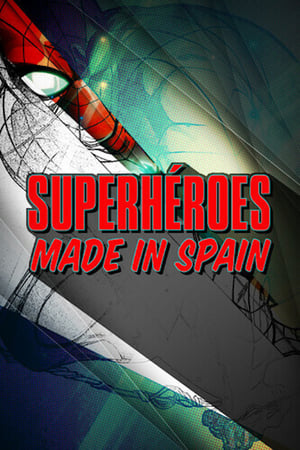
Superhéroes made in Spain
The documentary was shot in the prison for juvenile delinquents in Hungary. It does not aim at judging whether the perpetrators were convicted rightly or not but, given the burden they carry, how they can reintegrate into society after they are released.
This film is part of the Semmelweis Project, launched by Direkt36, an investigative journalism center based in Hungary, to show the reality and the causes of hospital-acquired infections, which are a growing problem in the country.
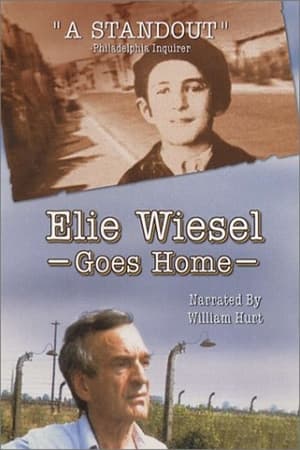
A documentary chronicling the adolescent years of Elie Wiesel and the history of his sufferings. Eliezer was fifteen when Fascism brutally altered his life forever. Fifty years later, he returns to Sighetu Marmatiei, the town where he was born, to walk the painful road of remembrance - but is it possible to speak of the unspeakable? Or does Auschwitz lie beyond the capacity of any human language - the place where words and stories run out?
The history of Bruguera, the most important comic publisher in Spain between the 1940s and the 1980s. How the characters created by great writers and pencilers became Spanish archetypes and how their strips persist nowadays as a portrait of Spain and its people. The daily life of the creators and the founding family, the Brugueras. The world in which hundreds of vivid colorful paper beings lived and still live, in the memory of millions, in the smile of everyone.
Documentary about "New Square", a group of young cartoonists from Zagreb who mainly gathered around the weekly paper Sloga in the second half of the 1970s. The authors Radovan Devlić (1950-2000), Krešimir Skozret (1951-) Joško Marušić (1952-), Mirko Ilić (1956-), Krešimir Zimonić (1956-) and Igor Kordej (1957-) introduced graphic innovations that raised the general interest in the Croatian comic art.
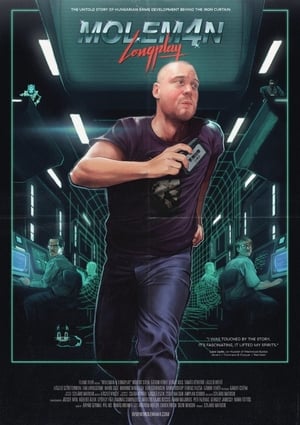
It is the year 2546. Corporations rule the world, and an agent is on a secret mission to explore the untold stories of the past. His journey leads him into a secret virtual reality where one corporation has recreated the 1980s, an era that witnessed the birth of video game development, an event in which a politically and economically restricted small European country, Hungary, had a significant role. He discovers a strange but exciting world, where computers were smuggled through the Iron Curtain and serious engineers started developing games. This small country was still under Soviet pressure when a group of people managed to set up one of the first game development studios in the world, and western computer stores started clearing room on their shelves for Hungarian products.
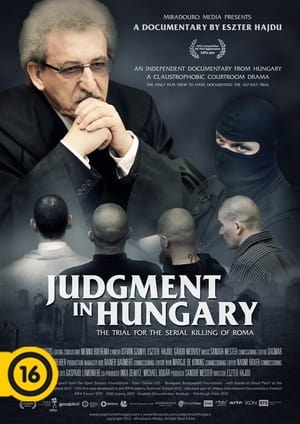
Hungary was the site of serial murders on ethnic basis. Over the course of one year, the murderers killed and seriously injured Roma children and adults. The state charged 4 men with committing the crime with racial motivation. This historical trial started March, 2011, and ended August, 2013 in Budapest. The 167 days of hearings was only documented continuously by our crew. We had exclusive permission to use multiple cameras in the court-room. The film is a classical chamber-drama, taking place in a small, claustrophobic court room, in the middle of Europe. What will be the outcome of the marathon, 3 year-long trial?
The Angelmakers is a 2005 documentary that provides insight into the epidemic of arsenic murders by women, known as The Angel Makers of Nagyrév, in 1929. The film is shot on location in the rural Hungarian village of Nagyrév, alternating between portraits of the surrounding landscape and first-hand narrations by the elderly inhabitants.
The Aszú of Tokaj, a sweet wine of Hungary, was once cherished by King Louis XIV, Queen Victoria, Peter the Great, Goethe and Beethoven. But the world has since forgotten the noble Aszú, two world wars, the enforced collectivisation of the Communist regime and the deadly filoxera epidemic had all wreaked havoc on the vines. Three dedicated heroes, one passion: to create The Great Wine that can return to the most refined tables of the world.
For almost three years, nature filmmaker and ecologist David Cebulla has been observing wild Common hamsters. He not only tries to learn more about the species, but also documents why hamsters are globally threatened with extinction. David travels from the western border of the distribution area in France via Germany, Poland, Austria and Hungary to the eastern border of the distribution area in the Kazakh steppe. In the process, he manages to capture some unique and fantastic images. But during the project, it becomes increasingly difficult to find animals living in the wild.
From the magic potion to the chemical composition of the worldwide success of Asterix, the film will tell of the genesis of the work, the creative complicity between Uderzo and Goscinny as well as behind the scenes anecdotes.
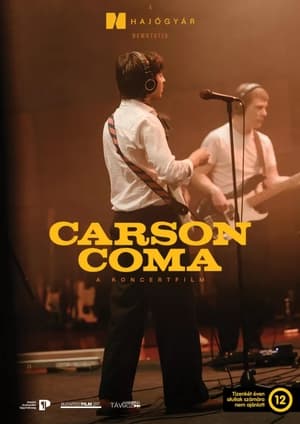
Carson Coma - A koncertfilm
What if democracy fails citizens by not serving them all equally? What if inequality becomes the norm and the most vulnerable citizens are left behind with no money, no home, no rights, and no country of their own? In Hungary, the government has slashed social benefits and criminalized homelessness, but a group of activists, homeless and middle class, is confronting authorities to defend social justice and their right to be citizens. After the tragic death of two of its founding members, the group feels that Hungary is growing more hostile and their struggle is more important than ever. Despite all odds, their own community keeps them going—a mini-society with democracy and solidarity at its heart, an island of hope, belonging and dignity in a society gradually shifting the other way.
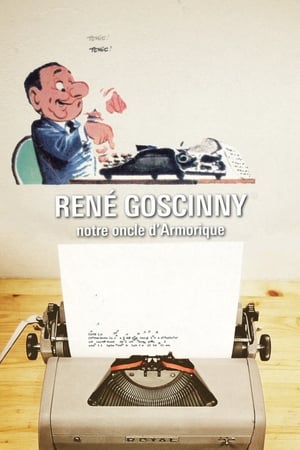
The career of French comic author René Goscinny was a living blend of cultures and an expression of the great importance this artist attached to the production and dissemination of sophisticated popular culture. Goscinny left behind an extremely extensive body of work: "Asterix", "Lucky Luke", "Isnogud", "Little Nick" and many more.
Dan Larsen takes on the challenge of creating a 24-page comic book in 24 hours.