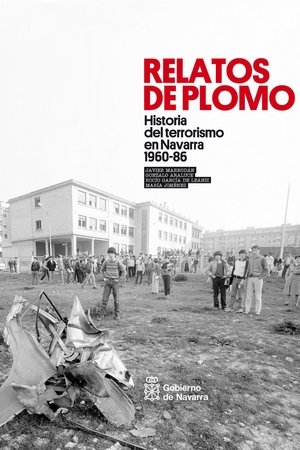
An attempt to create a bridge between the different political positions that coexist, sometimes violently, in the Basque Country, in northern Spain.
La bataille de Rabaska
T'es où, Youssef?
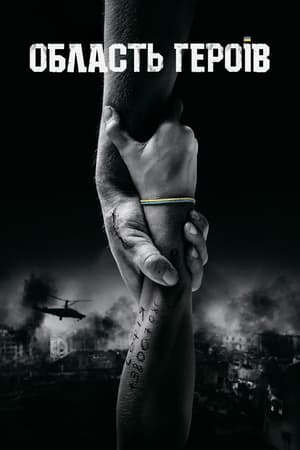
It's spring 2022, and Russia has begun its invasion of Ukraine. In Kyiv, we meet the rock musician Artem, who with only 14 days' notice could be sent to the front lines. Right now, however, his focus is elsewhere. He is preparing for a charity tour in Denmark.
Documentary describing events leading up to the February 1996 shoot down by Cuban Air Force Migs of 2 U.S. registered Cessna 337 aircraft operated by the Cuban exile organization Brothers To The Rescue based in Miami, USA.
In the aftermath of war, an extraordinary professor brings hope to children haunted by trauma-induced nightmares.
On November 13, 2015, the attacks in Paris and Saint-Denis, carried out by three Islamist commandos and claimed by ISIS, were the deadliest in France since the end of World War II. In the months that followed, the November 13 Program was launched by the CNRS and Inserm to study the construction of individual and collective memory around an event that profoundly marked French society. Today, the testimonies of 27 volunteers—among some 1,000 people—who participated in the study form a mosaic of experiences that shows how trauma extends beyond the immediate circle to permeate the national collective memory.
In this sequel to "My brother the Islamist," we continue to follow Robb Leech as the tries to understand his stepbrother's journey and transformation from middle-class boy to convicted terrorist.
Following the extraordinary resilience of Dr Abu Safiya and his medical team, who endured over 16 months of relentless pressure, including repeated Israeli military attempts to evacuate and destroy the hospital.
This expository film shows the mood of European society on the eve of the Second World War while promoting the values of international cooperation. Using the Swiss office of the BBC as an example, the film describes the functioning of radio and presents the possibilities opened by mass communications. After the advent of sound film, Cavalcanti promoted experimentation with sound, and in this connection he was interested in the communicational, organizational, and social aspects of radio.
Tchad 2 : L'Ultimatum
Tchad 3
From May 10, 1940, France is living one of the worst tragedies of it history. In a few weeks, the country folds, and then collapsed in facing the attack of the Nazi Germany. On June 1940, each day is a tragedy. For the first time, thanks to historic revelations, and to numerous never seen before images and documents and reenacted situations of the time, this film recounts the incredible stories of those men and women trapped in the torment of this great chaos.
Using unpublished photos taken by Italian war photographer Enrico Sarsini, and the reconstruction of key events, this film examines the battle for a strategically-located church that was defended by Azerbaijani teenager Natig Gasimov. After his surrender and interrogation by Armenian forces, he was never heard of again. This film finds out what happened to Natig and who may be responsible. Filmed over a period of three years, filmmaker Karan Singh spoke to witnesses in Armenia, Azerbaijan, Italy and Russia in his search for the truth.
“There was excitement in the air,” says Donga, now in his late twenties, describing his feelings when the uprising against Muammar Gaddafi’s rule broke out in 2011. He was 19, living in Misrata, and boldly went to film the fighting with a friend. A decade later, in a hotel in Istanbul, where he has been living since he was wounded in battle, he looks back on the past ten years through excerpts from his videos. And he reflects on how that period has affected him.
Driven by a personal interest in finding out how people deal with the sudden loss of their familiar structures and surroundings, director Jonas Kaufmann embarks on an emotional journey on behalf of Generation Z. A journey with the aim of finding the one inviolable point of human existence that gives us support when everything is lost. In our documentary, protagonist Roman Sachuk and Jonas Kaufmann take on the challenge of providing partial answers to the central questions of a generation in crisis.
He is Khagani Aliyev, a resident of Saricali village of Aghdam. On July 23, 1993, Khagani Aliyev, who heard about another Armenian attack on Aghdam, went home to take his parents who had not left the village to a temporary safe area...
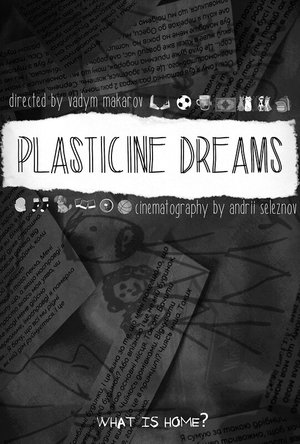
A documentary about a lost generation of young Russians: arriving from places all over Russia, they now live in an improvised private shelter in Tbilisi in Georgia: a student couple, a singer, a journalist, a Navalny activist, a gay blogger, and former politician. They are ordinary citizens who had never considered emigration. They do not belong to the famous avant-garde resistance but are still committed to an open and democratic civil society. In the last six months, 500,000 Russians are said to have left Russia. They are threatened not by tanks or missiles, but by the regime's ever-increasing repression, which hits any criticism of the war and any form of civic activism. Forced to leave their homeland by Putin's war, they live as digital dissidents searching for a new home.
A reckoning of Nazi Germany’s planned execution of its own citizens with physical and mental disabilities whom they deemed useless to their society.
Breaking Ranks: Inside Israel’s War presents the first-hand recollections of IDF soldiers who have broken official silence to share their experiences of the war in Gaza - accounts that may raise serious questions about conduct on the ground and potential breaches of international law. Directed by award-winning filmmaker Ben Zand, the film features exclusive interviews with Israel Defense Forces (IDF), reservists and veterans - many speaking for the first time - who served during the war in Gaza. Their testimonies describe what they recall as indiscriminate bombardment, instances where Palestinian civilians were used as human shields, and an operational culture that some soldiers characterised as “no innocents in Gaza.”