World Cup champion Hope Solo opens up about her turbulent rise to the top of women's soccer amid public scandals and tension with former teammates.
The moment where American sprinters Tommie Smith and John Carlos raised their gloved hands in defiance on the podium at the 1968 Mexico City Olympics is one of the most memorable images in sports history. But there is a third man in the photo, the white Australian who finished second to Smith and ahead of Carlos in the 200 meters. His name is Peter Norman, and he stands in quiet solidarity with them. Norman’s story is retold in this film with passion and perspective.
Shot over the course of 30 days at sea, filmmaker Alizé Jireh documents the group’s voyage across the North Atlantic—from moments of stillness and calm to the chaos of storms and setbacks. With an observational approach and an eye for the emotional and physical rhythms of life at sea, Jireh captures not just the external landscape, but the internal shifts that come with navigating the vast unknown.
The history of surfing is like one long ride in which surfers relay the baton to each other across the years on a single, endless wave. In order to understand how this ancestral Polynesian tradition was able to span the globe and the eras until it became a competitive sport and eventually won a place at the Olympics, we’ll plunge into its history through the exceptional stories of those who allowed it to survive and be reinvented.
1 in 52 players from Kinston High make it to the NBA, the most per capita in the world. Where basketball provides a way out for many with otherwise limited opportunities, something is definitely in the water in Kinston, NC.
Welcome to a hard driving video about the biggest winners of all, the athletes and teams who broken records in their sports.
The Japanese volleyball players called the “Oriental Witches” are now in their 70s. From the formation of the team at the factory until their victory at the Tokyo Olympics in 1964, memories and legends rise to the surface and blend inextricably.
The opening ceremony of the 2014 Winter Olympics took place at the Fisht Olympic Stadium in Sochi, Russia, on 7 February 2014. It began at 20:14 MSK (UTC+4) and finished at 23:02 MSK (UTC+4) This was the first Winter Olympics and first Olympic Games opening ceremony under the IOC presidency of Thomas Bach. The Games were officially opened by President Vladimir Putin. An audience of 40,000 were in attendance at the stadium with an estimated 2,000 performers. The ceremony touched upon various aspects of Russian history, and included tributes to famous Russians, such as Peter Tchaikovsky (1840–1893), Ukrainian-born Russian humourist, dramatist, and novelist Nikolai Gogol (1809–1852), filmmaker Sergei Eisenstein (1898–1948), ballet dancer Vaslav Nijinsky (1889–1950), and patron of arts, and founder of Ballet Russes, Sergei Diaghilev (1872–1929).
Having stood on the gold medal podium a record 8 times during one Olympic Games, Michael Phelps now stands alone as the the greatest Olympic champion in history. With exclusive interviews and commentary, Michael takes us on his personal journey to Olympic stardom. Includes all his races and special behind-the-scenes footage.
Pushing the limits of the human race: that is what runners aspire to when they take to the Olympic 100-meter track every four years. But for Usain Bolt, the record holder for the distance with his explosive 9.58 seconds, to become the fastest sprinter in history, crossing the finish line at some 44 km/h, it took more than a century of technical refinement. From the early days of sprinting to Usain Bolt's records, directors Jean-Christophe Rosé and Benoît Heimermann trace the history of the 100 meters, the flagship event of the Olympic Games, and its champions.
Marie-Jo
In a blockbuster performance deserving of Hollywood, the Los Angeles Lakers added the latest sequel to their championship legacy behind their leading man, Finals MVP Kobe Bryant. In the series billed as Disneyland vs. Disney World, the Lakers defeated the Orlando Magic in the 2009 NBA Finals
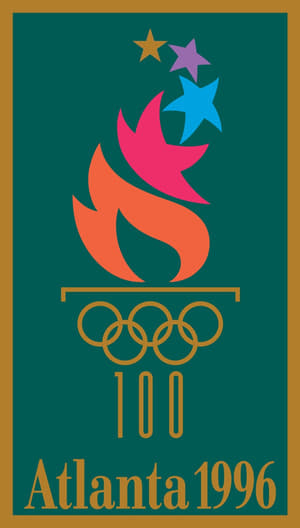
Live coverage of the opening ceremony of the 1996 Summer Olympics which took place in the evening on Friday 19 July in the Centennial Olympic Stadium, Atlanta, United States.
Examines the life and career of John Calipari, one of the most polarizing figures in modern college basketball, weaving his story around that of his 2015–16 Kentucky team.
In a hostile time for Asian Americans, the revisiting of an unlikely athlete's story 10 years later gives hope and shatters stereotypes on sport's biggest stage.
In February 2022, in Kharkiv, twin sisters Maryna and Vladyslava Alexiiva had to flee in the middle of the night under the bombs. In extremis, they take with them their bronze medals, won in Tokyo a year earlier in synchronized swimming. They took refuge in Italy for six months, then decided to return to Ukraine to reunite with their team. From then on, they were obsessed with a single goal: to win the gold medal in Paris in 2024.
The background and career of Tony Parker, whose determination led him to become arguably the greatest French basketball player.
While investigating the furtive world of illegal doping in sports, director Bryan Fogel connects with renegade Russian scientist Dr. Grigory Rodchenkov—a pillar of his country’s “anti-doping” program. Over dozens of Skype calls, urine samples, and badly administered hormone injections, Fogel and Rodchenkov grow closer despite shocking allegations that place Rodchenkov at the center of Russia’s state-sponsored Olympic doping program.
How the 1948 Olympic Games came into being, as the world struggled to cope in the aftermath of the Second World War, and the Games were held for the first time in 12 years. With Britain in the midst of widespread poverty and rationing, hosting the event seemed unlikely, but existing venues were renovated despite a low budget and little time to play with, and the British people pulled together to make the Games a success.
Sports media scholars look at the persistence of heterosexism and homophobia in perpetuating gender stereotypes. They argue for new media images which fairly and accurately depict the strength and competence of female athletes.