This “Traviata” became one of the most succesful of all opera films, especially in France, where 800,000 Parisian cinemagoers flocked to it in the first six week. It was nominated for two Oscars (for production and costume design) and won BAFTAs in those two categories, as well as receiving BAFTA and Golden Globe nominations as 1983’s Best Foreign-Language Film.
Most opera houses ring in the New Year with Johann Strauss Jr.'s most popular operetta--the festiveness of which is appropriate for the occasion--and this December 31, 1983, Covent Garden performance follows suit. An exceptional cast--led by Hermann Prey and Kiri Te Kanawa as the couple whose marriage survives the comic indiscretions of three long acts--obviously has as much fun as the audience. Plácido Domingo leads the Orchestra of the Royal Opera House through its paces with panache. Prince Orlofsky's Act II party is always a splendid opportunity to pull out all the stops with surprise "guests," and this performance makes the most of its chance: entering the proceedings to sing one of his tailor-made chansons, "She," is French crooner Charles Aznavour, who is followed by dancers Merle Park and Wayne Eagling, their delightful pas de deux flashily choreographed by Sir Frederick Ashton.
It's not opera; it's not a pop concert; it's not Broadway. It's all of these and none of them. Once you accept the fact that this sequel to the original blockbuster concert recording is less about music and more about entertainment and the power of musical personalities, you can appreciate what you're hearing as an event--phenomenal and bizarre, momentous and frivolous. This is an occasion to celebrate the voices and egos of three huge superstars, and to have fun listening as Luciano Pavarotti, Placido Domingo, and Jose Carreras interact, bouncing lines off each other and playing to the overwhelmingly enthusiastic audience.
The Met assembled an ideal cast for François Girard’s acclaimed new production of Wagner’s final masterpiece: Jonas Kaufmann in the title role of the fool “made wise by compassion”, René Pape as Gurnemanz, the veteran Knight of the Grail, Katarina Dalayman as Kundry, Peter Mattei is Amfortas, the anguished ruler of the Grail’s kingdom, and Evgeny Nikitin sings the evil magician Klingsor.
Tamino, a handsome prince, and Papageno, a bird-catcher, are sent by the Queen of Night to rescue her daughter Pamina from captivity under the high priest Sarastro. Julie Taymor's abridged, English-language production of the classic Mozart opera.
Filmed at the 1992 Glyndebourne Festival in Lewes, England, this production won unanimous critical acclaim for its innovative interpretation of Tchaikovsky's opera "Pique Dame" ("Queen of Spades"). Although sung in Russian, the production features English sopranos Felicity Palmer as the old countess and Nancy Gustafson as Lisa. Russian tenors Dimitri Kharitonov, Sergei Leiferkus and Yuri Marusin co-star.
A live recording of Carl Orff's world-famous musical masterpiece Carmina Burana, performed by more than 100 singers and dancers of the National Opera and Ballet of Ukraine (Odessa).
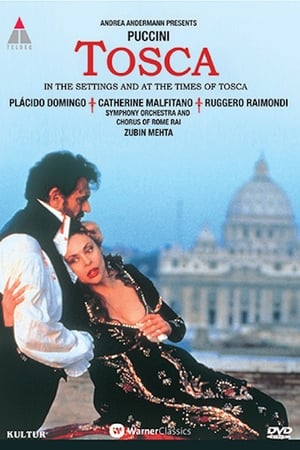
Extraordinary soprano Lise Davidsen stars as the volatile diva Floria Tosca for the first time at the Met. David McVicar’s thrilling production also features tenor Freddie De Tommaso in his eagerly anticipated company debut as Tosca’s revolutionary lover, Cavaradossi, and powerhouse baritone Quinn Kelsey as the sadistic chief of police Scarpia. Met Music Director Yannick Nézet-Séguin conducts the electrifying score, which features some of Puccini’s most memorable melodies. This live cinema transmission is part of the Met’s award-winning Live in HD series, bringing opera to movie theaters across the globe.
In this musical, an enigmatic masked woman catches the roving eye of a wily playboy gambler at a masquerade ball. If he knew that she was using her wiles as bait and was planning to reform him of his gambling womanizing ways after catching him, he may have head for different waters.
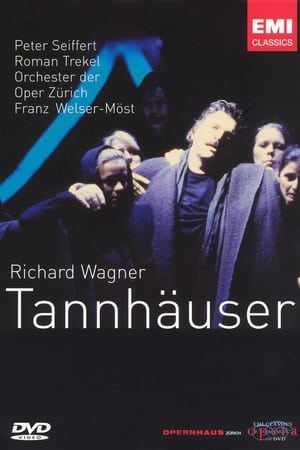
TANNHÄUSER UND DER SÄNGERKRIEG AUF WARTBURG is a grand opera by Richard Wagner in three acts. After experiencing boundless sensuality and freedom with the fun-loving Venus (soprano), the singer Tannhäuser (Tenor) finds it impossible to conform to the cultured setting of his betrothed Elizabeth (soprano), who loves him. During a singing contest, Tannhäuser describes the affair with Venus as the ultimate love experience and because of that, he is cast out from the established society. Thanks to Elizabeth's intervention, he is allowed to undertake a pilgrimage to the Pope to ask for the Holy Father's pardon. If the Pope accepts to forgive him, he would be allowed to take back his place in society. Tannhäuser accepts. But fate will not allow him to meet with his beloved Elizabeth again in this life. This is a recording of the legendary staging by Götz Friedrich for the 1978 Bayreuth Festival conducted by Sir Colin Davis.
NORMA tells the tragic story of a supposedly chaste druidic priestess, who is driven to murderous jealousy by her lover's inconstancy. But she forgoes vengeance, protects innocence, and sees to it that the guilty atone for their crimes. Fiorenza Cedolins, Sonia Ganassi, Vincenzo La Scola, and Andrea Papi star in this 2007 Gran Theatre Del Liceu/Grand Theatre de Geneve co-production of the Bellini opera.
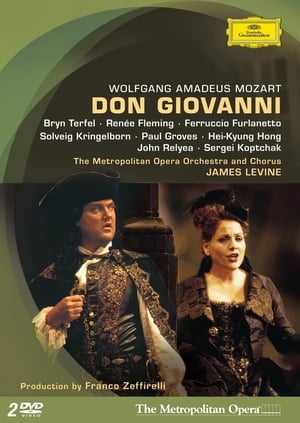
Every woman wants him, every man wants to be him: Mozart’s version of the irresistible rogue who brings excitement with him and leaves destruction it his wake has always attracted top singing actors, as in this performance brilliantly led by James Levine. Samuel Ramey is Don Giovanni, pursued by the incandescent Karita Mattila (Donna Elvira) in her Met debut season and role, and by the white-hot avenging fury of Carol Vaness (Donna Anna.) Ferruccio Furlanetto delivers a masterful comic turn as the Don’s servant, Leporello.
The Ballet de l'Opera National de Paris mounted this production of the late Pina Bausch's dance-opera Orpheus und Eurydike, which Bausch had adapted from composer Christoph Willibald-Gluck and Ranieri de' Calzabigi's 1762 opera Orfeo ed Euridice. As the title suggests, it takes its basic narrative from the myth of Orpheus, and his courageous but ill-fated attempt to rescue his lover Eurydice (also known as Eurydike) from the jaws of the underworld. This particular production finds Yann Bridard dancing as Orpheus and Marie-Agnès Gillot dancing as Eurydike , with mezzo-soprano Maria-Riccarda Wesseling accompanying Bridard and soprano Julia Kleiter accompanying Wesseling. Pina Bausch did the choreography and stage direction, while Rolf Borzik designed the sets, costumes and lighting. The Balthasar-Neumann Ensemble & Choir, under the direction of Thomas Hengelbrock, lend musical accompaniment.
Benjamin Britten’s opera Gloriana was written in 1953 for celebrations around the Coronation of Her Majesty Queen Elizabeth II, to whom the opera is dedicated. It had its first performance at the Royal Opera House on 8 June 1953, in the presence of The Queen then just 6 days into her reign. The centenary in 2013 of Britten’s birth prompted this new Royal Opera production, in which director Richard Jones uses the setting of a celebratory pageant in 1953 to explore the work’s alternating splendour and intimacy. This theatrical, inventive and colourful staging has at its core the symbolic reflections between the Tudor Elizabethan and the New Elizabethan ages that characterize the opera. The juxtaposition of the modern and the archaic in William Plomer’s libretto is wonderfully amplified in music that artfully fuses the sounds and manners of Tudor England – from lute songs to courtly dances – with Britten’s own distinctive style.
An aging opera singer looks back on her long life, including her relationships with her vocal teacher and a student.
A brilliant young fund manager leaves her unfulfilling job and long-term boyfriend to chase her lifelong dream of becoming an opera singer in the Scottish Highlands.
Two men meet and confront each other over a woman. Visibly different in appearance, the two men engage in a continuous battle of nerves. While the woman steps out to use the restroom, the men go up to the rooftop and start arm wrestling.
The history of the gypsy Aleko who couldn't forgive the betrayal of his wife.
TDK presents a recording of Puccini’s heart-breaking opera from one of the best opera houses of the world featuring star tenor José Cura and remarkable soprano Maria Guleghina as the two inseparable lovers. Riccardo Muti, music director of La Scala at the time of this performance, gives full weight to the alternation of social realism and private amatory psychology, of crowds and intimacy, body and spirit. And the director of this Milan production, the famous Italian film director Liliana Cavani, provides it with a realistic setting. Every scene looks like a genre painting, from which Puccini’s psychograms emerge musically. This forms the background for the two outstanding singer actors, who take the lead roles.
An ex-GI falls for a bathing beauty.