FIlm on how the average person can invest in the stock market.
Melting glaciers, gullied seas, the financial markets are about to collapse. Spectacular images of how growth continues to be blinding. Outside you can hardly see anything because of the smog and the smoke screen.
Some of the world's most innovative documentary filmmakers will explore the hidden side of everything.
Ruth Wilson Gilmore discusses racial capitalism, and her activism outside Lisbon, Portugal.
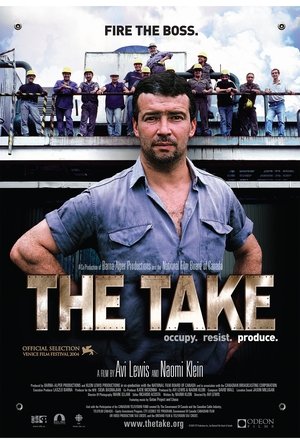
What happens to two dying coal towns in British Columbia when an American corporation provides a contract for millions of tons of coking coal? The film follows the consequences for the towns of Natal and Michel, suggesting that industrial growth has its price, especially with regard to the environment.
Jamie Johnson takes the exploration of wealth that he began in Born Rich one step further. The One Percent, refers to the tiny percentage of Americans who control nearly half the wealth of the U.S. Johnson's thesis is that this wealth in the hands of so few people is a danger to our very way of life.
Why is social trust breaking down, and how do we find it again? This is the question at the heart of Leviathan. Directed and produced by Alexander Beiner, it draws on sociology, myth, psychology, economics and systems theory to delve into the deep code of culture and make sense of the times we live in. It’s a journey that invites the viewer to confront the shadows lurking at the heart of our systems, and points the way toward hope, healing and action.
A tomato is planted, harvested and sold at a supermarket, but it rots and ends up in the trash. But it doesn’t end there: Isle of Flowers follows it up until its real end, among animals, trash, women and children. And then the difference between tomatoes, pigs and human beings becomes clear.
British historian and author Niall Ferguson explains how big money works today as well as the causes of and solutions to economic catastrophes in this extended version The Ascent of Money documentary. Through interviews with top experts, such as former Federal Reserve Chairman Paul Volcker and American currency speculator George Soros, the intricate world of finance, including global commerce, banking and lending, is examined thoroughly.
A documentary exploring the causes of the 1929 Wall Street Crash.Over six terrifying, desperate days in October 1929, shares crashed by a third on the New York Stock Exchange. More than $25 billion in individual wealth was lost. Later, three thousand banks failed, taking people's savings with them. Surviving eyewitnesses describe the biggest financial catastrophe in history.
A documentary that reveals the underbelly of the global aid and investment industry. It's a complex web of interests that span the earth from powerful nations and multinational corporations to tribal and village leaders. This documentary offers unique insights into a multi-billion dollar world by investigating how aid dollars are spent.
Swedish documentary film on consumerism and globalization, created by director Erik Gandini and editor Johan Söderberg. It looks at the arguments for capitalism and technology, such as greater efficiency, more time and less work, and argues that these are not being fulfilled, and they never will be. The film leans towards anarcho-primitivist ideology and argues for "a simple and fulfilling life".
The implantation of African traders in Guangzhou is a recent phenomenon, on which Marie Voignier reports through her interlinking portraits of Jackie, Julie, Shanny who have come to set up their business on site. Amidst the monstrous accumulation of merchandise on the endless markets of the megacity, the film follows these African businesswomen grappling with the globalised Chinese economy.
The Messina brothers are Yesmoke, a little tobacco company based in modern day Turin, Italy. Originally, Yesmoke was an online store for cigarettes selling its products all over the world. Every day millions of people would buy cheap packets of Marlboro, Camels and Lucky Strikes online. When sales reached over one hundred million, "Big Tobacco" started to fight the "Little Guys" and sued them for 550 Million dollars, obligating them to shut their website down.
As the US debt spirals out of control, it polarizes society and threatens to disrupt traditional retirement with an impending freight train of onerous taxes and draconian austerity measures.
Targeted for several failed redevelopment plans dating back to the days of Robert Moses, Willets Point, a gritty area in New York City known as the “Iron Triangle,” is the home of hundreds of immigrant-run, auto repair shops that thrive despite a lack of municipal infrastructure support. During the last year of the Bloomberg Administration, NYC’s government advanced plans for a “dynamic” high-end entertainment district that would completely wipe out this historic industrial core. The year is 2013, and the workers of Willets Point are racing against the clock to forestall their impending eviction. Their story launches an investigation into New York City’s history as the front line of deindustrialization, urban renewal, and gentrification.
On September 16, 1920, as hundreds of Wall Street workers headed out for lunch, a horse-drawn cart packed with dynamite exploded in front of Morgan Bank — the world’s most powerful banking institution. The blast turned the nation’s financial center into a bloody war zone and left 38 dead and hundreds more seriously injured. As financial institutions around the country went on high alert, many wondered if this was the strike against American capitalism that radical agitators had threatened for so long.
An investigation of "disaster capitalism", based on Naomi Klein's proposition that neo-liberal capitalism feeds on natural disasters, war and terror to establish its dominance.
The End of Poverty? asks if the true causes of poverty today stem from a deliberate orchestration since colonial times which has evolved into our modern system whereby wealthy nations exploit the poor. People living and fighting against poverty answer condemning colonialism and its consequences; land grab, exploitation of natural resources, debt, free markets, demand for corporate profits and the evolution of an economic system in in which 25% of the world's population consumes 85% of its wealth. Featuring Nobel Prize winner Amartya Sen and Joseph Stiglitz, authors/activist Susan George, Eric Toussaint, Bolivian Vice President Alvaro Garcia Linera and more.
DEBT is the story of a frantic pursuit: the search for the responsible for the televised cry of hunger of Barbara Flores, an eight-year-old Argentinean girl. Buenos Aires, Washington, the IMF, the World Bank and Davos; corruption and the international bureaucratic lack of interest.