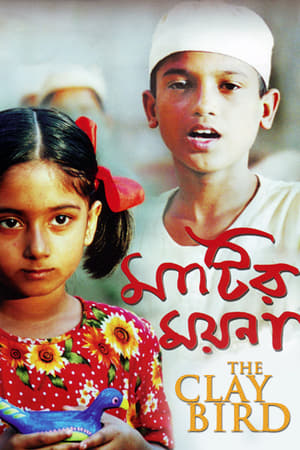
A family must come to grips with its culture, its faith, and the brutal political changes entering its small-town world.
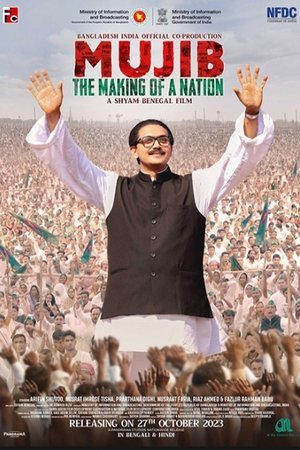
Biopic on the father of the nation of Bangladesh, Sheikh Mujibur Rahman. The film will showcase his growing up as a child to his standing up against all injustice in his youth to fighting for the independence of his country. How he led a country to it's independence with his inspirational presence and fight for the justice.
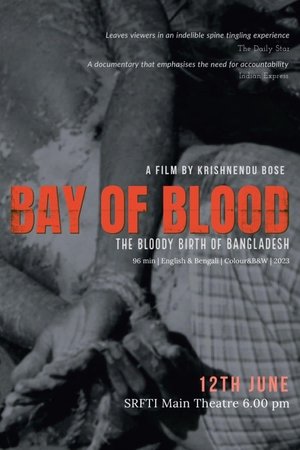
March 25th 1971, a horrific 'Genocide' was unleashed on the unarmed civilians of East Pakistan. This was done by their own Pakistani Army. An estimated 3 million people were killed, 10 million people were displaced to India as refugees and 400,000 women and girls were raped by the Pakistani soldiers. But Pakistan was not alone in perpetrating this violence. The then-American president and the National Security Advisor were supporting the Pakistani dictator. The cold war triggered this geopolitical escalation. Finally, India pressurized by the 10 million refugees within its borders, went to war with Pakistan. and joining forces with the local rebels, the Mukti Bahini, helped liberate Bangladesh. Cradled in the blood of innocents, a new nation was born in the closing days of 1971. "Bay of Blood", brings this 50-odd-year-old story to life.
The film tells the story of the legendary 'Shadhin Bangla Football Team' founded during the 1971 Liberation War of Bangladesh. They played friendly matches across India to raise funds which would be used in the war. The film also portrays the personal lives of few players of the team and their struggle and losses during the war. Though the film is inspired by true events, it takes cinematic liberty and mixes fiction with reality as well.
A Bangladeshi American undertakes a journey to learn about the liberation war in his native country, traveling there for the first time in nearly two decades, and uncovering the controversial role the U.S. played in a forgotten genocide that occurred there over 50 years ago. From 1971 to the present day, this is a story of Bangladesh’s independence, a family’s journey immigrating to America, and the cognitive dissonance of a person belonging to both homelands. Driven by interviews with his father and other family members, along with experts and witnesses, archival videos, declassified recordings, and animations, BENGAL MEMORY is a unique and untold oral history through a personal lens.
A short documentary, charting Bangladesh's quest for freedom from Pakistan.
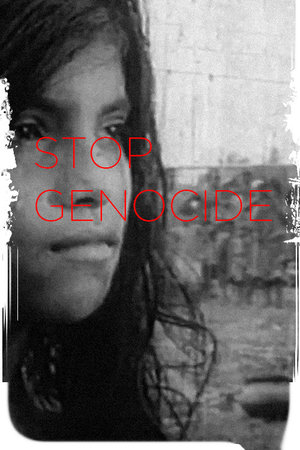
A documentary film about to resist the brutal action taken by Pakistan occupy army against general people of Bangladesh (previously East Pakistan) in between 26 March, 1971 and 16 Dec, 1971.
A paralyzed man and a deaf son both seriously affected by the war, lives a life dependent of each other while they both reminisce of their past .
Many have heard of Fela Anikulapo-Kuti, the legendary artist from the 70s and 80s. But some may not know that his mother Funmilayo Ransome-Kuti was also a legend in her own right, as a women's rights activist unabashedly pushing for equality in Nigeria at a time when people weren't having those conversations. "Funmilayo Ransome-Kuti" the film emerges as a new vivid exploration of Ransome-Kuti's journey. From growing up and learning about the importance of education, to her groundbreaking step in becoming the first girl to attend Abeokuta Grammar School at just 13, going to London and then becoming emboldened to return to Nigeria to step into her role as an educator and organizer.
On her eighteenth birthday, Lena is trying to bond with her family. All Souls’ Day, a time for contacting the dead and getting together to return to one’s roots, puts our protagonist in a special mood and changes her outlook on her own problems. Everything that happens throughout the day will revolutionise Lena’s view of her family. It is a story of the search for one’s identity and roots, of life and death, of the co-existence of parallel worlds that come together through the power of love.
Some weekdays in the life of literature teacher Tamara, which hold nothing surprising for her. It is the story about the narrowness of the space of life with insufficient choice.
The cinematographer Zhenya must earn extra by driving a taxi to support his wife and sick child. Once, a casual passenger involves him in a criminal story similar to a movie, which Zhenya films in his head.
A Muscovite, recently arrived as volunteer in a conflict zone, faces the enemy alone: a seriously wounded female sniper. It appears that both of them are from the same yard. He can kill her and revenge those she has shot. He can rescue her and betray his men. If he doesn’t make a choice, others will.
The life of a middle-aged, lonely businessman is filled with children’s dreams about outer space. The only opportunity for him to go to stars is an MRT device, only there the hero feels zero gravity. In the attempt to find as effective a remedy for his “flights”, the man ends up in a deadlock.
Maya, a gynecologist from Moscow, trains the staff at a hospital in a small settlement in the Northern Caucasus. She notices barbaric performances of female circumcision carried out behind her back.