Buddhist monk and photographer Matthieu Picard as he returns to the Asian country in the Himalayas where he spent a decade after seven years away, revisiting breathtaking landscapes and experiencing local traditions.
Draw
Ueli Steck (Switzerland), Simone Moro (Italy) and Jon Griffith (GB) are not like 95% of the climbers on Everest: they don't use oxygen, altimeters (improperly called Sherpas), or fixed ropes. In 2013, the trio aims to repeat the arduous Western Spur. The Sherpas have the mission to equip the mountain with fixed ropes on this famous day, up to Camp 3: ropes without which customers of commercial expeditions could not climb Everest. An argument ensued, insults were hurled from both sides. The confrontation at Camp 2 degenerated: a Sherpa water bottle physically attacked the trio of Europeans. Blows and stones were thrown and threats led the trio to flee the mountain. The Réel Rock film crew, which is part of the climbing team, films this chaos without complacency.
Six blind Tibetan teenagers climb the Lhakpa-Ri peak of Mount Everest, led by seven-summit blind mountain-climber Erik Weihenmayer.
Blind climber Erik Weihenmayer and his team's highly successful ascent of Mount Everest along with four other remarkable milestones on the mountain. Time magazine called this the most successful Everest expedition of all time.
Paragot and Bérardini: two climbers who fill all climbing enthusiasts with admiration. In Fontainebleau, Saussois, the Alps, the Andes, the Himalayas, and all over the world, they have left their names attached to the most difficult routes and the most prestigious peaks. Here, they recount only the climbs they completed together: famous expeditions to Aconcagua and Huascarán, firsts in the Alps and the Dolomites. An unwavering friendship, comical and tragic adventures—this is what they share with us in the warm atmosphere of their memories. "La Cordée des Voyous" will be included in Jean Afanassieff's film "La Grande Cordée," which deals with post-war proletarian mountaineering.
Maurice Barrard and Liliane Bontemps met in 1973 in Peru. Four years later, they are married and start their life together in the Loire Valley. She is a physiotherapist, he is an educator. For them, although settled not far from Chartres, the mountains are never far away. Whenever the opportunity presents itself, they embark on high-altitude expeditions. First individually, then together. In 1982, they were at the top of Gasherbrum 2, an ascent filmed in this documentary prelude to other future ascents including the Nanga Parbat in 1984, after an aborted attempt a year earlier, which made Liliane Barrardi the first woman to climb this mountain. of Karakoram. The "tallest couple in the world" will not stop there. After the Makalu in 1985, in the spring of 1986 they will attempt the ascent of K2 and its 8,611 meters... Un Homme, Une Femme, Un 8000 was broadcast in the program Les Carnets de L'Aventure in 1983.
In 2013 Velindre Cancer Care asked Rhod to lead an expedition to climb Kilimanjaro, the 19,341 ft high volcano in Africa. Rhod assumed they were 'taking the piss' but gave it a go anyway. He got together with some friends and tried to get fit before setting off for the peak.
The film is based on the expedition of mountaineer Muhammad Ali Sadpara to K2 in Pakistan, which cost him his life in 2021 at the age of 45. The film opens with him passing the bottleneck with his companions, successfully climbing it, and then returning when he is caught in an avalanche or storm and ultimately loses his life. As his life fades from memory, the film shifts to flashbacks as he recalls the events of his life.
An epic story of adventure, starring some of the most magnificent and courageous creatures alive, awaits you in EARTH. Disneynature brings you a remarkable story of three animal families on a journey across our planet – polar bears, elephants and humpback whales.
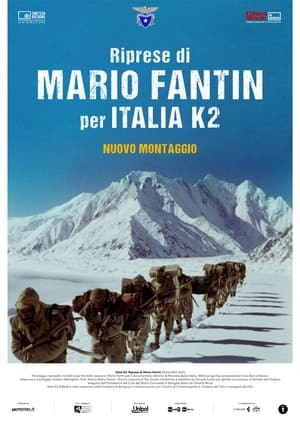
After the successful conquest of Everest in 1953, two Italians reach the summit of K2, the second highest mountain in the world, the next year,after careful preparation and the formation of the team of climbers, scientists, and porters.
On some peaks in 2003, the statistics are impressive. For the K2 dubbed "wild mountain" or "ruthless mountain", only 240 reached the summit and more than 60 perished in the ascent. An unimaginable rate of one death in four to survive. And these statistics are even worse At the start of the 2004 climbing season, only five talented and determined women had reached the 8,616-meter summit of K2, but only two made it out alive. , they too perished while climbing other peaks of 8000 meters, these five women all disappeared in the mountains.
John Bishop and Naomi Bishop present a portrait a peculiar life style of the Himalayan indigenous Sherpa people in their documentary , the Himalayan Herders. The 76 minutes long film is about the diverse culture and life style of herders community near Mt. Everest region of Nepal.The film was made in 1997 as a part of Case Studies in Cultural Anthropology Series.
In this retrospective tribute, acclaimed filmmaker Jean Walkinshaw hails the 100th anniversary of Mount Rainier National Park in Washington by talking to those who know it best: the scientists, naturalists, mountain climbers and artists whose lives have been touched by the peak's far-reaching shadow. The result is a harmonious blend of archival material and high-definition footage celebrating an icon of the Pacific Northwest.
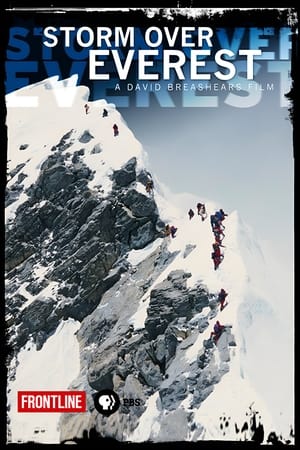
As darkness fell on May 10, 1996, a fast moving storm of unimaginable ferocity trapped three climbing teams high on the slopes of Mount Everest. The climbers, exhausted from their summit climb, were soon lost in darkness, in a fierce blizzard, far from the safety of High Camp at 26,000 feet. World-renowned climber and filmmaker David Breashears, who aided the rescue efforts back in 1996, now returns to Everest to tell the fuller story of what really happened on that legendary climb. Through remarkably intimate interviews with the climbers and Sherpas many who have never spoken before on American television Breashears sheds new light on the worst climbing tragedy in Mount Everest s history.
Fog surrounds the peak of a mountain as summer wildflowers bloom.
A film about the 1979 expedition to Nanga Parbat in Pakistan, led by Lyon native Jean-Pierre Frésafond. After a city tour, they set off by bus and then on foot with Sherpas to base camp. Having set out to attempt the Rupal Pillar, the expedition was unable to reach its objective in time (torrential rain, blocked roads, scree, etc.) and lost precious time before choosing to attempt the Mazeno Ridge by default. The team theoretically had the means to do so, since it brought together no fewer than 21 strong climbers, with a large core from Lyon—a concentration of talent rarely seen. But the resulting group dynamic worked contrary to expectations, and they had to settle for the most modest of consolation prizes: the ascent of the First Peak (6,880 meters). Frésafond recounted this in a book-testimony "The Revenge of the Himalayas - The Human Adventure at Nanga-Parbat".
In 1966, John Harlin II died while attempting Europe's most difficult climb, the North Face of the Eiger in Switzerland. 40 years later, his son John Harlin III, an expert mountaineer and the editor of the American Alpine Journal, returns to attempt the same climb.
Daulagiri (8167m), Naga Parbat (8125m) and Broad Peak (8051m) are among the 14 peaks in the world. Jean-Christophe Lafaille has set himself the goal of reaching these 3 peaks in the space of two months. This film takes us on a surprising journey that begins in Nepal and ends in Pakistan, while exploring the soul of this committed mountaineer… Ed Viesturs and Katia Lafaille accompanied Lafaille on his adventure.
Thomas de Dorlodot and Horacio Llorens journeyed for a personal adventure across the Himalayan mountains. They covered roughly 350km and became the very first paragliders to fly over Rohtang Pass.