Ladies of good families and social standing come to have their afternoon tea with their daughters who will someday follow in the same tradition. A charming portrait of a time that is slowly disappearing.
In this artistic exploration of the life and work of writer Henry Miller, filmmaker Joe Kishton skillfully weaves clips of films and interviews of Miller with the music of Laurie Anderson. From Miller himself we hear of his difficult relationship with his parents, and of his need to create, even (or especially) when his message abrades social mores.
Traces the lives of the Hartings, a blind Montreal family of three who make their living singing in the city's subway stations. The Hartings lost their only sighted child Hassan in a tragic drowning accident, and have since turned to the teachings of Russian mystic Grigori Grabovoi, hoping to resurrect their son. Resurrecting Hassan is an exploration of this family's legacy of grief, tragedy and abuse; the film will follow them on their path to redemption.
Today it is the city of Montreal, but 3 centuries ago the tiny band of missionary founders called it Ville-Marie, the holy city of Mary. This film goes back to its beginning and those who felt called to plant an oasis of Christianity in the North American wilderness. In an imaginative, at times almost surrealistic, way the film recalls the highborn company from France, and shows what survives of Ville-Marie in the Montreal of today.
The Soul of Bossales is an immersion in the heart of popular Haitian culture whose spirituality and creativity have been forged by a surge of freedom and identity affirmation. Foukifoura, Édris, Charlotte or Ramoncite, “Bossales” characters with committed artistic and political acts, give us the gripping story of a very harsh reality: material and health precariousness, political violence, neo-colonialism.
The Heroes of the Massacre River is a powerful documentary that chronicles the stories of the pioneers behind the construction of the historic Canal of Ouanaminthe, a project that united Haitians across the nation and the diaspora. This film celebrates the groundbreaking efforts of key figures, centering on Dr. Bertrhude Albert, Dr. Naismy-Mary Fleurant, architect Wideline Pierre, economist Etzer Emile as well as dedicated canal workers Milourie Sylfrard, Theodore Johnson and Joseph Pressoir — all guided by the investigative journey of Max Angie Clervil. It also serves as a commentary on the complexity of colonialism and borders, tracing the role that the Massacre River continues to play in the history of Ayiti.
La plaque tournante
Zombies are part of pop culture, but what are they? Where do they come from? To find real zombies we visit Haiti where Zombies are an integral part of the island's cultural and religious roots.
In the past 20 years, some 300,000 English-speaking people have left Montréal, convinced they had no future in a Québec that had become increasingly French, increasingly nationalistic. In this video we meet some of the people who are moving away and recall the days, in the last century, when there were more English-speaking people than French in Montréal. The video poses a controversial question: Will the city, with its youth leaving in great numbers, become a community of the elderly, unable to renew itself?
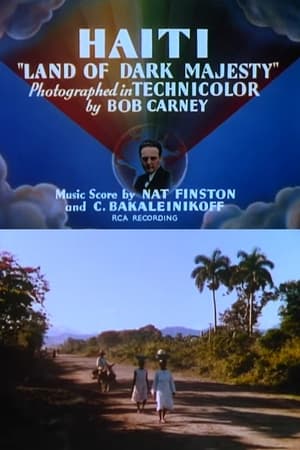
This short film from the Perspective series highlights social and economic development in Haiti circa 1957. It depicts customs and traditions used to pass along the history of a people, and offers a look into their daily lives — lives that looks very different from their experiences today.
For the past 4 years a devout Catholic Andre Levesque has been performing dance shows inside the trains of Montreal's underground metro. Using old school pop and rock music hits as the accompaniment to his amateur dances, he devotes his performances to Jesus Christ and Virgin Mary.
Anna, a twelve-year-old Ukrainian gymnast, has fled her war-torn country and recently settled in Montreal with her mother, younger brother, and grandmother. Confronted by the past, the challenges of exile, and a deep need for belonging, she seeks to rebuild her identity and regain her balance. Through her child’s perspective, the documentary explores the reality of life after war, questioning what endures and what is missing, even when one has found refuge.
Every day, on the streets of Canada's cities, we pass them on our way to work or school. Bums, beggars, winos, bag people we call them. But who is the person at the end of that outstretched arm? What is life on the street really like? Is there a way off the street? For six years, director Daniel Cross followed the lives of three homeless men who spent much of their time in and around a Montreal subway station. Filmed in a cinema verité style, the film is unique: it humanizes the homeless, breaking down the barrier between us and them, neither moralizing nor offering easy answers. This is a gritty, compelling look at life on the streets that moves beyond the media stereotypes to show both the humanity of the homeless and the street-toughened aspects of their existence.
Les Hiboux, ça change des vies!
Drama documentary from 1978 exploring the private feelings of novelist Thomas Hardy through the poems of love and remorse that he wrote after the death of his first wife, Emma.
Katja Mann: A Life with Thomas Mann
Haitian history is presented through an explosion of colour, dance and music, as the country prepares for its legendary carnival.
BREAKING POINT brings viewers back to those tense, critical moments when Canada's future as a country was at stake.
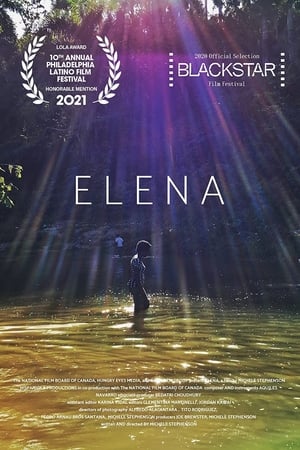
In 1937, tens of thousands of Haitians and Dominicans of Haitian descent were exterminated by the Dominican army, on the basis of anti-black racism. Fast-forward to 2013, the Dominican Republic's Supreme Court stripped the citizenship of anyone with Haitian parents, retroactive to 1929, rendering more than 200,000 people stateless. Elena, the young protagonist of the film, and her family stand to lose their legal residency in the Dominican Republic if they don't manage to get their documents in time. Negotiating a mountain of opaque bureaucratic processes and a racist, hostile society around, Elena becomes the face of the struggle to remain in a country built on the labor of her father and forefathers.
This documentary let us to relive the challenge of the men behind the 1967 Universal Exposition in Montréal, Canada. By searching trough 80,000 archival documents at the national Archives, they managed to bring light on one of the biggest logistical and political challenges that were faced by organizers during the "Révolution Tranquille" in the Québec sixties. Includes the accounts of the Chief of Advertising Yves Jasmin, and businessman Philippe de Gaspé Beaubien.