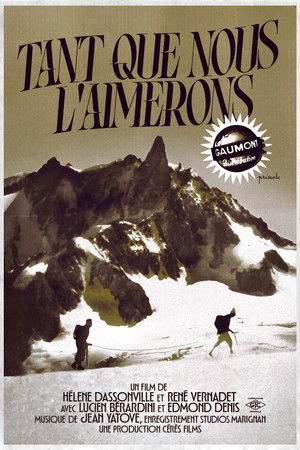
Lucien Berardini and Edmond Denis are two mountaineers who took part in the French expedition to Aconcagua (Andes Mountains) in 1954. Both suffered severe frostbite to their fingers and toes, and three years later, they set out to climb the Aiguille du Géant, a legendary route in the Mont Blanc massif. The camera closely follows the efforts of the roped party, an example of strength and self-sacrifice, until their victorious arrival at the summit.
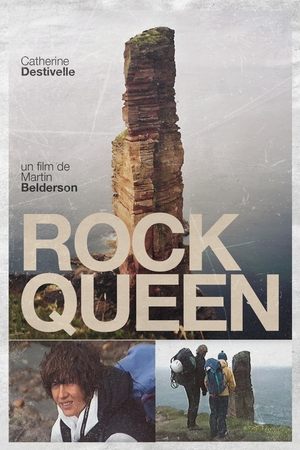
Catherine Destivelle has deservedly become the most famous female climber in the world. She rose to prominence with historic climbs, such as the free ascent of the Nameless Tower in Pakistan, and solo winter ascents of the classic north faces of the Matterhorn and the Eiger, climbs that have never been repeated by any woman. She also made history in sport climbing by winning the world championship title. In 1997, this time in Scotland, on the iconic Old Man of Hoy route, opened by Bonington, Patey & Baillie, Martin Belderson crowned Destivelle Queen of the Rock. She was four months pregnant when she made this 137-meter ascent, which was not difficult but on tricky rock.
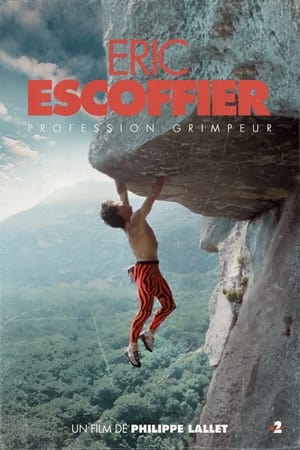
A documentary portrait of the legend Eric Escoffier at the height of his mountaineering career. A true athlete, Escoffier has comprehensive, cutting-edge preparation in three different climbing disciplines: rock climbing, ice climbing and solo free climbing, without any safety devices. Philippe Lallet's camera follows Eric in his performances and in his preparation for one of the first La Sportroccia climbing competitions, in 1985 in Bardonecchia in Italy.
PAS ZEN - 15 minutes pour gravir le Montmartre
Pierre Mazeau has managed to unite three of his passions which seem to have nothing in common, at a very high level: mountaineering, jurisprudence and policy. The Everest mountaineer, rescued from the Freney Pillar, the passionate jurist, the former sports minister, privy counsellor, and president of the French Constitutional Court is a charismatic personality. This sensitive film portrait follows a line, which Pierre Mazeaud himself has quoted: “Alpinism belongs to those who provide themselves with means to reach their goals, to those who are fully committed to a goal, to those, who know the value of solidarity of men, and to those who are aware that true human existence can only be fulfilled by proceeding with a team of roped-partners.”
Two climbers, Dany Badier and Françoise Dassonville, swim to explore an underground cave in the Calanques, near Marseille, then equip themselves with climbing gear to scale the spectacular cliffs of the Calanques. Their ascent culminates at the summit of the Grande Candelle. Directed by Gilbert Dassonville in 1970 and produced by Cérès Films, this film won first prize at the Trento Mountain Film Festival in 1967.
Ningwasum follows two time travellers Miksam and Mingsoma, played by Subin Limbu and Shanta Nepali respectively, in the Himalayas weaving indigenous folk stories, culture, climate change and science fiction.
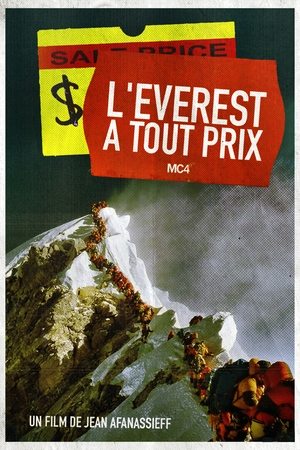
In 1983, three climbers became the first French people to reach the summit of Everest. Among them were expedition leader Pierre Mazeaud and a promising 25-year-old climber, Jean Afanassieff. Twenty years later, the two legends, accompanied by mountain guide Michel Pellé, retrace the steps of their exploit and make the trek from Kathmandu to the foot of the roof of the world. This is an opportunity to retrace the history of the successive assaults on Everest and to assess the current situation of a mountain that has become a victim of its own success: while Sherpas have been able to take advantage of Western enthusiasm and thus enrich themselves and equip the summit to make it more accessible, the site's attendance poses numerous problems, both human and ecological.
Nicolas Jaeger, a French physician specializing in sports and high-altitude physiology, conducted an experiment by spending two months on the highest peak in the Peruvian Andes, Huascarán. From July to September 1979, Nicolas Jaeger lived alone for 60 days at an altitude of 6,700 meters and studied the effects of hypoxia on his body. He documented his experience on film and later in his book, "Carnet De Solitude," published in 1979.
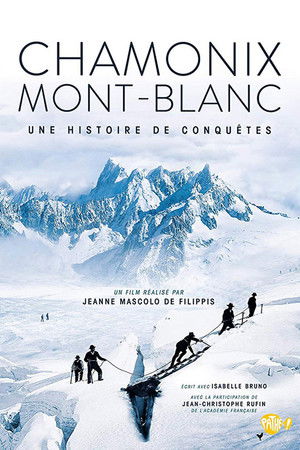
Chamonix - Mont Blanc, A History of Conquests
"Les Compagnons Du Vide" (The Companions of the Void) is a documentary made in 1989 by Claude Andrieux and Gilles Chappaz, broadcast in two parts on the FR3 program "Montagne." The film explores the history of the mountain guide profession through portraits of mountain guides, showcasing the diversity of this high-risk occupation. It also delves into the intimate relationship between the climbing team and the client, using the example of prestigious guides. The documentary follows these teams on major climbs around Chamonix, on Mont Blanc, and on La Meije in the Écrins massif.
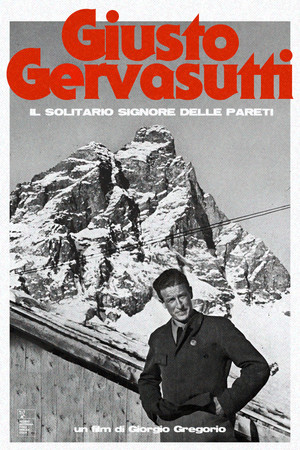
Giusto Gervasutti (1909-1946) was an Italian mountaineer, considered by many to be the best mountaineer of his generation and one of the greatest of the post-war era. He achieved his first feats in 1930 and revolutionized mountaineering in the Western Alps by repeating and opening routes of extreme difficulty that are still considered absolute routes today: the east face of the Grandes Jorasses (with his friend Boccalatte), the northeast spur of the Aiguille Noire de Peuterey, the north face of the Grandes Jorasses, the Gervasutti route on the Gugliermina, the east face of Mont Blanc du Tacul (where he died in 1946), among an incredible list of climbs. The film, made to mark the centenary of Giusto Gervasutti's birth, portrays a solitary and tormented mountaineer, endowed with an impeccable moral sense, an advocate of light and ethical mountaineering, always in search of an unattainable happiness.
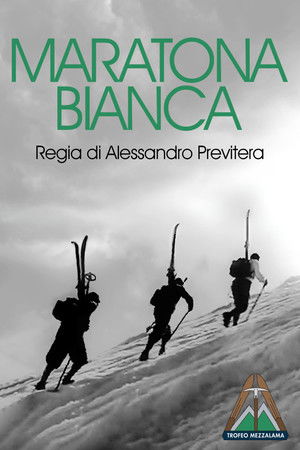
Documentary on one of the first editions of the Trofeo Mezzalama, the highest ski mountaineering race in Europe, at more than 4,200 meters above sea level, which takes place on the glaciers of Monte Rosa, from Breuil to Gressoney-La-Trinité, crossing the summits of Castor (4,199 meters) and Nez du Liskamm (4,100 meters). The film recounts the last hours of feverish preparation before the start, the teams preparing for the race linked in ropes, then follows the stages of the competition by following the groups of skiers from a plane. Created in 1933, the Trofeo Mezzalama was contested until 1938, before falling into oblivion during the war. A second version was organized from 1970 to 1973. A third biannual version has been organized since 1997.
Matti and Niila, growing up in the mid-sixties in the harsh and conservative environment of a Finnish-speaking part of Tornedalen in Swedish Laponia, close to the Finnish border. Their big dream is to become rock stars. In the present the now grown-up Matti feels guilt for the death of his drug-addicted rock star friend Niila.
Mont Blanc, the roof of Europe, attracts the attention of mountaineers from all over the world, from seasoned climbers to novices. With its extensive media coverage, this mountain represents a dream of adventure for an ever-growing audience. Catherine and Maël, natives of Chamonix, also dream of reaching its summit. But climbing the giant of the Alps is a major undertaking that requires rigorous high-altitude training. Aware of the risks, the two novices enlist the help of Jean-Paul Lemercier, a high-mountain guide. He will give them the opportunity to learn about this challenging environment during a "Mont Blanc Course," which includes ice climbing school, two acclimatization peaks, and the ascent of the legendary mountain over three days. Set against the majestic backdrop of the Mont Blanc massif, this film retraces their preparation, their attempts, and the realization of their dream, day by day.
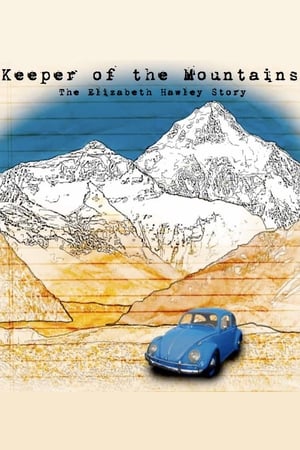
Keeper of the Mountains is a portrait of Elizabeth Hawley and her unlikely key role in the Golden Age of Himalayan mountaineering, her defiance of the traditional gender roles of her day and her decision to settle alone in Kathmandu in 1960, where she has famously lived life on her own terms ever since. Hawley, 91 and a former journalist, maintains the world's largest and most treasured archive of Himalayan mountaineering expeditions and her work is trusted by news organizations and publications around the globe. All this despite never having climbed a mountain herself.
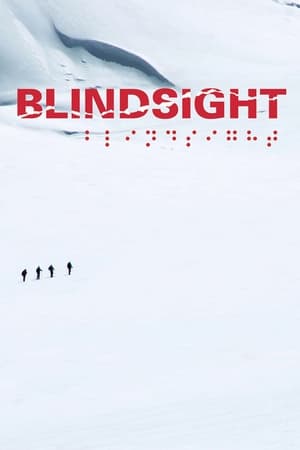
Six blind Tibetan teenagers climb the Lhakpa-Ri peak of Mount Everest, led by seven-summit blind mountain-climber Erik Weihenmayer.
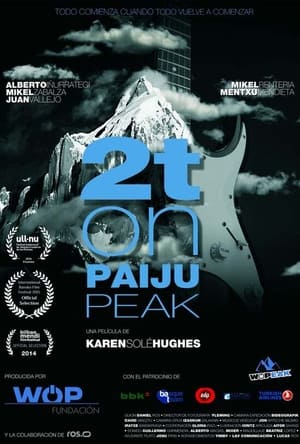
In 2013, Alberto Iñurrategi, Juan Vallejo and Mikel Zabalza desist in their attempt to climb Paiju Peak (6,610m). A year later, his steps cross with Mikel Renteria and Mentxu Mendieta from the WOP Foundation, who decide that the second attempt at Paiju Peak will be the first stage of their WOPeak project. The three members of the cordada land again in Pakistan. Identical scenery, the same objective and a maximum motivation for a challenge beyond mountaineering in a route full of emotions that ends with the opening of a new road in the heart of the Karakorum that they christened '2t'.
An international expedition led by French mountaineer Benoit Chamoux reached the summit of Annapurna (8091 m) on Tuesday, May 10, 1988, via its south face, one of the most difficult routes in the Himalayas. The expedition, named "L'Esprit d'Equipe" (The Spirit of Team), financed by the computer company Bull (Chamoux thus secured one of the largest contracts in the history of mountaineering: twenty million francs to carry out his project), aimed to reach six peaks over 8,000 meters, as a full team, within three years: Annapurna, Everest, Manaslu, Cho Oyu, Makalu, and Kangchenjunga. The challenge results: in 1988: Annapurna (8091 m) - 5 out of 6 men reached the summit, 1988: failed on Everest, 200 m below the summit, 1989: Manaslu (8183 m) - 8 out of 8 men reached the summit in 4 teams of 2, 1990: Cho Oyu (8201 m) - 7 out of 7 men reached the summit, 1990: Shisha Pangma (8013 m) - 7 out of 7 men reached the summit.
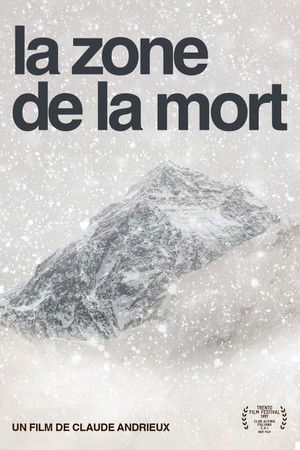
To understand the difficulties of an ascent to over eight thousand metres, it is enough to remember the almost 300 victims these peaks have claimed. The Swiss alpinist Ehrart Loretan, the third alpinist in the world to have climbed all 14 8,000, and the Austrian alpinist Kurt Diemgerger cover the whole history of the conquest of the world’s 8,000, from the fifties to the present day, together with other alpinists and film directors who have climbed them. They talk about their experienced when they ventured into the death zone.