Shows the interaction between Hamburg police officers and paramedics.
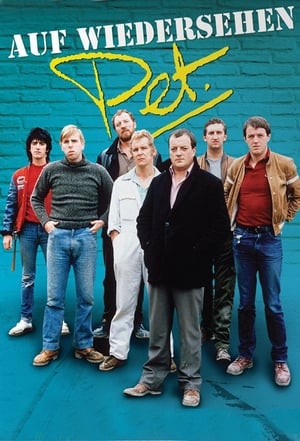
Seven British construction workers escape Britain's ever growing dole queues and travel to Germany to work on a site in Dusseldorf. We follow their trials and tribulations of working away from home and away from the women they left behind.
Familie Braun
Bonn depicts the rise of the young West Germany, a country struggling to break free from the terrors and legacies of World War II and longing for a 'normal' life. Into this heady and volatile mix steps Toni, a young woman determined to seize every opportunity, overcome every obstacle and make her own way in what is still a very male-dominated society. But what at first appears to be only an entry-level office job at one of the country's two competing secret services soon sucks her ever deeper into a clandestine world of suspicion
The German inspector Max Grosz sets off with the Norwegian policewoman Thea Koren to Spitsbergen in search of his missing nephew. In the process, they delve deeper and deeper into a web of intrigue and political interests, because the disappearance is apparently connected to the controversial takeover of an agricultural company.
Nord bei Nordwest
A contemporary spy series that follows Daniel Miller, an undercover agent at the CIA station in Berlin, Germany.
End of Innocence is a two-part television film that focuses on the work of the German Uranium Association during World War II. At Farm Hall in England, the ten German nuclear scientists interned there as part of Operation Epsilon learn of the dropping of the first atomic bomb on Hiroshima in August 1945. In flashbacks, the development of the German uranium project is recapitulated chronologically from the discovery of nuclear fission by Otto Hahn to the work of Kurt Diebner at the Heereswaffenamt to the experiments of the Kaiser Wilhelm Institute for Physics under Werner Heisenberg and Carl Friedrich von Weizsäcker at the Haigerloch research reactor in spring 1945.
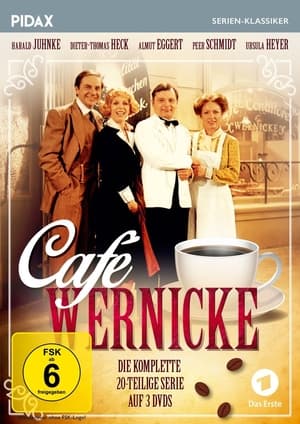
Café Wernicke
A gripping coming-of-age story set against the real culture wars and political events of Germany in the 1980s. The drama follows Martin Rauch as the 24 year-old East Germany native is pulled from the world as he knows it and sent to the West as an undercover spy for the Stasi foreign service. Hiding in plain sight in the West German army, he must gather the secrets of NATO military strategy. Everything is new, nothing is quite what it seems and everyone he encounters is harboring secrets, both political and personal.
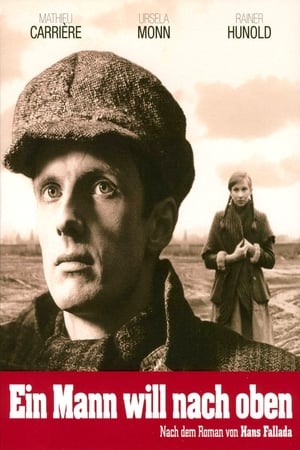
In 1909, Karl Siebrecht, who has just become an orphan, arrives in Berlin. The 16-year-old is eager to conquer the city for himself in just a few weeks. On the train ride there, he meets Rieke Busch, a girl from the working-class district of Wedding. She accompanies Karl from then on. But he soon realizes that he will have to start at the bottom. His path is characterized by small successes and setbacks. Only later does he make his breakthrough by founding a luggage transportation company. But once again, his success was short-lived as his business partner booted him out. Karl Siebrecht is faced with the ruins of his company. But he does not give up, finds new ways and seems to have achieved another breakthrough. But then the First World War breaks out...
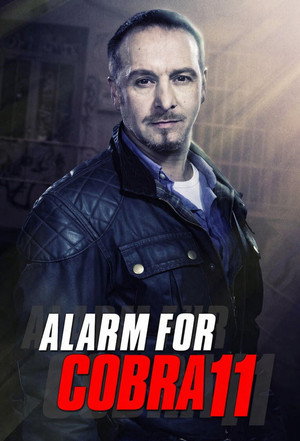
A long-running German television series about a two-man team of highway police, originally set in Berlin and later in North Rhine-Westphalia.
A young girl falls in love with a poor brewer's son. Their relationship is opposed by the girl's father, a rich mobster who has come to town to try to bully his way into the inner circle of Munich's brewery dynasties.
In 1946 Berlin, an American cop searches for his missing brother while helping a novice German policewoman fight the violent crimes engulfing the city.
Cold War, the seventies. Lars is a Romeo agent from East Germany: he must go to the West side and seduce and spy on Western women who work in government or defense institutions.
Berlin, 1888. After penniless Ida’s life is saved at the Charité Hospital she must work off the treatment costs. While she becomes acquainted with the most brilliant physicians of this era at the world-famous hospital, the self-determined young woman discovers her passion for medicine.
Lindenstraße is a German television show on ARD's Das Erste, one of Germany's two publicly administered TV channels. The first episode was aired on 8 December 1985 and since then new episodes have been broadcast weekly. Its current timeslot on Das Erste is Sundays at 18:50. The events of the Sunday episode usually take place on the Thursday before the show, based on the TV station's original plan of airing the episodes Thursday night. Prior of the start of the show, the timeslot was switched to Sunday evening but the Thursday remained the day the events usually take place as the show shall feature the daily life routine of the protagonists on a working day. Exceptions are the so-called holiday episodes that take place on Sunday, such as for Christmas and Easter and also on important election days. Setting the pace for other soap operas in Germany, the first episodes were met with mostly bad reviews. However, Lindenstraße soon became one of the most successful shows on German TV.
Lena's father works as a developer in Hitler's high-tech forge, where the famous unit receiver E1 was developed. When he dies in 1945, he leaves a notebook with the name Sattler. He should look for Lena. Lena is stranded with her seriously ill mother Hilde and her sister Betty in a village near Fürth. Here she meets two men: Walter Juskowiak, returnees from prisoner of war, with whom she meets, and Hans Sattler. The representative for radio kits turns out to be the son of Wilhelm Sattler, owner of the Sattler works in Fürth. Lena is sure to have finally found the right man.
In 1944 many Germans in Eastern Prussia believed like Lena von Mahlenberg, daughter of a local aristocrat, that Hitler would surrender and spare them from being invaded by the vengeful Russian Red Army. He didn't and they had to flee.
A two-part television film by UFA Fernsehproduktion about Jutta Gallus, who peaceful protested against the SED dictatorship in the GDR.