Agnes may not seem like someone with much to laugh about. For one thing, she has albinism - a lack of pigment in the skin, hair and eyes - and her appearance has provoked prejudice from family, friends and strangers since she was born. But despite all odds, Agnes refuses to lead a life of sorrow. This fascinating and inspiring documentary also shares the stories of seven other people's individual experiences of living their lives with albinism in Kenya, a predominantly black society. While each person's story is unique, they all have one thing in common: they know what it is like to stand out uncomfortably from the crowd.
After getting out of jail, where she learned to care for the sick, Alma, an albino woman, is determined to recover at any cost something much more important than her own freedom. In order to do so, Alma must spend her nights taking care of Clemente, a hypochondriac compulsively obsessed with avoiding sudden death. Their relationship moves through suspicion, fear and compassion to tenderness and love.
Nina, a 9-year-old outcast Dominican girl with albinism, finds herself the target of a jealous classmate's witch hunt.
A determined 16-year-old with albinism makes it her mission to become a professional model in her hometown of Minneapolis, while attempting to go unnoticed in every other aspect of her teenage life.
Man Ré dreams of traveling to outer space... but what if this actually happens? In 2017, Angola launched its first satellite into space... and lost it. The film revives this dream. An indie musical film written by and starring Isis Hembe, one of Angola's most renowned urban artists...
Rejected by his father at birth, a boy with albinism navigates a childhood of bullying, tragedy and cautious hope.
Grace, a Dutch-African girl with albinism, feels like an outsider with her white skin and poor eyesight. When she meets Kya, her African identity becomes more important. How far will she go, to fit in the group?
Kibera is the largest slum area in Nairobi, and the largest urban slum in Africa. This documentary depicts three important problems; violence, drugs (miraa) and albinos killing.The 2009 Kenya Population and Housing Census reports Kibera's population as 170,070, contrary to previous estimates of one or two million people .Most of Kibera slum residents live in extreme poverty, earning less than $1.00 per day. Unemployment rates are high. Persons living with HIV in the slum are many, as are AIDS cases. Cases of assault and rape are common. There are few schools, and most people cannot afford education for their children. Clean water is scarce. Diseases caused by poor hygiene are prevalent.
In Tanzania there is a growing clandestine market for albino skin, bones and hair as ingredients in potions that promise to make people rich. As a result people with albinism live in fear of being abducted or maimed. Jerome, a young karate master, has made teaching kids with albinism to defend themselves his life's mission. Now he’s determined to take one of them to a world championship in Japan.
Jon and Liz Grabowski have two biological children and five adopted children, four of whom have albinism. Although they must take extra care with their disabilities, nothing keeps this family down.
A fickle and unfaithful husband, Antonis, tries to drive his rich wife crazy so that he can get his hands on her fortune, with the chauffeur and his lover as accomplices. In order to succeed, he fakes his own death, but fate, as usual, plays its own game. A game in which an old friend of his wife is also involved, a reporter on the police beat, Bekas, who is trying to solve a mystery in which strange phenomena come one right after the other, and doubts never seem to end.
On the night of graduation prom the credit to the English Language School, Loris tries to escape to the West, but he is betrayed and captured. Charged with political motivation, Loris is sentenced. The year is 1986. The slogan written in red letters onto the wall in the prison is: If you don't know - we will teach you, if you can't - we will show you how, if you don't want to - we will force you. It is put into practice. Torture, cynicism and physical violence turn the talented young man into an impassive and coldblooded observer. The Berlin wall is falling. Loris is granted an amnesty. Already free, he is alienated and indifferent to the world. In his desperate escape from reality Loris revenges for his ruined life and takes the road to his own destruction. But he meets love. Loris tries to find salvation in yet another flight...
Two men, Philip Whittemore (Henry B. Walthall) and Thorpe (Harry Northrup) both go to the Northwest to gain the right-of-way for their railroad company from D'Arcambal (Emmett King). Whittemore arrives first and D'Arcambal refuses to meet with him until he saves his daughter, Jeanne (Pauline Starke) from going over the rapids. Then Thorpe arrives and tries to use force by kidnapping Jeanne and insisting that he is her father.
The Way They Were is a Spanish Drama starring Antonio Banderas
A little love story can actually be huge even if you are only twelve years old...
This is a Spanish Drama starring Antonio Banderas
Rocío, is in love with Mario, a free rider with a lot of face that, to top it all, is partner of the business of her father, Domingo with whom she maintains incestuous relations. When Domingo passes away, both Mario and Rocío's mother have to put to the front of the business, finishing with the inheritance that could receive Rocío. In the midst of her frustration, a young business worker, secretly in love with Rocío, will try to have the legacy of her father end up in the hands of his rightful heiress.
Two Mormon missionaries become concerned when someone they teach goes missing. As they search for the answers, they find themselves plunged into a world of danger and deceit.
A nurse takes care of a patient in her house. Maria do Céu has been a nurse for more than forty years, working at an old Hospital in Lisbon. She was sixteen, when she arrived to Lisbon, coming from a small village in Alentejo. At the Hospital, she reads the file of an old patient who was also her friend. The file is then closed. Maria do Céu returns to her village, where she sings at the people’s house choir.
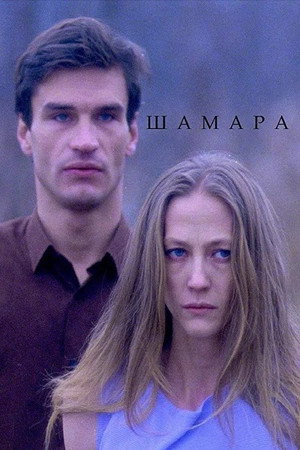
Industrial Soviet town in the 1970s is suffering from a cholera epidemic. Zina Shamarina, nicknamed Shamara, is a rebel-spirited woman who lives in a factory dormitory and is desperately in love with Ustin, the man who was one of the bunch that raped her years ago and then married her only to avoid prosecution. When Ustin commences an affair with the new girl in town, Shamara is challenged to regain herself and her place in this community.