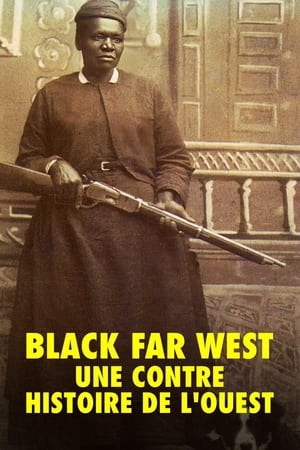
Colorado Springs, late 1970s. Ron Stallworth, an African American police officer, and Flip Zimmerman, his Jewish colleague, run an undercover operation to infiltrate the Ku Klux Klan.
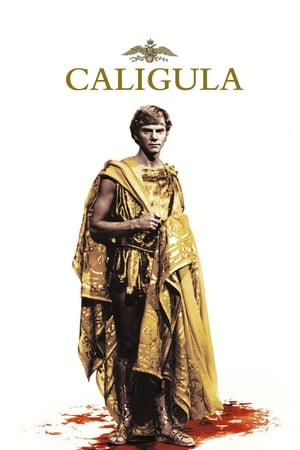
After the death of the paranoid emperor Tiberius, Caligula, his heir, seizes power and plunges the empire into a bloody spiral of madness and depravity.
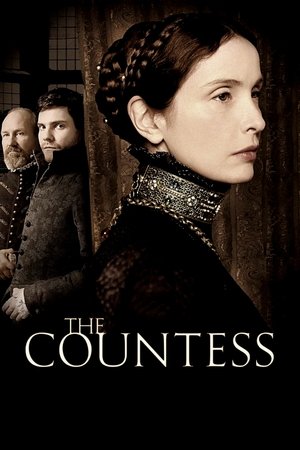
Kingdom of Hungary, 17th century. As she gets older, powerful Countess Erzsébet Báthory (1560-1614), blinded by the passion that she feels for a younger man, succumbs to the mad delusion that blood will keep her young and beautiful forever.
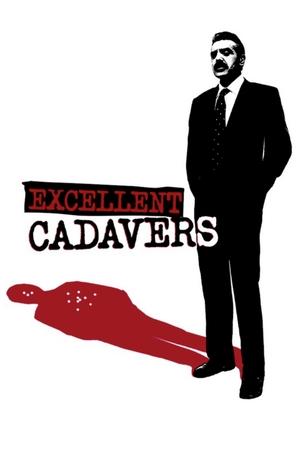
Palermo, Sicily, 1984. Examining magistrate Giovanni Falcone allies with Tomasso Buscetta, a former mobster, to defeat the clan of Corleone, the ruthless Mafia faction that rules Cosa Nostra with an iron hand, cruelly eliminating all those who dare to oppose its immense power: other criminals, policemen, judges, even innocent civilians. One of them wants revenge, the other wants justice. But only one can survive such an unequal fight.
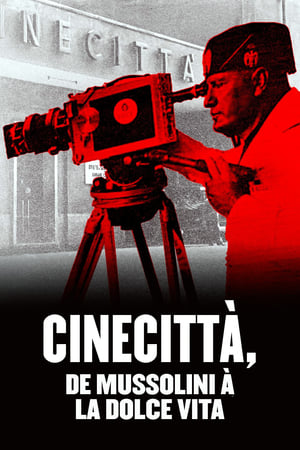
The story of Italian cinema under Fascism, a sophisticated film industry built around the founding of the Cinecittà studios and the successful birth of a domestic star system, populated by very peculiar artists among whom stood out several beautiful, magnetic, special actresses; a dark story of war, drugs, sex, censorship and tragedy.
What is true and what is false in the hideous stories spread about the controversial figure of the Roman emperor Gaius Julius Caesar Augustus Germanicus (12-41), nicknamed Caligula? Professor Mary Beard explains what is accurate and what is mythical in the historical accounts that portray him as an unbalanced despot. Was he a sadistic tyrant, as Roman historians have told, or perhaps the truth about him was manipulated because of political interests?
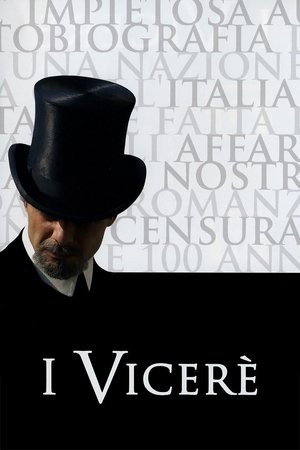
In late 19th-century Sicily, the noble Uzeda family—whose lineage dates back to the ancient viceroys that ruled those lands—fights to preserve its waning power in the face of the newly unified Italian regime.
Professor Niall Ferguson argues that Britain's decision to enter the First World War was a catastrophic error that unleashed an era of totalitarianism and genocide.
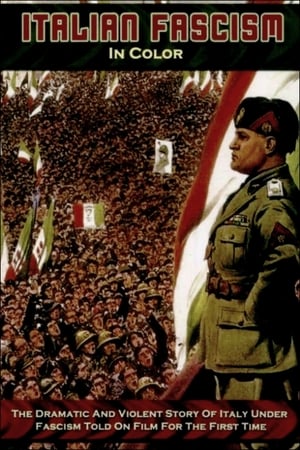
After the World War I, Mussolini's perspective on life is severely altered; once a willful socialist reformer, now obsessed with the idea of power, he founds the National Fascist Party in 1921 and assumes political power in 1922, becoming the Duce, dictator of Italy. His success encourages Hitler to take power in Germany in 1933, opening the dark road to World War II. (Originally released as a two-part miniseries. Includes colorized archival footage.)
The first American space station Skylab is found in pieces scattered in Western Australia. Putting these pieces back together and re-tracing the Skylab program back to its very conception reveals the cornerstone of human space exploration.
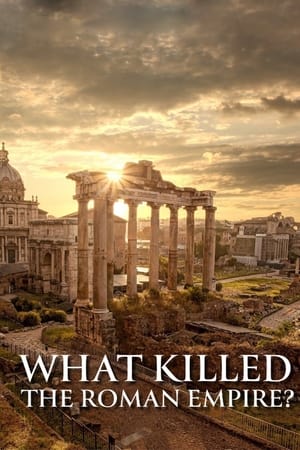
Why did the Roman Empire, which dominated Europe and the Mediterranean for five centuries, inexorably weaken until it disappeared? Archaeologists, specialists in ancient pathologies and climate historians are now accumulating clues converging on the same factors: a powerful cooling and pandemics. A disease, whose symptoms described by the Greek physician Galen are reminiscent of those of smallpox, struck Rome in 167, soon devastating its army. At the same time, a sudden climatic disorder that was underway as far as Eurasia caused agricultural yields to plummet and led to the westward migration of the Huns. Plagued by economic and military difficulties, attacked from all sides by barbarian tribes, the Roman edifice gradually cracked.
During the celebrations for the 1600th anniversary of the founding of Venice, Elena and her friend Alvise are drawn to a strange message under the Rialto Bridge, embarking on an adventure through time to discover historical figures who will open their eyes to the beauty and fragility of their city.
George Orwell's novel of a totalitarian future society in which a man whose daily work is rewriting history tries to rebel by falling in love. Episode 1 of Season 6 of Studio One's anthology series.
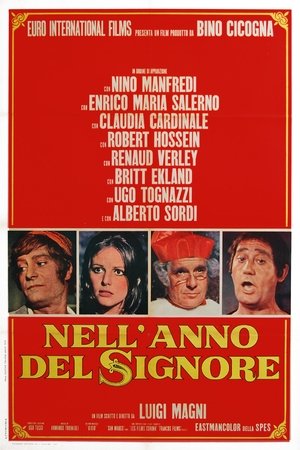
The year is 1764. For over a year, Josef has been leading a precarious life in Venice. He hopes to become an opera composer. The city, full of talented and already-established composers, seems closed to him. Looking for work as a violinist, he comes into the orbit of a rich young woman. Thanks to her, he gets the opportunity to play at salons. But his real opportunity arises when he becomes the lover of a libertine marquise. She teaches him worldly manners, rids him of signs of a provincial upbringing and introduces him to a hedonistic existence free from religious intolerance. Thus transformed, Josef gets an incan incredible commission: to write an opera for the San Carlo, Europe's largest theatre.
We follow leading experts on a quest to unlock the mysteries surrounding the tomb of Christ, using the latest scientific techniques to restore the Aedicula housing the tomb.
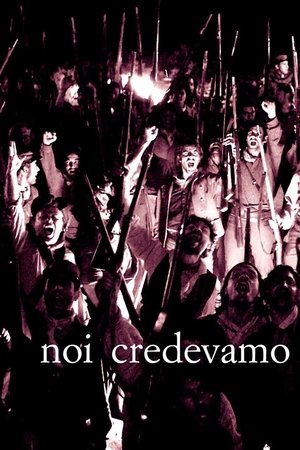
1828. In the wake of the repression of revolutionary uprisings in the monarchist South, three young friends join Giuseppe Mazzini's patriotic cause, seeking to finally unify Italy under a republican government. Their idealism will clash with the inevitable disillusionment as they grow apart over the following fifty years.
A documentary chronicling the history of the telescope from the time of Galileo. Featuring interviews with leading scientists discussing Galileo's first use of the telescope to the latest discoveries in cosmology.
The Three Musketeers is a legendary work, whose heroes have rocked multiple generations. These fictional musketeers have eclipsed the real musketeers, those who formed the royal company that existed between 1622 and 1775. Who were these men, and how did they serve the King? Did they really take part in the affairs of the Crown? Did Athos, Porthos, Aramis and D'Artagnan really exist? Thanks to the best historians, discover the true story of the Musketeers.
Documentary composed of interviews with female partisans who survived the German invasion of Italy in World War II.
In 79 AD, one of the infamous natural disasters in human history occurred when Mount Vesuvius erupted. With speculative dramatizations of various inhabitants' final hours along with detailed documentation of the known facts concerning the eruption, the horrific day is vividly brought to life.