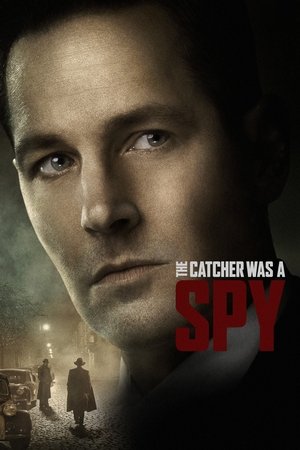
A Taiwanese high school baseball team travels to Japan in 1931 to compete in a national tournament.
The Toronto Blue Jays — the defending champions — sleek, corporate, efficient — featuring an offensive arsenal that hit a collective 0.311 in the six-game series. The Philadelphia Phillies — a last-to-first success story — with their long hair, beards, and blue-collar work ethic — a softball team in pinstripes. This was a World Series that won't soon be forgotten. A six-game slugfest that sent pitchers scurrying to the showers. The heroes were named Dykstra, Molitor, Schilling and Alomar. The games were unforgettable. The sheer drama of Game Four — with its runs, hits, and duration — all records. The surgical precision of Curt Schilling's shutout in Game Five. And Joe Carter's incredible three-run blast to win Game Six — just the second time in history a home run has ended a World Series.
Since Little League Baseball was founded in 1939, about 40 million kids have played the sport. The list includes future Hall of Famers like Carl Yastrzemski, Tom Seaver and Nolan Ryan, and hundreds of other future Major Leaguers. But of all the kids who ever played Little League, the best of the best was a boy you’ve probably never heard of: Art “Pinky” Deras. In the summer of 1959, he led the team from Hamtramck, Mich., to the Little League World Series title, and in the process, he put together a Little League season the likes of which we might never see again. His amazing story comes to life in “The Legend of Pinky Deras: The Greatest Little-Leaguer There Ever Was,” a new film from Blue Hammer Films. Pinky received a ton of national publicity back in 1959, but then he fell off the map. In the half-century since he lit the Little League world on fire, there have been no films about him, no magazine stories, not even a single newspaper article.
Celebrate the life of baseball’s most enduring legend; Satchel Paige was the single most important player in the old Negro Baseball Leagues
Baseball, Dennis & the French tells the true story of Paul Croshaw, longtime liberal activist and connoisseur of French films, who amazed his family, friends and himself by becoming a churchgoing, conservative Christian after years of listening to nationally syndicated radio host Dennis Prager.
In 2014, Chicago’s Jackie Robinson West Little League became the first all-Black team to win the Little League U.S. Baseball Championship. Along the way, 13 twelve-year-old athletes from the South Side turned into media superstars—their faces were splashed across magazine covers and major TV networks, garnering them millions of fans around the country. They were even invited to the White House to meet President and Mrs. Obama. But it all came crashing down after a rival coach accused the team of breaking residential boundary rules.
Buck Weaver and Hap Felsch are young idealistic players on the Chicago White Sox, a pennant-winning team owned by Charles Comiskey - a penny-pinching, hands-on manager who underpays his players and treats them with disdain. And when gamblers and hustlers discover that Comiskey's demoralized players are ripe for a money-making scheme, one by one the team members agree to throw the World Series. But when the White Sox are defeated, a couple of sports writers smell a fix and a national scandal explodes, ripping the cover off America's favorite pastime.
The 1995 World Series featured the two best teams in baseball. The Cleveland Indians won 100 games in a shortened season, and they made it to the World Series for the first time in 41 years. The Atlanta Braves had been here before, twice in the previous four years. With the best pitching staff in baseball, they were called the team of the '90's. Still they needed a World Series Title to claim that crown. This official documentary of the 1995 World Series includes all the dramatic moments of the six-game battle between the Indians and the Braves including: Eddie Murray's game-winning single at frenzied Jacobs Field. Orel Hershiser's gutsy performances against the incredible Greg Maddux. Dave Justice talking the talk...and then walking the walk. Tom Glavine, the series MVP, pitching one-hit baseball under phenomenal pressure.
A look back at Miggy's illustrious career.
In a time when America was on the brink of modernization, Carson "Skeeter" Bigbee emerged from rural Oregon to become an embodiment of national transformation. Born to working parents in 1895, Bigbee’s life as a multi-sport athlete, a baseball star with the Pittsburgh Pirates, a World War I enlistee, and a World Series hero, intersected with America's Progressive Era, the electrification of society, the First World War, and the onset of the Great Depression. His story, from hitting the decisive run in the 1925 World Series to managing in the American Girls Professional Baseball League, is a poignant reflection of ambition, patriotism, and the resilient spirit of an ever-changing nation in the early 20th Century.
Baseball bloopers and amazing plays from the likes of Ty Cobb, Babe Ruth, George Brett, and Dave Winfield.
This film is an intimate and moving cinematic record of Shohei Ohtani's journey to MLB stardom. A faithful portrait of his talent development and battle with injuries, and his unique mindset to become a superstar ballplayer breaking all the barriers of race, language, discipline, and culture.
Montreal Expos star catcher Gary Carter visits Japan to learn about the customs and traditions of baseball in the Far East. He also encounters other "foreign" baseball players he once played with in the MLB.
The true story of the most decorated dog in American military history - Sgt. Stubby - and the enduring bonds he forged with his brothers-in-arms in the trenches of World War I.
The Indians and Yankees, both in a tight race with the White Sox, met at the Polo Grounds on August 16th, 1920. In the fifth inning, Carl Mays threw one of his "submarine" pitches that hit Ray Chapman in the head. Chapman collapsed at the plate. He was rushed to the hospital and died the next day, the only Major League Baseball player ever to be killed in a game. Grief tore through Cleveland and the pivotal moment led to an explosion on and off the field. The Indians, sparked by the addition of young shortstop Joe Sewell, recovered in time to win their first World Series Title. What resulted was a rivalry that would last 100 years.
Just weeks after losing to the New York Yankees in the 2003 ALCS, the Boston Red Sox made it their mission to get the bat they needed to put them over the top. That bat belonged to reigning AL MVP Alex Rodriguez of the Texas Rangers. Deals were offered. Plans were made. Everything was done. Rodriguez was headed to Fenway Park. Until he wasn’t. This is the story of the 36 hours when the best player in the league went from savior of the Red Sox to latest weapon of the Yankees.
A baseball loving community unites to make its MLB dream come true and hits a home run with the 1993 arrival of Colorado Rockies.
"It started with batting average, home runs and RBIs. Then sabermetrics came along and introduced a new set of results-driven statistics. But results only tell half the story, and the new revolution in baseball analytics goes one step deeper to measure the actual physicality of the players – exit velocity off the bat, spin rate on a pitcher's curveball, efficiency of an outfielder's route to a fly ball, and a ton more. "FUTURE OF THE GAME is a new series exploring the cutting edge in sports technology, co-produced with our pals at VICE's tech channel Motherboard. In this inaugural episode we meet the architects of MLB Statcast, a new initiative using the same technology that tracks debris during the launch of space shuttles to change the way we watch baseball on TV and give overlooked talent a second change to stick in the Major Leagues" (Vice Sports).
Yankee Stadium has seen a plethora of legends over the franchise's storied history, but few have left a legacy as unique as Jim Abbott's. On September 4, 1993, the pitcher, who was born without a right hand, threw a no-hitter in front of the Yankee faithful. This astonishing achievement is merely one in a lifetime of perseverance, as Abbott continues to advocate for people with disabilities.
Charles Durning appears as the legendary baseball manager Charles Dillon "Casey" Stengel in this one-man show presented before a live studio audience.