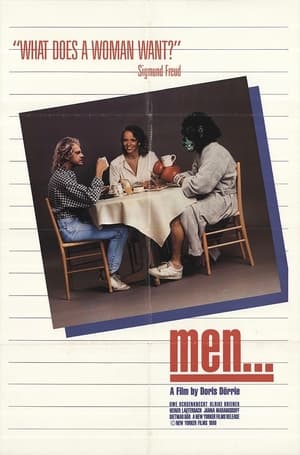
A successful, womanizing middle-aged man decides to move out of the house he shares with his wife after she confesses to having an affair. He looks for a new place to live and ends up moving into his wife's lover's apartment as a roommate. The husband begins to take an interest in the artistic work of the lover and coaches him for a big job interview. Little does he know that the job he's helping the lover to get is within his own company... A story about strange circumstances and the limits of friendship.
The semi-biographical The Extremists' Opera follows the everyday and inner struggles of a women-only alternative theater group delivering explosive and politically controversial explosive stage performances under the control of tough mannered director Naoko.
The youngest protagonist of the documentary is Wartburg, an automobile over 50 years of age. The car is still on the road, driven by Bogdan, a 70-year-old who is taking his mother to visit the German factory where she was forced to work during WWII. In this road movie which takes place between Majdanpek and Germany, the trip becomes a journey into the past, retracing memories from the war and revealing a unique relationship between an old son and his elderly mother.
Four young women continue the journey toward adulthood that began with "The Sisterhood of the Traveling Pants." Now three years later, these lifelong friends embark on separate paths for their first year of college and the summer beyond, but remain in touch by sharing their experiences with each other.
'Fill your Heart with French Fries' is a sad comedy short - telling the tale of a young woman who gets dumped by her girlfriend at a fast food joint, and, too sad to leave, just stays there for a week.
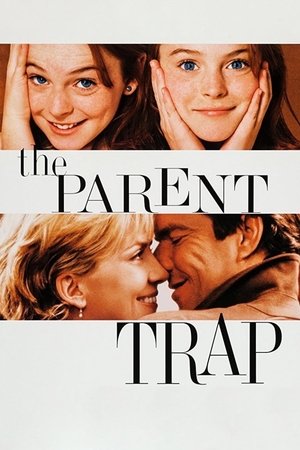
Hallie Parker and Annie James are identical twins who were separated at a young age due to their parents' divorce. Unbeknownst to their parents, the girls are sent to the same summer camp, where they meet, discover the truth about their relationship, and come up with a plan to switch places in an effort to reunite their mother and father.
In 1947, two years after the end of the Second World War, Film Journal No. 1 was released in Sarajevo. Fifty years later, after the collapse of the Communist bloc, this newsreel was lost in the confusion of the fighting in Yugoslavia. In Journal No. 1 Hito Steyerl attempts to find out how the footage got lost and what was on this document from the Sutjeska studio. In the simultaneous projection of Journal No. 1 the ‘unattainability of an historical zero hour of the national identity’ takes concrete form: The lost newsreel reports on a literacy campaign as well as Muslim women confidently removing their headscarves. We listen however to eyewitnesses trying to recapture the lost content and we see the artist Arman Kulasic making a number of drawings that resemble the story-boards for the lost film. What appears to be moments of great change remain limited by subjective and uncertain memory. The film was premiered at documenta 12.
Maggie Cooper thinks it would be really cool if her son Lloyd were gay. So cool, in fact, that she outs him to the entire school.
Lawyer Thomas Neumann is extremely successful in his career and happily married to his wife Bettina. Nevertheless, he has a mistress on the side, who one day reveals to him that she wants him to have a child. Thomas agrees, but a sperm test reveals that he is infertile. Now he asks himself the question: who is the real father of his children? His brother Johannes, a priest, helps him to find out the truth. Thomas suspects two former friends with whom he and Bettina used to go on vacation. He invites them to his home so that he can carry out comparative studies in peace, as genetic testing didn't exist back then. One friend has gone mad, the other is blind. The two of them cause Thomas' household a great deal of confusion, especially as he has to entertain an important business partner from overseas at his home.
Three sisters - Georgia, Eve, and Maddy - do what they do best with life, love, and lunacy on the telephone lines that bind - when their curmudgeonly father, Lou, is admitted to a Los Angeles Hospital. After years of wild living, intermittent affection, and constant phoning, he is finally threatening to die.
Buddhist monks open up about the joys and challenges of living out the precepts of the Buddha as a full-time vocation. Controversies swirling within modern monastic Buddhism are examined, from celibacy and the role of women to racism and concerns about the environment.
Home-video footage of infants playing transforms into an experimental display of rotoscope animation.
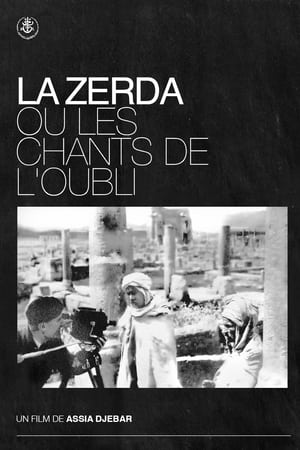
“La Zerda and the songs of oblivion” (1982) is one of only two films made by the Algerian novelist Assia Djebar, with “La Nouba des femmes du mont Chenoua” (1977). Powerful poetic essay based on archives, in which Assia Djebar – in collaboration with the poet Malek Alloula and the composer Ahmed Essyad – deconstructs the French colonial propaganda of the Pathé-Gaumont newsreels from 1912 to 1942, to reveal the signs of revolt among the subjugated North African population. Through the reassembly of these propaganda images, Djebar recovers the history of the Zerda ceremonies, suggesting that the power and mysticism of this tradition were obliterated and erased by the predatory voyeurism of the colonial gaze. This very gaze is thus subverted and a hidden tradition of resistance and struggle is revealed, against any exoticizing and orientalist temptation.
This film is an album of Native womanhood, portraying a proud matriarchal society that for centuries has been pressured to adopt different standards and customs. All of the women featured share a belief in the importance of tradition as a source of strength in the face of change.
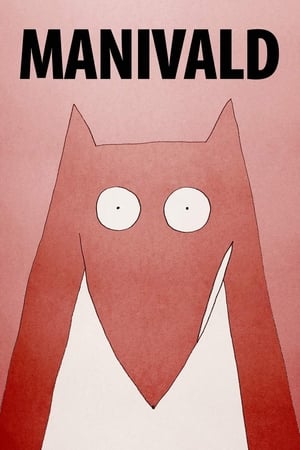
Manivald is a fox in his early 30s. He is still living at home with his mother. One day a young hot wolf called Toomas comes to fix the washing machine. A love triangle develops between the three of them. Things get out of hand and Manivald realizes that it is time to move out.
Jenny is on the road in her film producer's Rolls-Royce, which she has to drive to a film shoot and a wedding. When she gets lost at night, she finds a wrecked car in the ditch and rescues a skinhead.
Aymé Pigrenet, a recently widowed farmer, is eager to find a new wife to help him run his farm. Desperate, he seeks the aid of a local matchmaker who suggest that he go to Romania to find a new wife. There he meets Elena.
In a time when girls were forbidden to study religious scriptures, a Jewish girl masquerades as a boy to enter religious training and unexpectedly finds love along the way.
...Her son-in-law, Ippolit Matwejewitch Worobjaninow, is a former nobleman and a dandy who is currently wasting away as a small town magistrate in charge of civil marriages. He eagerly takes up the quest to find the treasure. Meanwhile, over the years, the twelve chairs have been dispersed all over the country. However, Worobjaninow is not the only one in pursuit of the treasure. Hot on its trail are Ostap Bender, a clever and colorful conman, as well as Father Fjodor, a priest to whom the wealthy aristocrat has also confessed her secret. Thus begins a wild chase that ranges from North to South, West to East, across water and land, from the country to the city.
Sara, a cold college professor, and her husband, an ecstatic painter, spend a summer away from the city, straining their rocky relationship.