Richard Jones’ “La bohème” is an important weapon in the Royal Opera’s commercial arsenal. This is its second revival since Jones’ production hit the stage in autumn 2017, replacing John Copley’s beloved 40-year old staging, resplendent with period detail and resolutely naturalist. Jones brings a considerable break with the past in his approach, pointing the way towards thought-provoking possibilities for the work, though it is a clearly a show that defers to the need for regular revival and breadth of appeal.
Royal Opera favourite Bryn Terfel heads the cast for this new production of Donizetti’s comedy of domestic drama across two generations. The witty story of a middle-aged man whose supposed young wife runs rings around him – with her own ulterior romantic purpose in mind – has long delighted and surprised audiences, not least as presented with the sparkle of its music and the virtuoso skill of its performers. Damiano Michieletto’s exhilarating production shows how contemporary the characters still are and how immediate and touching the story remains.
The Snow Queen is Hans Abrahamsen's first opera, composed to a self-penned libretto, based on Hans Christian Andersen's eponymous fairy tale. Following an in-depth study of the topic of snow and a life-long obsession with Andersen's fairy tales, Abrahamsen composed the opera between 2014 and 2018. Hans Abrahamsen's music, with it's smooth transitions and subtly modified repeats, lends the lyrics both depth and lightness. He is keen to point out the range of avenues for interpretation available. " It's possible to read the fairy tale in a variety of ways. It contains many mysteries which are open to numerous interpretations." Accompanying Barbara Hannigan is a top-class ensemble of singers, including Peter Rose, Katarinya Dalayman and Rachael Wilson. Cornelius Meister is the musical director, currently general music director at the Staatsoper Stuttgart.
Simon Keenlyside smolders dangerously in the title role of Mozart’s version of the legend of Don Juan, creating a vivid portrait of a man who is a law unto himself, and all the more dangerous for his eternally seductive allure. Adam Plachetka is his occasionally unruly servant Leporello. It’s when Giovanni tangles with Donna Anna (Hibla Gerzmava) that things start to unravel, aided by the reappearance of Donna Elvira (Malin Byström), who is determined not to let her seducer go. With Paul Appleby as Don Ottavio, Donna Anna’s eternally steadfast fiancé. Principal Conductor Fabio Luisi leads the Met Orchestra and Chorus.
Like Handel’s Orlando (1732) and Ariodante (1734), Alcina derives from the narrative material in Ariosto’s Orlando furioso. The story of the sorceress Alcina, an initially hedonistic, manipulative woman who later finds herself a victim of love, fits into the genre of the ‘magical opera’ with numerous magical elements, but Handel achieved considerable emotional authenticity in his characterisations. This makes Alcina one of the most deeply felt and multifaceted operas. ‘You may despise what you like ; but you cannot contradict Handel,’ said the Irish playwright George Bernard Shaw. As in Tamerlano, Pierre Audi based this production on the stage at the baroque theatre at Drottningholm, for which he originally developed the directing concept. His set is thus based on the principles of perspective, with wings in the form of painted panels. The result is marvellous modern musical theatre in a historizing frame.
Disciplined Italian composer Antonio Salieri becomes consumed by jealousy and resentment towards the hedonistic and remarkably talented young Salzburger composer Wolfgang Amadeus Mozart.
Beethoven’s only opera is a masterpiece, an uplifting story of risk and triumph. In this new production, conducted by Antonio Pappano, Jonas Kaufmann plays the political prisoner Florestan, and Lise Davidsen his wife Leonore (disguised as ‘Fidelio’) who daringly sets out to rescue him. Set in strong counterpoint are the ingredients of domestic intrigue, determined love and the cruelty of an oppressive regime. The music is transcendent throughout and includes the famous Act I Quartet, the Prisoners’ Chorus and Florestan’s impassioned Act II cry in the darkness and vision of hope. Tobias Kratzer’s new staging brings together the dark reality of the French Revolutionary ‘Terror’ and our own time to illuminate Fidelio’s inspiring message of shared humanity.
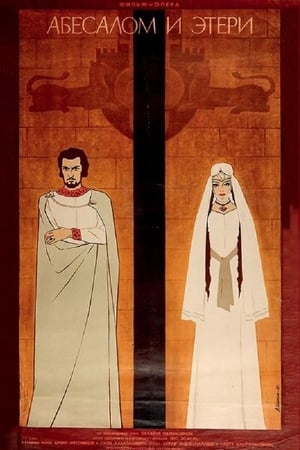
Prince Abesalom runs into an orphaned Eteri while hunting, falls for her and brings the woman to his palace as his fiancé. The Prince’s aid Murman loses his self-control at Eteri’s beauty and gives her a spelled necklace as a wedding gift. Eteri contracts a mysterious disease that only Murman is capable to heal.
Live recording of a stage performance at the Glyndebourne Theatre, 24 August 1973, directed by Sir Peter Hall.
The 2021 production by the Dutch National Opera of the work by German composer Rudi Stephan (1887–1915) "Die ersten Menschen" ("The First Humans"), completed in 1914 to a libretto by Otto Borngräber interpreting the Biblical story of the Garden of Eden through symbolism and the then nascent science of psychoanalysis. This production was part of the Holland Festival of Amsterdam.
Bastien a Bastienka
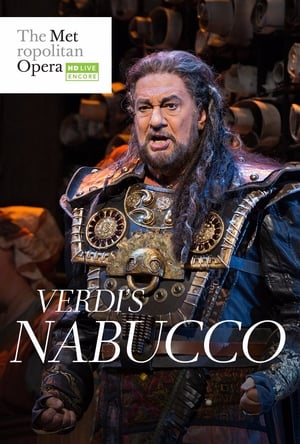
Nabucco, King of Babylon, takes Jerusalem in his war with the Israelites – but his daughter Fenena loves the Israelite Ismaele. She releases their prisoners, leading her vengeful half-sister Abigaille to plot to take power. Nabucco declares himself a god and is struck by a bolt of lightning. Abigaille tricks the now feeble king into signing a death warrant for the Israelites, including Fenena and Ismaele. Nabucco prays to the God of Israel for forgiveness; his sanity is restored and he saves the prisoners from death. He converts himself and his people, while Abigaille commits suicide.
The first-ever audio-visual recording of this opera – directed by Christof Loy, conducted by Marc Albrecht and with Sara Jakubiak, Brian Jagde and Josef Wagner in the leading roles
The world premiere of composer Kaija Saariaho's opera, "Innocence", at the 2021 Aix-en-Provence Festival. Finland is the setting but the protagonists come from the four corners of Europe: a Finnish groom and his Romanian bride, a French mother-in-law and a Czech maid. Around them memories unravel in a contemporary tragedy of guilt and lost innocence.
Last production staged by Patrice Chéreau, this Elektra will remain as the main and most striking lyrical event of these last years in Aix-en-Provence. This production is leaded by three amazing singers: the German soprano Evelyn Herlitzius gave a tremendous, never-to-be-forgotten account of the title role, Waltraud Meier portrays a human and chilling Clytemnestra and Adrianne Pieczonka is a fantastic Chrysothemis. Everyone's loneliness and intimate struggles are Patrice Chéreau's favorites theatrical themes. With Esa-Pekka Salonen conducting the Orchestre de Paris, this production of Elektra becomes an unforgettable experience.
Starring Jonas Kaufmann as Bacchus and featuring Emily Magee with Daniel Harding conducting the Vienna Philharmonic, Ariadne auf Naxos was filmed at the acclaimed Salzburg Festival in 2012. This release also includes "Le Bourgeois gentilhomme."
The young soldier Don José intends to marry Micaëla, a girl from his home village. But when he meets the sensual and high-spirited Carmen, he sacrifices everything to be with her. Carmen grows tired of Don José and falls in love with the toreador Escamillo. Unable to bear her leaving him, Don José tracks Carmen down to a bullring where Escamillo is fighting and murders her.
In the Summer of 2009, the British director Nigel Lowery and the Iranian choreographer Amir Hosseinpour brought to the stage of the Berlin State Opera Unter den Linden, with colour and full of humour, the fantastic and imaginative adventures of "Racing Roland". On the occasion of the 200th anniversary of the death of Joseph Haydn, the composer's most renowned opera during his lifetime,Orlando Paladino, was performed, a heroic-comical stage piece based on Ariost's famous Versepos. Singers such as Marlis Petersen (Angelica), Tom Randle (Orlando), Alexandrina Pendatchanska (Alcina), Pietro Spagnoli (Rodomonte), Sunhae Im (Eurilla) and Victor Torres (Pasquale) performed under the musical direction of period-music specialist René Jacobs. The Freiburg Baroque Orchestra completed this high-class production giving the music a beautiful sound and lively swing.
Lucia’s brother Enrico is horrified to learn she has fallen in love with his sworn enemy Edgardo. He hastily arranges her marriage to his associate Arturo. Edgardo and Lucia privately exchange rings before he leaves to fight in France. Enrico tricks Lucia into believing that Edgardo has been unfaithful. Longing for death, she signs the contract with Arturo – moments before Edgardo returns. Lucia murders Arturo in their wedding bed. His death is followed first by Lucia’s, and then by Edgardo’s.
The priestess Norma loves Pollione, leader of the occupying force suppressing her people, and has borne two children by him. But Pollione’s love has withered, and he now loves Norma’s fellow priestess Adalgisa. Meanwhile, the people urgently look to Norma to lead their rebellion. Norma discovers the love between Pollione and Adalgisa. Furiously she gives the signal for war. Pollione is captured, attempting to steal away with Adalgisa. Norma, called upon to announce a sacrificial victim to consecrate the uprising, declares it shall be a guilty priestess: herself.