The Cold War and Civil Rights collide in this remarkable story of music, diplomacy and race. Beginning in 1955, when America asked its greatest jazz artists to travel the world as cultural ambassadors, Louis Armstrong, Dizzy Gillespie, Duke Ellington and their mixed-race band members, faced a painful dilemma: how could they represent a country that still practiced Jim Crow segregation?
The multi-award-winning Finnish documentarian Mika Kaurismäki, brother of Aki Kaurismäki (The Man Without a Past), helms the nonfiction work Sonic Mirror -- a protracted exploration of rhythm as one of life's driving forces. Revered drummer Billy Cobham serves as host, taking the audience on a long musical journey around the world and through a myriad of musical genres and styles. Cobham, Kaurismäki, and co. segue from Western concert halls and stages to the music of African tribes performed by Brazilian street children to the distinct music of autistic patients. Along the way, the filmmakers raise serious questions about the function of music as an identifying force, a means of communication, and an emotional release; they also probe the enduring connections between group awareness and self-awareness. The film ultimately builds to a hugely affirming and cathartic expression of music as collective expression that unifies its performers in spirit.
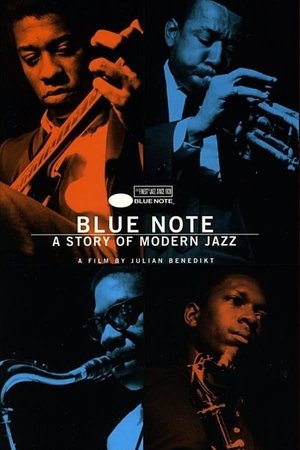
Explore the vision behind the iconic American jazz record label. Since 1939, Blue Note artists have been encouraged to push creative boundaries in search of uncompromising expressions. Through current recording sessions, rare archive and conversations with iconic Blue Note artists, the film reveals an intimate perspective of a legacy that continues to be vital in today’s political climate.
A musical documentary accompaniment to the 1994 benefit compilation album concerning AIDS in the African-American community.
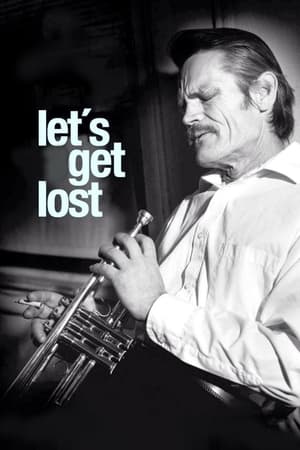
Documentary about jazz great Chet Baker that intercuts footage from the 1950s, when he was part of West Coast Cool, and from his last years. We see the young Baker, he of the beautiful face, in California and in Italy, where he appeared in at least one movie and at least one jail cell (for drug possession). And, we see the aged Baker, detached, indifferent, his face a ruin. Includes interviews with his children and ex-wife, women companions, and musicians.
A documentary film about the life of pianist and jazz great Thelonious Monk. Features live performances by Monk and his band, and interviews with friends and family about the offbeat genius.
On stage since she was a toddler, Googoosh has been an icon of Iranian pop culture since the 1970s. Her progressive style and raw singing talent attracted worldwide acclaim and saw her performing alongside the likes of Tina Turner and Ray Charles. But the star's career came to an abrupt halt after the Islamic Revolution, which banned women from singing in public. Googoosh was placed under house arrest, where she remained for the next two decades. Niloufar Taghizadeh's documentary, which includes interviews with the charismatic singer (now in her seventies, but still performing and advocating for women and girls) and arresting archival footage, offers both a loving portrait of a national icon and a fascinating historical and cultural record of Iran.
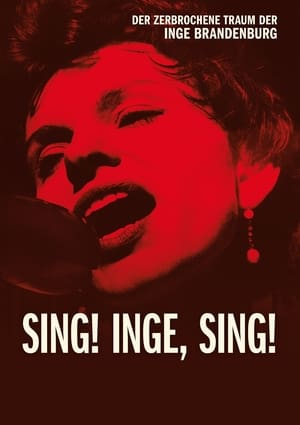
Fictional film with documentary elements about a jazz musician in Berlin.
A comprehensive history of European Jazz, exploring the origins of the US-influenced Jazz clubs after the Second World War, the first steps independent of American jazz and the various changes of direction that have repeatedly occurred in European jazz in the search for that "own voice" that European jazz musicians have helped to form. Featuring the great masters of European jazz such as Chris Barber, Jan Garbarek, Juliette Gréco, Stefano Bollani and Till Brönner, to name but a few.
Narrated by Phil Harris, a longtime friend of Fountain's, "Pete!" uses performance film, interviews, behind-the-scenes footage and a home videos to offer an intimate portrait of Fountain, the walking, talking embodiment of his hometown. Produced and directed by by John Beyer, the film originally aired on PBS stations nationwide. When it aired locally as part of a PBS membership drive, "Pete!" was credited with raising "more than had ever been raised by a single program in the history of WYES," according to a story published in The Times-Picayune in August 1980.
An intimate look into the life of icon Quincy Jones. A unique force in music and popular culture for 70 years, Jones has transcended racial and cultural boundaries; his story is inextricably woven into the fabric of America. Jones came to prominence in the 1950s as a jazz arranger and conductor before working on pop music and film scores. He moved easily between musical genres, producing major pop hits of the early 1960s and serving as an arranger and conductor for several collaborations in the same time period.
A documentary about the life and career of American jazz guitarist Tal Farlow
"It must schwing!" was the motto of Alfred Lion and Francis Wolff, two German Jewish immigrants who in 1939 set up Blue Note Records, the jazz label that was home to such greats as Miles Davis, John Coltrane, Herbie Hancock, Thelonious Monk, Art Blakey, Dexter Gordon and Sonny Rollins. Blue Note, the most successful movie ever made about jazz, is a testimony to the passion and vision of these two men and certainly swings like the propulsive sounds that made their label so famous.
A music documentary made with Sun Ra.
Stop for Bud is Jørgen Leth's first film and the first in his long collaboration with Ole John. […] they wanted to "blow up cinematic conventions and invent cinematic language from scratch". The jazz pianist Bud Powell moves around Copenhagen -- through King's Garden, along the quay at Kalkbrænderihavnen, across a waste dump. […] Bud is alone, accompanied only by his music. […] Image and sound are two different things -- that's Leth's and John's principle. Dexter Gordon, the narrator, tells stories about Powell's famous left hand. In an obituary for Powell, dated 3 August 1966, Leth wrote: "He quite willingly, or better still, unresistingly, mechanically, let himself be directed. The film attempts to depict his strange duality about his surroundings. His touch on the keys was like he was burning his fingers -- that's what it looked like, and that's how it sounded. But outside his playing, and often right in the middle of it, too, he was simply gone, not there."
Stories and music of Black artists who relied on an underground travel guide to navigate the injustices of racial segregation while on the road. The Negro Travelers’ Green Book was a directory of lodgings, restaurants, and entertainment venues where African Americans were welcomed. Features performances and interviews with vocalists, musicians, activists, historians, and others.
Tenor saxophonist, composer and producer Kamasi Washington and his band perform a special show at Harlem's legendary Apollo Theater for the theatre's 85th year anniversary. Washington explores Harlem's rich musical and cultural history and the city's influence on his generation of artists.
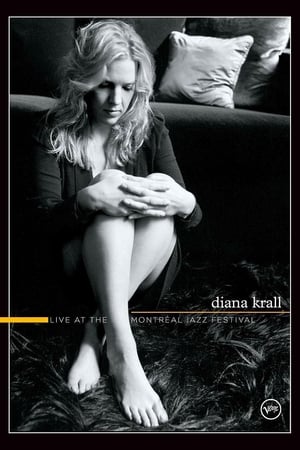
Diana Krall | Live at the Montreal Jazz Festival
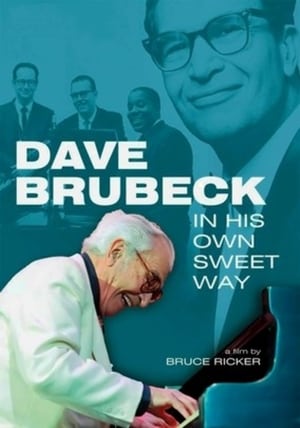
A chronological look at the life and career of jazz musician, composer, and performer Dave Brubeck (1920-2012 ), presented through contemporary interviews, archival footage of interviews and performances, and commentary by family, fellow musicians, and aficionados. Emphases include his mother's influence, his wife's invention of college tours, his skill as an accompanist, the great quartet (with Desmond, Morello, and Wright), his ability to find musical ideas everywhere, his orchestral compositions, his religious conversion, and his unflagging sweet nature.
Set to a classic Duke Ellington recording "Daybreak Express", this is a five-minute short of the soon-to-be-demolished Third Avenue elevated subway station in New York City.