The order comes in the summer of 1941 from propaganda minister Joseph Goebbels himself: The best animators are summoned to Berlin. Their task: Producing feature-length cartoons in ‘Disney-Quality’ with the newly founded ‘Deutsche Zeichenfilm GmbH’. To get trained, the Disney movie “Snow White” is re-traced frame by frame. After the final victory, one new feature-length production of quality shall be released every year from 1947 onwards. – that is the plan. Only in 1943, the first production is completed: “Armer Hansi” a 17-minute-long colour movie, realized with the effortful Multiplane-technology. The second film by the ‘Deutsche Zeichenfilm’ is only completed in 1946 – by DEFA. In the territories occupied by Germany, cartoons are produced as well, sometimes harmless ones, sometimes propagandistic ones. With excerpts from animated movies, life-action film documents, and witness reports by contemporaries, this documentary draws a picture of the cartoon production in the third Reich.
Starting with a long and lyrical overture, evoking the origins of the Olympic Games in ancient Greece, Riefenstahl covers twenty-one athletic events in the first half of this two-part love letter to the human body and spirit, culminating with the marathon, where Jesse Owens became the first track and field athlete to win four gold medals in a single Olympics.
Part two of Leni Riefenstahl's monumental examination of the 1938 Olympic Games, the cameras leave the main stadium and venture into the many halls and fields deployed for such sports as fencing, polo, cycling, and the modern pentathlon, which was won by American Glenn Morris.
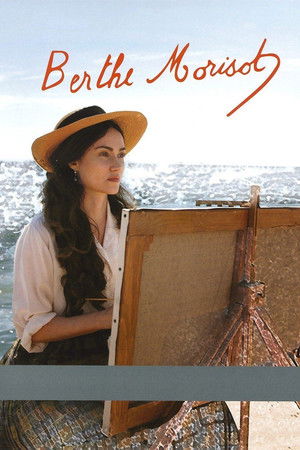
At 25, Berthe dreams of making a living from her painting, never to marry, and to always stay with her sister Edma. Her parents do not see things from the same angle. Then Berthe meets Edouard Manet, who takes an interest in this young artist apprentice whose face inspires him.
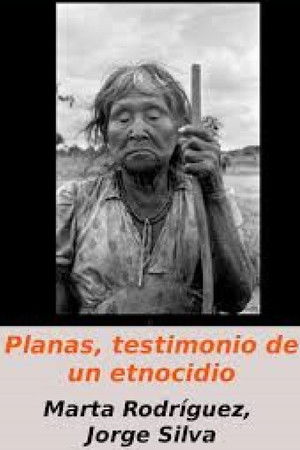
A documentary on the massacre of Planas in the Colombian east plains in 1970. An Indigenous community formed a cooperative to defend their rights from settlers and colonists, but the government organized a military operation to protect the latter and foreign companies.
A woman mysteriously wakes up in a hotel handcuffed to a firefighter to find messages they left themselves the night before revealing that their lives are in danger.
A gifted singer, struggling with addiction on the streets of Skid Row, sets out on a journey to transform his life.
Funny collage of sea, sun and ice. A show from the beach with skiers, tigers, mermaids and much more.
A vibrant kaleidoscopic tribute to the guitar that meshes dance, mime, visual art, and virtuoso performances to create a spectacular yet intimate celebration of the instrument. For one exciting week the city of Toronto plays host to the International Guitar Festival. The streets echo with the sounds of the instrument as the great masters from every tradition gather to play for each other -- John Williams from England, Leo Brouwer from Cuba (classical), Turibio Santos from Brazil (folk), Vladimir Mikulka from Czechoslovakia (avant-garde), Rik Emmett and Kim Mitchell from Canada, Steve Morse from the USA (rock).
Muhammad Yunus, Nobel Peace prize winner, is known in the whole world as the banker of the poor, because he pioneered and tested a funding system in Bangladesh: by lending little sums of money to the less well-off with no interest, and returning it by installments gained with their work, people are able to get free from extreme misery. Thus, what can happen if three boys, just graduated, who live in Naples, try to import this funding system that subverts every economic rule?
In 1953 Dylan Thomas went to New York for the last time, his marriage a wreck, his drinking out of control. He was on his way to meet Stravinsky and to wallow in New York acclaim - but what was he escaping? How did such a triumph become a requiem? The last days of a great poet.
A group of people are standing along the platform of a railway station in La Ciotat, waiting for a train. One is seen coming, at some distance, and eventually stops at the platform. Doors of the railway-cars open and attendants help passengers off and on. Popular legend has it that, when this film was shown, the first-night audience fled the café in terror, fearing being run over by the "approaching" train. This legend has since been identified as promotional embellishment, though there is evidence to suggest that people were astounded at the capabilities of the Lumières' cinématographe.
A new uranium mill -- the first in the U.S. in 30 years -- would re-connect the economically devastated rural mining community of Naturita, Colorado, to its proud history supplying the material for the first atomic bomb. Some view it as a greener energy source freeing America from its dependence on foreign oil, while others worry about the severe health and environmental consequences of the last uranium boom.
A Zen priest in San Francisco and cookbook author use Zen Buddhism and cooking to relate to everyday life.
The Purity Ball symbolizes a father's protection over his daughter's virginity, but how does this reflect in the choices she makes, understanding her sexuality, and knowing her worth as a woman? This documentary examines the effects of Abstinence-Only Programs versus Comprehensive Sex Education in schools and what society can do to help lower teen pregnancies, abortions, and STDS, as well as poverty and sexual abuse.
Hugues Aufray, l'éternel jeune homme
An inspiring documentary chronicling the rise, fall and resurrection of '80s metal band Quiet Riot. The career of Frankie Banali, the band's drummer, reached a serious crossroads when his best friend and bandmate died in 2007. Years later, Banali realizes he must forge ahead and make a new life for himself and his daughter and he goes on a quest to reunite the band and fill the immense void left by his bandmate.
Underwater Dreams, narrated by Michael Peña, is an epic story of how the sons of undocumented Mexican immigrants learned how to build underwater robots. And go up against MIT in the process.
October 2004. Uruguay. After three years away Mariana returns to her country to be reunited with her family and also to vote. After the economic crisis that plunged the country into a terrible depression, Uruguay is on the brink of a real change. We are shown day to day life in Melo, a small provincial city, we are given an intimate insight into a family of militant leftists, and we accompany a Latin American people in the month leading up to a historic political event: the first ever election victory in Uruguay of a party from the political left, the Frente Amplio.
Titus Andronicus returns from the wars and sees his sons and daughters taken from him, one by one. Shakespeare's goriest and earliest tragedy.