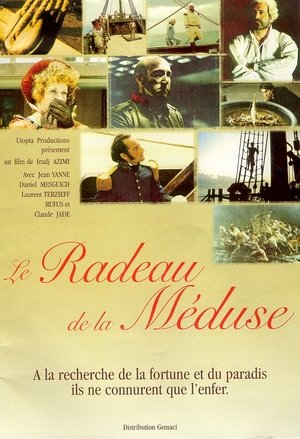
Iranian Iradj Azimi directed this French historical drama re-creating events depicted in the famous 1819 painting The Raft of the Medusa by Jean Louis Andre Theodore Gericault (1791-1824). The ill-fated voyage of the frigate Medusa begins when it departs Rochefort for Senegal in 1816. After striking a sandbar off the African coast, 150 civilians row safely to shore, but Captain Chaumareys (Jean Yanne) orders 140 soldiers and sailors onto a raft (minus supplies) and has it cut loose. Only 14 survive from the 140, creating a scandal back in France. Gericault (Laurent Terzieff) later talks to three of the survivors while researching his painting. Work on this film began in 1987, but sets destroyed by Hurricane Hugo caused delays, so the film was not completed until 1990. However, it then remained undistributed until an incident in which writer-director Azimi slashed his wrists in front of French Ministry of Culture officials.
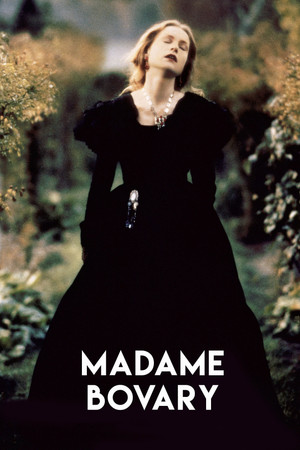
In 19th-century France, doctor's wife Emma Bovary seeks to escape her dull provincial life through various extramarital affairs and extravagant spending, leading to tragic consequences.
Set in a dugout in Aisne in 1918, a group of British officers, led by the mentally disintegrating young officer Stanhope, variously await their fate.
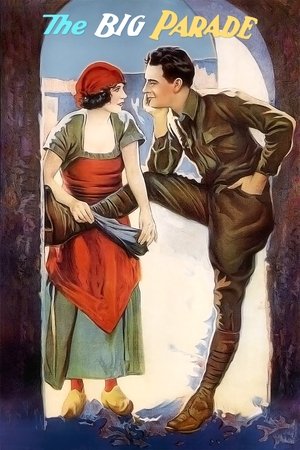
The story of an idle rich boy who joins the US Army's Rainbow Division and is sent to France to fight in World War I, becomes friends with two working class men, experiences the horrors of trench warfare, and finds love with a French girl.
Les gens du Nord
From the mean streets of the Belleville district of Paris to the dazzling limelight of New York's most famous concert halls, Edith Piaf's life was a constant battle to sing and survive, to live and love. Raised in her grandmother's brothel, Piaf was discovered in 1935 by nightclub owner Louis Leplee, who persuaded her to sing despite her extreme nervousness. Piaf became one of France's immortal icons, her voice one of the indelible signatures of the 20th century.
"Race d’Ep!" (which literally translates to "Breed of Faggots") was made by the “father of queer theory,” Guy Hocquenghem, in collaboration with radical queer filmmaker and provocateur Lionel Soukaz. The film traces the history of modern homosexuality through the twentieth century, from early sexology and the nudes of Baron von Gloeden to gay liberation and cruising on the streets of Paris. Influenced by the groundbreaking work of Michel Foucault on the history of sexuality and reflecting the revolutionary queer activism of its day, "Race d’Ep!" is a shockingly frank, sex-filled experimental documentary about gay culture emerging from the shadows.
Au revoir les enfants tells a heartbreaking story of friendship and devastating loss concerning two boys living in Nazi-occupied France. At a provincial Catholic boarding school, the precocious youths enjoy true camaraderie—until a secret is revealed. Based on events from writer-director Malle’s own childhood, the film is a subtle, precisely observed tale of courage, cowardice, and tragic awakening.
During the events of May 1968 in France, different worldviews of conflicting relatives collide in their family estate.
Sophie, a quiet and shy maid working for an upper-class French family, finds a friend in the energetic and uncompromising postmaster Jeanne, who encourages her to stand up against her bourgeois employers.
A 19-year-old searches for her twin brother after he runs away from home, following a fight with their father.
A group of teenagers living in a housing project in the outskirts of Paris rehearse a scene from Marivaux's play of the same name. Krimo is determined not to take part, but after developing feelings for Lydia, he quickly assumes the main role and love interest in the play.
Reluctantly, a sulky adolescent returns to her parents' house for yet another boring summer vacation, dabbling in desire and the art of desirability, eventually mixing reality with vision, caged fantasies with the fierce female sexuality.
Martinaud, an illustrious notary suspected of being the perpetrator of two horrendous crimes, voluntarily agrees to be questioned by Inspector Gallien on New Year's Eve. What initially is a routine procedure, soon becomes a harsh interrogation that seems to confirm the initial suspicions.
Orphaned after a Nazi air raid, Paulette, a young Parisian girl, runs into Michel, an older peasant boy, and the two quickly become close. Together, they try to make sense of the chaotic and crumbling world around them, attempting to cope with death as they create a burial ground for Paulette's deceased pet dog. Eventually, however, Paulette's stay with Michel's family is threatened by the harsh realities of wartime.
Marquise is a drama about the rise and fall of a beauteous actress. As cheerfully portrayed by Sophie Marceau, the eponymous heroine is an engagingly ribald, but perhaps rather too modern, character. She rises from an impoverished background to become a favourite of the Sun King, Louis XIV, and the mistress of the celebrated Racine, who wrote roles especially for her; but her fate, in the end, is a tragic one.
Les Aliénés
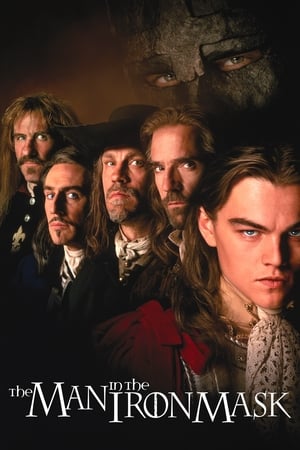
Years have passed since the Three Musketeers, Aramis, Athos and Porthos, have fought together with their friend, D'Artagnan. But with the tyrannical King Louis using his power to wreak havoc in the kingdom while his twin brother, Philippe, remains imprisoned, the Musketeers reunite to abduct Louis and replace him with Philippe.
Eric and Sarah are detectives who are investigating the murder of a professor which it seems like a gay hate crime. Married Eric becomes attracted to the pathologist, Emmanuel.
Danielle, a vibrant young woman, was forced into servitude after the death of her father when she was a young girl. Danielle's stepmother, Rodmilla, is a heartless woman who forces Danielle to do the cooking and cleaning, while she tries to marry off the eldest of her two daughters to the prince. But Danielle's life takes a wonderful turn when, under the guise of a visiting royal, she meets the charming Prince Henry.