In this sequel to the award-winning You’ve Been Trumped, director Anthony Baxter once again follows American billionaire Donald Trump and a cast of other greedy characters who want to turn some of the Earth’s most precious places into golf courses and playgrounds for the super rich. From the historic site of Dubrovnik to the ancient sand dunes and rolling green hills of the seaside town of Balmedie, these tycoons bully local residents, influence governments, ignore local referendums and even meddle in national environmental policies to acquire their latest trophies. With in-depth interviews and Baxter’s expert storytelling, we learn just how devastating these golf courses can be to the surrounding countryside and water tables. In this funny, inspiring and at times heartbreaking David and Goliath story for the 21st century, the locals don’t give in easily. But will their fight be enough to protect their land and traditional way of life?
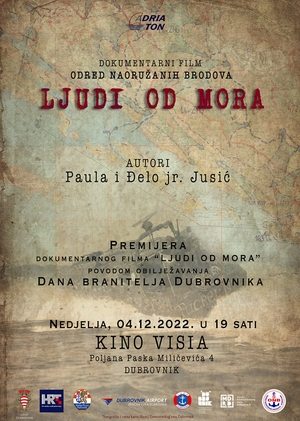
Documentary about The Armed Boats Squadron Dubrovnik, a volunteer unit of the Croatian Navy that ran the naval blockade during the siege of Dubrovnik which formed part of the Croatian War of Independence in 1991–1992.
Documentary about the second-oldest radio station in Croatia, established in 1942.
A solitary nurse bonds with a badly burned patient who survived an accident on an oil rig.
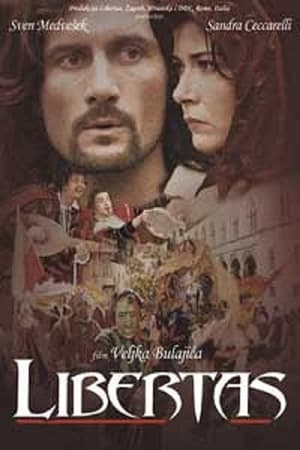
The film is set in mid-16th century, at a time when the entire eastern Mediterranean is dominated by two great empires, the Ottoman Empire and the Republic of Venice, with the small but wealthy maritime republic of Ragusa (modern-day Dubrovnik) managing to maintain its independence through diplomatic agreements.
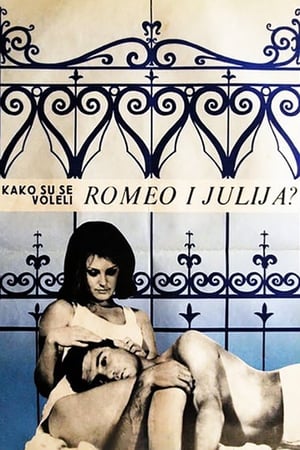
The story of unfortunate lovers from contemporary Belgrade, a young woman married for money, and a student whom she loved before marriage. Juvenile love romance gets extinguished by social intolerance, calculated and upstarted.
Documentary on the extreme conditions of the Namib Desert in the southwest of Africa, and on the extraordinary creatures who thrive there. With temperatures at nearly double that of the warmest temperate climes, it seems nothing could survive. Yet life flourishes, miraculously.
D'Artagnan and his musketeer comrades must thwart the plans of Cardinal Richelieu to usurp King Louis XIII's power.
Several years after the battle of Waterloo, a former soldier from Shoreditch sits in a London inn reminiscing about the brave and determined officer who took him to hell and back. The narrator is Rifleman Cooper, and the officer whose fame he recalls is the legendary Richard Sharpe.
“Manual of Evasion LX94” is a thought-provoking Dadaist film about time by the Portuguese director Edgar Pêra. It was shot in Lisbon in 1994 and stars Terence McKenna, Robert Anton Wilson and Rudy Rucker. Time is explored from many unusual angles, while Pêra fills the screen with a wide variety of bizarre and mind-warping imagery.
"Shot live for TV by the legendary German music show “Rockpalast” this DVD represents the earliest example of a complete Fahey concert performance. The multi-camera filming features detailed close-ups of Fahey’s playing style giving fans a rare insight into what Pete Townsend has called the William Burroughs of the guitar. Fahey’s 1978 visit to Europe saw him in fine wild form performing an 11 track set and as an incredibly rare bonus a short interview with the maverick iconoclast.
Eric Rohmer leads a conversation with Jean Renoir and Henri Langlois on the art of filmmaker Louis Lumière.
Documentary about the birth of bossa-nova, in Brazil, and the major stars of this musical style.
Filmmaker Marc Forster expresses his thoughts and reflections on life.
An obituary for Victor Jara, the Chilean folksinger who was murdered in a football stadium by the military junta during the days of the September 1973 coup.
Though he never actually worked in Hollywood, Rainer Werner Fassbinder, who died in 1982 at the age of 36, was influenced greatly by American studio films of the 1950s and the convention of melodrama (the link most often mentioned is Douglas Sirk).
The film portrays the Swedish playwright, novelist, poet, essayist and painter August Strindberg's life 1849-1912. Through his extensive correspondence and literary production, from the supposed first work, the drama "The Free Thinker" (1869), to the posthumously published "The Occult Diary" (published 1977 ). But also his three wives, Siri von Essen, Frida Uhl and Harriet Bosse, and the children Karin, Greta and Hans are given space in the film. The unpublished first drama "The Free Thinker", depicts a young man forced to break with family and tradition to follow his conscience and ideals, becomes a prophecy about the author's own life.
An hour-long discussion between Fritz Lang and Jean-Luc Godard in which they discuss a variety of art forms, the role of the cinema, their collaboration together, and much more. (Filmed in 1964 but released for TV in 1967.)
A look at the problems associated with cocaine use, including the toll it takes, not only on the users themselves but on society in general.
A series of interviews with Juan Domingo Perón in Madrid, where he was exiled. Filmed between June and October 1971, Perón talks about the current situation of the Justicialist movement and the steps to be taken to win the presidential elections again.