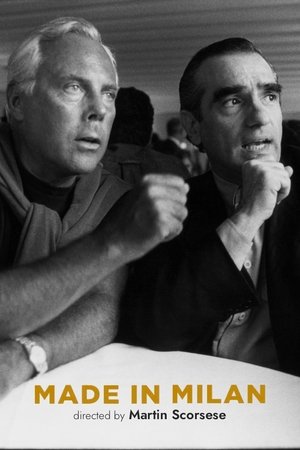
As he prepares for a show, fashion designer Giorgio Armani discusses his principles of fashion, his family history and the city of Milan.
“Convalescing, when you don't have to participate in the world. Time to read, to dream, to look - the blue, the light of the television, the blue, the book, the patterns the light, the blue. Time to appreciate how much that really is.”
Faces pass by in quickly edited, split-screen recordings. A 'structuralist' film in which the film material itself plays an important role. Grain, scratches and flickering give the film texture. The music is by Steve Reich.
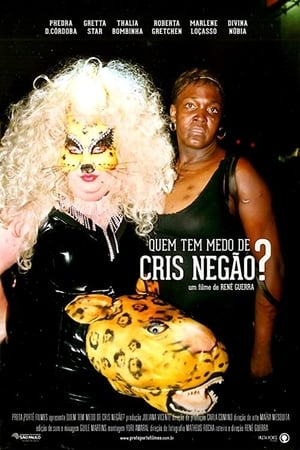
Cristiane Jordan, or Cris Negão, as she was called, was a transvestite who worked as a bawd in downtown of São Paulo known by her violent methods to control the other transvestites. Hated and feared by a legion, she also had her fans until she was tragically murdered with two shots in the head. The documentary is a dive into the transvestite universe through the stories of this legendary character of São Paulo's underworld.
A short film with shots of sculptures by Anneke Walvoort. The materiality of film plays an important role: visible grain, flashes of colour, unexpected camera movements.
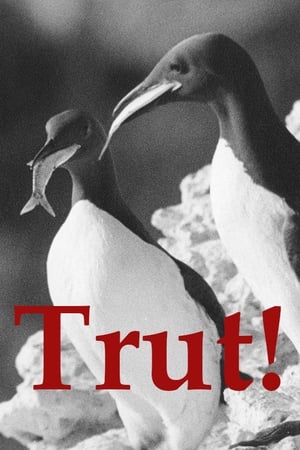
Arne Sucksdorff’s short documentary observes gulls raiding nests and stealing eggs with ruthless persistence. Though presented as pure nature study, the film was widely read as an allegory of Nazism—a symbolic parable of predation and violence during wartime. Sucksdorff himself denied such intent, but remarked that “a film that is not open to interpretation is a dead film.”
La niña más guapa de Aguilón
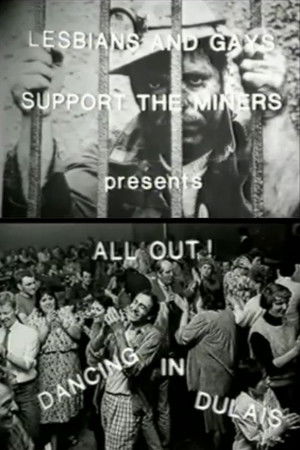
Dancing in Dulias was made by members of Lesbians and Gays Support the Miners (LGSM) and Lesbians Against Pit Closures during and immediate after the 1984/85 minders strike. Like the forthcoming movie, Pride, it documents the interactions between lesbians and gay men and the miners and their families in Dulais in South Wales - only this time it's the real thing. As well as some memorable footage that includes the Blaenant Lodge banner leading the 1985 Lesbian and Gay Pride march and LGSM members struggling with bingo at the local community hall, the film documents the wider political impact of this seemingly unlikely alliance. (cont. http://www.cambridgefilmfestival.org.uk/films/2014/dancing-in-dulais#sthash.HScQCj7E.dpuf)
A fascinating pictorial document: On an old, cluttered work ship, a man is helped on with a bulky, old fashioned diving suit. It's a complicated process, many layers and sections are carefully applied. He goes over the side. Some men row out to what looks like a wrecked barge and set dynamite. Then the diver returns and now laughs and acknowledges the camera. The other men, now safely away, blow up the barge.
A short dance film in Pathécolor, also know as stencil colouring. The editing cuts correspond with the dancers' costume changes. More about stencil colouring at http://zauberklang.ch/filmcolors/timeline-entry/1218/.
Documentary about the leader of the fascist party in The Netherlands, from 1931 till 1945. This architect called Anton Mussert was shot in 1946 after having been convicted for high treason and aiding the enemy.
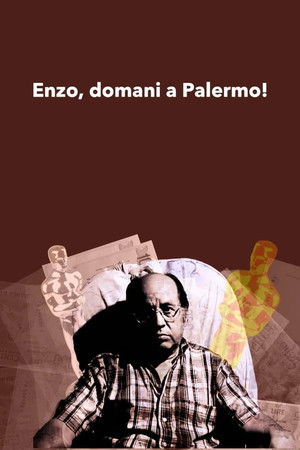
Ciprì and Maresco's delicious documentary portrays Sicilian super-agent Enzo Castagna, a man with some 20,000 extras on his books, who has worked with the likes of Loren, Pasolini, Rosi, Coppola and Cimino (indeed, virtually anyone who's ever chosen to film in Palermo). It's typically weird, witty and wonderful, partly due to its subject, a self-styled 'little big man' who consents to be described as 'almighty' and 'the greatest contributor to Italian cinema in the last 35 years'. The local favourite has also done time for bribery, but refuses to comment on Cosa Nostra. The film is as astonishing as its subject. Shot in luscious b/w, it's driven forward by an offscreen interrogator who alternates between ludicrously hyperbolic flattery and forthright questions about corruption and crime. It also serves as a study of the way ethics get abandoned in the unending pursuit of fame, wealth and self-esteem.
Dormente
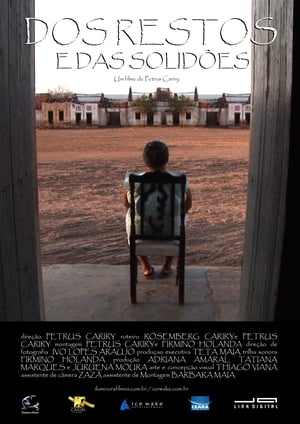
In the interior of the Inhamuns, the driest and poorest piece of land in Ceará, the ghost town of Cococi, among ruins and neglect, is a kind of living museum from immemorial times. In the middle of the deep caatinga, wandering among the ruins and the shadows, lives Dona Laura, 70 years old, brooding over memories and pain.
This documentary shows how the Berliner workers lived in 1930. The director Slatan Dudow shows through images: a) the workers leaving the factory; b) the raise of the rents; c) the "unpleasant" guest, meaning the justice officer that brings the eviction notice; d) the fight of classes of the houses of capitalists and working classes; e) the parks of the working class; f) the houses of the working class, origin of the tuberculosis and the victims; g) the playground of the working class; h) the swimming pool for the working class, ironically called the "Baltic Sea" of the working class; i) the effects of humidity of basement where a family lives, with one member deaf; j) one working class family having dinner while the capitalist baths his dog; k) the eviction notice received from an unemployed family and their eviction.
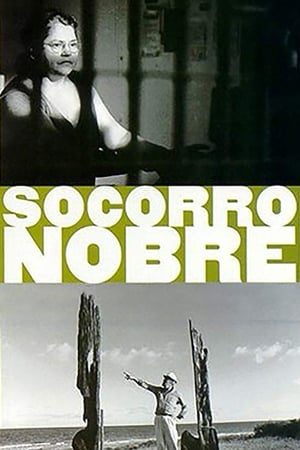
When the inmate Maria do Socorro Nobre reads an article about the Polish artist Franz Krajcberg in Veja magazine, she decides to write a letter to him. Socorro was sentenced to more than twenty-one years in a prison for women in Salvador, Bahia, while Franz is a tormented artist that lost his family and lived his childhood in a ghetto in Poland but survived the Holocaust. Franz moved to Brazil and recovered life wish living close to nature and inspires Socorro to dream with life again.
This public-school educational film warns of the dangers of cheating. John Taylor is struggling with his algebra course, and convinces his friend Mary to show him her answers during the tests. But when he is caught, his reputation among his fellow students, along with his student-council seat, is put in jeopardy.
Clouds 1969 by the British filmmaker Peter Gidal is a film comprised of ten minutes of looped footage of the sky, shot with a handheld camera using a zoom to achieve close-up images. Aside from the amorphous shapes of the clouds, the only forms to appear in the film are an aeroplane flying overhead and the side of a building, and these only as fleeting glimpses. The formless image of the sky and the repetition of the footage on a loop prevent any clear narrative development within the film. The minimal soundtrack consists of a sustained oscillating sine wave, consistently audible throughout the film without progression or climax. The work is shown as a projection and was not produced in an edition. The subject of the film can be said to be the material qualities of film itself: the grain, the light, the shadow and inconsistencies in the print.
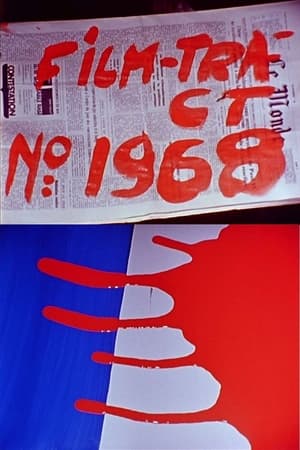
In the 1968 movement in Paris, Jean-Luc Godard made a 16mm, 3-minute long film, Film-tract No.1968, Le Rouge, in collaboration with French artist Gérard Fromanger. Starting with the shot identifying its title written in red paint on the Le Monde for 31 July 1968, the film shows the process of making Fromanger’s poster image, which is thick red paint flows over a tri-color French flag. —Hye Young Min
A 13-minute documentary film depicting life in Prague.