Mexican American Rodolfo P. Hernandez faced death along the 38th parallel, earning a Congressional Medal of Honor for valor during the Korean War. A story of heroism, perseverance and service, Hernandez proved that even in the most dire circumstances a wounded soldier can accomplish his mission and go on to greater service as a veteran.
Documentary film version of the stage show in which actress Cynthia Gates Fujikawa explores the story of her father, actor Jerry Fujikawa, who had a long career in films and television, most often as a stereotyped Asian. The daughter, in the course of searching out her late father's history, discovers many things that she had not known, among them that her father had spent time in Manzanar, the internment camp for Japanese-Americans during World War II, that he had had a family prior to hers, and that somewhere out there was a sister she had never known existed.
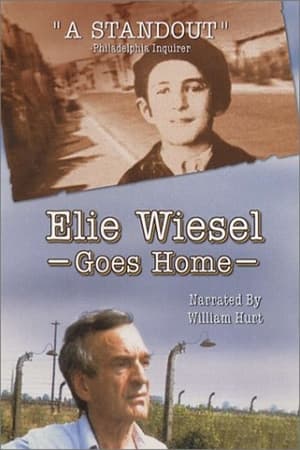
This chilling, vitally important documentary was produced to mark the 40th anniversary of the liberation of Auschwitz Concentration Camp. The film contains unedited, previously unavailable film footage of Auschwitz shot by the Soviet military forces between January 27 and February 28, 1945 and includes an interview with Alexander Voronsov, the cameraman who shot the footage. The horrifying images include: survivors; camp visit by Soviet investigation commission; criminal experiments; forced laborers; evacuation of ill and weak prisoners with the aid of Russian and Polish volunteers; aerial photos of the IG Farben Works in Monowitz; and pictures of local people cleaning up the camp under Soviet supervision. - Written by National Center for Jewish Film
Guy joins an ambitious engineering project to recover a crashed WW2 Lancaster Bomber – and the remains of its missing crew members – from the depths of the Dutch lake where it’s lain for 80 years.
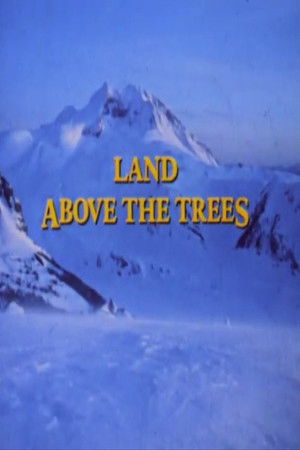
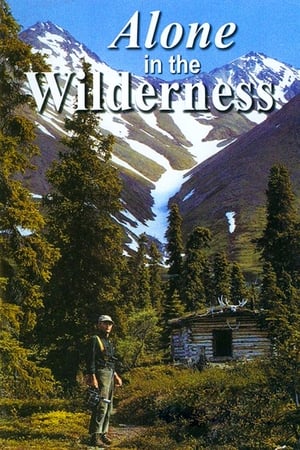
Dick Proenneke retired at age 50 in 1967 and decided to build his own cabin in the wilderness at the base of the Aleutian Peninsula, in what is now Lake Clark National Park. Using color footage he shot himself, Proenneke traces how he came to this remote area, selected a homestead site and built his log cabin completely by himself. The documentary covers his first year in-country, showing his day-to-day activities and the passing of the seasons as he sought to scratch out a living alone in the wilderness.
This documentary reveals the impacts of the Sixties Scoop, a period in which a series of Canadian policies enabled child welfare authorities to take, or “scoop up,” Indigenous children from their families and communities for placement in white foster homes. Explore Indigenous resilience through narrative sovereignty as experienced through the Little Bird series’ Indigenous creatives, cast, crew & community members.
The filmed account of a large Canadian rock festival train tour boasting major acts. In the summer of 1970, a chartered train crossed Canada carrying some of the world's greatest rock bands. The Grateful Dead, Janis Joplin, The Band, Buddy Guy, and others lived (and partied) together for five days, stopping in major cities along the way to play live concerts. Their journey was filmed.
Where are you, João Gilberto? sets out in the footsteps of German writer Marc Fischer who obsessively searched for the legendary founding father of Bossa Nova and last great musical legend of our time, Brazilian musician João Gilberto, who has not been seen in public for decades. Fischer described his journey in a book, Hobalala, but committed suicide one week before it was published. By taking up Marc Fischer's quest, following his steps one by one, thanks to all the clues he left us, we pursue João Gilberto to understand the history, the very soul and essence of Bossa Nova. But who can tell whether we will meet him or not?
This FitzPatrick Miniature visits the Union of Soviet Socialist Republics (USSR), the largest geographically unbroken political unit in the world, covering one-sixth of the world's land mass.
An unclassified US Navy introductory training film detailing the duties and training required of radio operators (aka radiomen).
Henry Ford, the legendary automobile manufacturer, James D. Mooney, the GM manager and Tom Watson, the IBM boss, were all awarded the Grand Cross of the German Eagle, the Nazis' highest distinction for foreigners, by Hitler for their services to the Third Reich. At this time, in 1937 and 1938, Hitler's armaments industry was running at full speed. The German subsidiaries of these American companies - Opel, the Ford Werke AG and Dehomag - had willingly allowed themselves to be integrated into the "Führer's" war preparations. The film concentrates on the companies which were indispensable for Hitler to wage war. The documentary is supported by new archive material, as well as interviews with contemporary witnesses and experts.
Made in 1940 and sponsored by the Ministry of Information this film shows the food contributions supplied to Britain by various colonies and dominions. 'Food from the Empire highlights the severity of the food issue, by discussing food production as a battle (...) and offers insights into British attitudes towards its colonies and dominions. The commentary notes that the ‘free people’ of these countries are ‘anxious to send every ounce they can to the United Kingdom for they know that upon the ability of Great Britain to hold out depends their own freedom’. Britain is depicted as a dominant power, fighting to protect those within the Empire, while the colonies are loyal and ‘anxious’ to help.' - Tom Rice, on the film from colonialfilm.org.
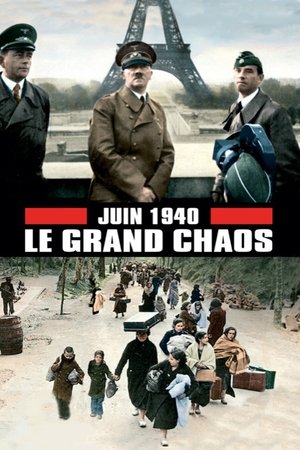
Hitler's invasion of Russia was one of the landmark events of World War II. This documentary reveals the lead-up to the offensive, its impact on the war and the brinksmanship that resulted from the battle for Moscow. Rare footage from both German and Russian archives and detailed maps illustrate the conflict, while award-winning historian and author John Erickson provides insight into the pivotal maneuvers on the eastern front.
As World War II looms, Pope Pius XI calls on a humble American priest to help him challenge the evils of Nazism and anti-Semitism. But death intervenes, and Pope Pius XII now carries out a very different response to Hitler and the Holocaust.
The award-winning filmmaker Peter Lilienthal is dedicated to this extremely poignant documentary of U.S. military policy and the living conditions of former resistance fighters in Latin America.
Go head-to-head with an icebreaker. Plunge down a twisting mountain gorge. Soar through the clouds in the nosecone of a jet, then speed along with a dog team as it races across a frozen Arctic lake. A sweeping, moving tribute to Canada's stunning geography and rich cultural heritage, Momentum leaps off your screen--and touches your heart. Momentum wowed audiences from around the world when it premiered at Seville, the greatest world's fair of the last quarter century.
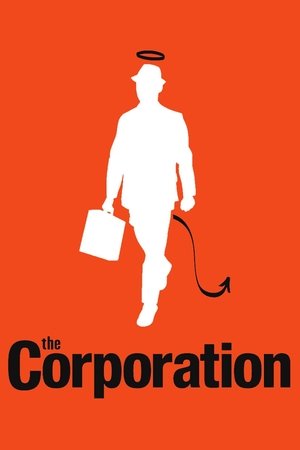
Since the late 18th century American legal decision that the business corporation organizational model is legally a person, it has become a dominant economic, political and social force around the globe. This film takes an in-depth psychological examination of the organization model through various case studies. What the study illustrates is that in the its behaviour, this type of "person" typically acts like a dangerously destructive psychopath without conscience. Furthermore, we see the profound threat this psychopath has for our world and our future, but also how the people with courage, intelligence and determination can do to stop it.
Stan Hill Jr. is a Haudenosaunee artist living in Miawpukek First Nation Reserve, Conne River, Newfoundland. In “The Bear Inside a Whale,” he and his family discuss racism, identity, religion, creation and art, along with the cultural extinction of the Beothuk of Newfoundland. Throughout the film, we follow Stan carving a bear out of a whale vertebra. And we visit The Rooms (museum) in St. John’s, Newfoundland, where Stan talks about viewing and reclaiming Indigenous artefacts.
On Dec. 5, 1944, American soldiers, led by Harry Stuts, put their guns down for one day and organized a party celebrating the town's centuries-old Saint Nick tradition. Soldiers made hot chocolate from their D-rations, company cooks made donuts and cookies for the children, and 22-year-old corporal Richard Brookins from Rochester, NY played the role of Saint Nick. An emotional and heartfelt story, THE AMERICAN SAINT NICK illustrates how American soldiers and residents of the hamlet were able to bond over a moment in time, creating a tradition that continues to this day.
A documentary of an expedition to Churchill, Manitoba to film the Northern Lights.