The destiny of women is irrevocably linked to blood. Between tradition and modernity, the female body has been marketed, honored, and mutilated.
The film presents the Bible's account of God's plan from the creation of the earth through to the end of the 1,000 year reign of Christ.
The image of the Virgin of Zapopan represents more than a Mexican religious element, it is a symbol of identity and popular memory. For centuries this effigy has accompanied its people and is worthy of one of the most important displays of devotion in Mexico.
In the week when Hindus celebrate the holy festival of Diwali, this documentary tells the story of one of their faith's most sacred symbols - the swastika. For many, the swastika has become a symbol synonymous with the Nazis and fascism. But this film reveals the fascinating and complex history of an emblem that is, in fact, a religious symbol, with a sacred past. For the almost one billion Hindus around the world, the swastika lies at the heart of religious practices and beliefs, as an emblem of benevolence, luck and good fortune.
A fascinating new look at the biblical, historical, and scientific evidence for Creation and the Flood. Learn from more than a dozen scientists and scholars as they explore the world around us in light of Genesis. Dr. Del Tackett, creator of The Truth Project, hikes through canyons, climbs up mountains, and dives below the sea in an exploration of two competing views... one compelling truth.
An exploration of the intersection between religion and homosexuality in the U.S. and how the religious right has used its interpretation of the Bible to stigmatize the gay community.
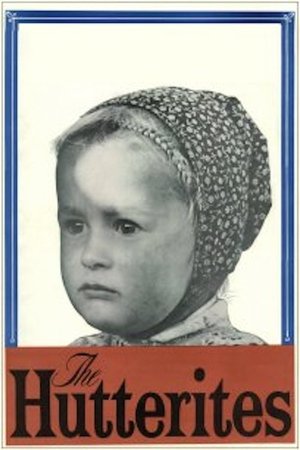
A look at the Hutterites, an Anabaptist religious community similar to the Amish or the Mennonites in rural Alberta.
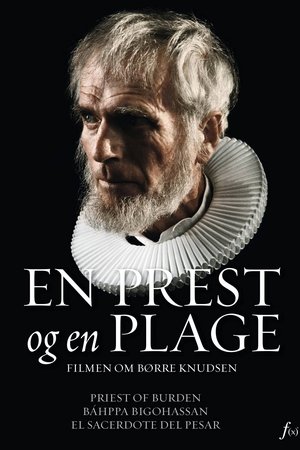
The priest Børre Knudsen is Norway's most infamous anti-abortionist, and much hated for this. He fought for his cause without thinking about the consequences for his family and his children even in the worlds most democratic country.
Scott Mills travels to Uganda where the death penalty could soon be introduced for being gay. The gay Radio 1 DJ finds out what it's like to live in a society which persecutes people like him and meets those who are leading the hate campaign.
Soji-ji (1979) is a video work documenting a chant recitation at a Zen temple. The chant recited by many monks does not proceed in unison like group singing. Each monk recites in sync with his breath, so that the intake of breath occurs at different moments. That is to say, each monk articulates the chant differently. Since there is no unified division, when the multiple chants overlap, an endless wave of chant (sutra) appears as a collective density or modality (at the same time, each monk’s steps form a totally different rhythm from the individual chants).
A documentary film about men, women, and children fleeing northward from the existential threats in their home countries of Honduras, El Salvador, and Guatemala. They embark on a perilous journey with an uncertain outcome. Shortly after crossing the southern Mexican border, they find shelter with people who want to help them survive the ordeal of the at least 1,700-kilometer journey to the US.
In this two-part Channel 4 series, Professor Richard Dawkins challenges what he describes as 'a process of non-thinking called faith'. He describes his astonishment that, at the start of the 21st century, religious faith is gaining ground in the face of rational, scientific truth. Science, based on scepticism, investigation and evidence, must continuously test its own concepts and claims. Faith, by definition, defies evidence: it is untested and unshakeable, and is therefore in direct contradiction with science. In addition, though religions preach morality, peace and hope, in fact, says Dawkins, they bring intolerance, violence and destruction. The growth of extreme fundamentalism in so many religions across the world not only endangers humanity but, he argues, is in conflict with the trend over thousands of years of history for humanity to progress to become more enlightened and more tolerant.
When one thinks of the American Deep South, the image of veiled Muslim students strolling the University of Alabama campus is the last thing that comes to mind. VOICES OF MUSLIM WOMEN FROM THE US SOUTH is a documentary that explores the Muslim culture through the lens of five University of Alabama Muslim students. The film tackles how Muslim women carve a space for self-expression in the Deep South and how they negotiate their identities in a predominantly Christian society that often has unflattering views about Islam and Muslims. Through interviews with students and faculty at Alabama, this film examines representations and issues of agency by asking: How do Muslim female students carve a space in a culture that thinks of Muslims as terrorists and Muslim women as backward?
Commentator-comic Bill Maher plays devil's advocate with religion as he talks to believers about their faith. Traveling around the world, Maher examines the tenets of Christianity, Judaism and Islam and raises questions about homosexuality, proof of Christ's existence, Jewish Sabbath laws, violent Muslim extremists.
An intimate portrait of the nuns of Kala Rongo, a rare and exceptional Buddhist Monastery exclusively for women situated in Nangchen, in remote and rural northeastern Tibet. These nuns are receiving religious and educational training previously unavailable to women, and playing an unprecedented role in preserving their rich cultural heritage even as they slowly reshape it. They graciously allow the camera a never-before-seen glimpse into their vibrant spiritual community and insight into their extraordinary lives. Some shy, some outspoken, all are committed to the often difficult life they have chosen, away from the yak farms and herding families of their birth. It is the story of their spiritual community, one that couldn't have existed 20 years ago but is thriving today.
Documentary film about sexual abuse in the Catholic Church in Poland.
King of the Jews is a film about anti-Semitism and transcendence. Utilizing Hollywood movies, 1950's educational films, personal home movies and religious films, the filmmaker depicts his childhood fear of Jesus Christ. These childhood recollections are a point of departure for larger issues such as the roots of Christian anti-Semitism.
A documentary about the confluence of Christianity and mixed martial arts, including ministries which train fighters. The film follows several pastors and popular fighters in their quest to reconcile their faith with a sport that many consider violent and barbaric. Faith is tried and questions are raised. Can you really love your neighbor as yourself and then punch him in the face?
On 25th December 2011 the Georgian Patriarch Ilia II described his 34 year-long leadership as head of the Georgian Orthodox Church as a ‘sunny night’. Beginning in 1989, and going up to the present, the film essay Sunny Night tells of political and social events since Georgian Independence. A variety of formats and sources, disparate images and voices report on protests, recommencements, uproars and wars, and religious identity that centres around the dominant religion of the nation. In the midst of the ongoing shifts and the various state of affairs, the patriarch stands out as the only constant figure. Meanwhile the sermonised religion begins to take on radical forms, going as far as priests forming front row human-chains, leading protests of several thousand orthodox believers chasing a handful of LGBT activist throughout the streets of Tbilisi in May 2013.
An exploration of America’s cultural divide ignited by the 2020 controversy surrounding the forcible toppling of Father Junipero Serra’s statues. Best-selling author Arthur Brooks examines the toxic polarization gripping the nation. Can we bridge this divide, or are we destined to repeat history?