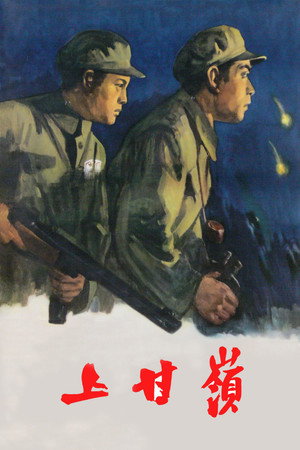
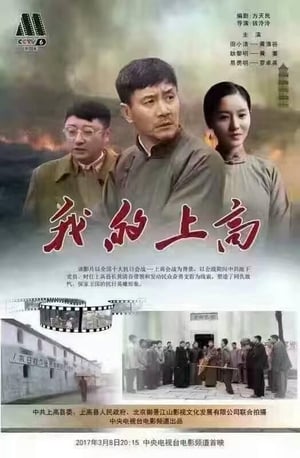
The film follows a group of Chinese People's Volunteer Army soldiers who are holding Triangle Hill for several days against US forces. Short of both food and water, they hold their ground until the relief troops arrive. The movie portray the battle as a Chinese victory over an American invasion, and the People's Volunteer Army soldiers were shown as Chinese war heroes."
At the Battle of Triangle Hill in October 1952, Huang's unit was tasked with destroying an enemy blockhouse.
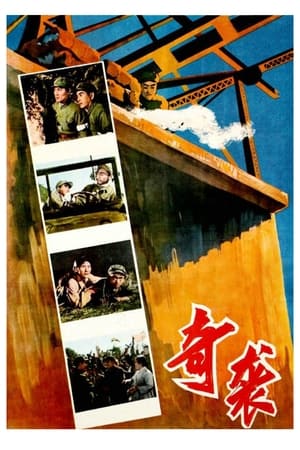
To help the Koreans against the imperialist Americans, Feng Yang, a scout for the Chinese army, must take a crack platoon to blow up the Kangping bridge in order to cut off the American retreat/reinforcement and make possible a major assault on American positions.
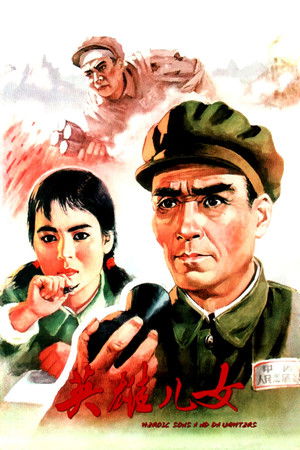
An army officer has a chance encounter with a young soldier, the son of an old comrade in arms. The soldier tells the officer he has a sister who is also in the army. When the young soldier is killed in action, the officer visits her to pay his respects, and recognizes her as his own child, given up for adoption 18 years earlier. This presents him with a dilemma, wanting to reconnect with the only child he ever had, yet reluctant to tell her the truth about her parentage ...
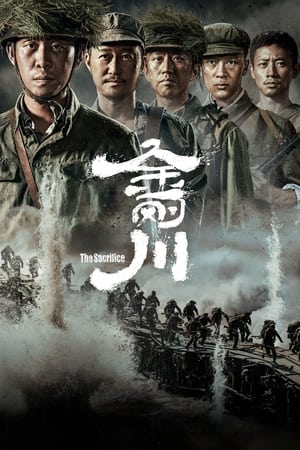
In 1953 the Korean War is entering the final stage. The People's Volunteer Army of China has launched its last major battle in Kumsong. In order to arrive on time and deliver enough ammo to the Kumsong front line, the soldiers have to defend themselves against the never ending bombardments of enemy bombers and race against time to repair the last bridge, all while facing supply shortages and with inferior equipment.
Beyond the Great Wall is a true story based on how Wang Chao-chun sacrificed her love and life for the good of the Chinese people during war time fears between China and the Huns.
Tarakanova is a 1930 French historical drama film directed by Raymond Bernard and starring Édith Jéhanne, Paule Andral and Olaf Fjord. It depicts the life of Princess Tarakanoff, the pretender to the throne of Catherine II in Eighteenth Century Russia.
A toymaker in Poland specializes in building lifesize mechanical men. He builds a chess-playing "automaton" to hide a pretty young Polish activist who is being hunted by occupying Russian forces.
After serving as an embassy secretary in London at the end of 1787, a position he didn't exactly enjoy, the poet André Chénier returns to Paris. When the Revolution breaks out, he becomes enthusiastic about it, and never ceases to express his love of liberty and high principles. But he also speaks out against excesses and troublemakers. For her part, the beautiful Aimée de Coigny, who has just divorced the Duc de Fleury, leads a dissolute life. In 1793, the Convention decides to put "the Terror on the agenda". Aimée de Coigny and her new lover, Casimir de Montrond, are arrested. At the Saint-Lazare prison, their life together is preserved. Six months later, Chénier is arrested and imprisoned. Dazzled by the young woman's beauty, the poet dedicates his most beautiful verses to her. But Aimée remains unmoved by his love.
Laura lives in a Hotel in Britanny and meets there an old man. Laura looks like his wife Lise, who's killed by the Gestapo...
An act of cowardice influences the lives of two Basque families over three generations.
This cinematic travelogue consists of three parts. In the first part, texts and small maps are our guides through Madrid in 1936. We see pictures of daily life against the background of the fascist shillings. A sad portrait of destroyed houses, the search for survivors under the rubble, and children's corpses in small wooden coffins. Central to the second part is the defence of liberty. Images from the front alternate with fragments of the besieged city. The last part deals with the aid given to and still needed by the town; an appeal is made to give money for medicines. This film breathes an unfaltering belief in a favourable close: unconditional victory. At the time, the film was a great success and yielded a lot of money for medical aid to Spain.
The true, harrowing story of a young Jewish girl who, with her family and their friends, is forced into hiding in an attic in Nazi-occupied Amsterdam.
Paralyzed in the Vietnam war, Ron Kovic becomes an anti-war and pro-human rights political activist after feeling betrayed by the country he fought for.
Part 1: The forest at Katyn. Mass graves of more than 20,000 Polish officers and government officials. They were discovered by the Germans in the spring of 1943. Goebels' propaganda immediately gave the matter publicity, blaming the Russians for the crime. Part 2: When the Russians occupied the Smolensk region in September 1943, they came across the graves erected by the Germans at the site of the Katyn massacre. Now they, like the Germans before them, made a propaganda film blaming the Third Reich for the murder of Polish officers.
An idyllic voyage to Tahiti in 1789 turns a crew aboard the H.M.S. Bounty against its captain when they find a tropical paradise.
A historic moment in Japanese history. In 1990, Emperor Akihito became the first emperor to have their enthronement televised.
Okatsu is a widow raising five children - adults but still mama-dependent - in mid-eighteenth century Edo, Japan. Her frugality attracts unflattering comment even amid national tough times (the region is in famine) What Okatsu tells no one is that she saves so that a friend can start his own business once he's released from prison.
At the end of the 18th century in Bulgaria under Ottoman slavery, a young woman leaves home and family to become leader of a guerrilla gang.
North Korea: A Plan to Survive