The audience is invited into Violetta’s privacy to have a close look at the fire to which she abandons herself among the guests of this musical and phantasmagorical celebration that blends theatre and opera, voices that speak and sing, and where the distinction between the instrumentalists and the singers becomes blurred, where Charles Baudelaire is seated next to Christophe Tarkos, and where the phantoms of this Paris in full industrial boom whose future we are living at present, sing and die.
Fierrabras of 1823 is the last of Franz Schubert’s stage works. Rarely performed to this day, this heroic-romantic opera has now been staged for the first time ever at the Salzburg Festival by famous director Peter Stein. Based on an old French 12th-century epic, the plot depicts the military conflict between Christians and Moors at the time of Charlemagne – as a backdrop to stories of love and friendship that prove to be stronger than war and hatred of otherness. The strong cast includes the “marvellously expressive miracle Dorothea Röschmann” (Die Zeit) and “Michael Schade, who exudes his exceptional tenor in Fierrabras’s heroic arias” (Der neue Merker). Under the energetic baton of lngo Metzmacher, the Vienna Philharmonic unfold “the melos, the poetry, the sweetness and the dramatic force of Schubert’s highly refined and atmospheric sound worlds” (Kleine Zeitung) in highly romantic fashion.
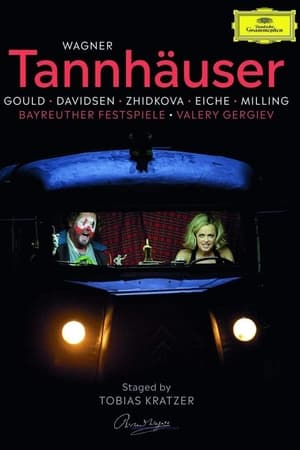
Witness the Zurich Opera's stunning production of Richard Wagner's masterpiece "Tannhauser," conducted by Franz Welser-Most and featuring Peter Sieffert (Tannhauser), Solveig Kringelborn (Elisabeth) and Roman Trekel (von Eschenbach). Initially produced in Dresden in 1845, "Tannhauser" instilled a sense of wonder in a few of Strauss's ardent friends and admirers, among them Robert Schumann and Franz Liszt. Opera buffs will love it.
A 2002 live performance of Mikel Rouse's Dennis Cleveland, a multimedia opera set entirely on a television talk show in the late 20th century.
Májové jitro
Richard Wagner called Die Walküre the “first evening” of the Ring of the Nibelung; he called Das Rheingold the prologue or Vorabend. Musically and dramatically, we are introduced to a radically new and different world when the opening bars of Die Walküre resound. A fully developed orchestral palette of Leitmotivs paints a wild storm scene, and the curtain rises on a modest dwelling: a fully human scene that has nothing to do with the gods, dwarves and nymphs of Das Rheingold. At the same time, however, the way Die Walküre portrays radical beginnings reveals some telling reminiscences of the unfolding of Das Rheingold. Die Walküre is exciting and deeply feeling drama.
Take a perfect cast, a great conductor and a groundbreaking staging in-out makes a 'Tristan' for eternity. The 1983 performance in Bayreuth was a great moment for the world of opera. The ensemble performance of René Kollo, Johanna Meier and Matti Salminen with, then as now the Wagner admirer, Daniel Barenboim conducting the Bayreuth orchestra inspired singers and instrumentalists to peak performance. Jean-Pierre Ponnelle created a dream-beautiful stage.
The Lyric Opera of Chicago's 1985 production of Puccini's opera, set in the late nineteenth century in the city of Nagasaki, about a young Japanese woman who weds an American naval officer who later abandons her and the child she bore him.
Gustav Von Aschenbach, a passionate composer, arrives in Venice as a result of wanderlust and there meets a young man by whose beauty he becomes obsessed.
Jules Massanet's lyrical opera is transformed into a superb film production by Petr Weigl, shot on location in Prague, with music conducted by Libor Pesek. First produced by the Vienna Opera in February 1892, "Werther" rapidly confirmed Massanet's position on the French opera scene and achieved enormous popularity outside France, notably in Italy, America and England. The tragic story tells of Werther's intense passion for Charlotte, who has married his best friend, Albert, fulfilling a pledge to her now deceased mother. But Werther's letters of love bring Charlotte to his side when he promises to take his own life.
Frantisek Filip film version of the Smetana opera.
This tragic story revolves around the licentious Duke of Mantua, his hunch-backed court jester Rigoletto, and Rigoletto's beautiful daughter Gilda. The opera's original title, La maledizione (The Curse), refers to the curse placed on both the Duke and Rigoletto by a courtier whose daughter had been seduced by the Duke with Rigoletto's encouragement. The curse comes to fruition when Gilda likewise falls in love with the Duke and eventually sacrifices her life to save him from the assassins hired by her father.
A group of merchants and vikings navigate dramatic events both within and without in this epic musical based on the Icelandic Vinland sagas. As secrets are exposed, two women (Freydís and Gudrid) have a reckoning.
Francesco Cilea's Adriana Lecouvreur was inspired by the real-life story of a celebrated actress at the Comédie-Française who was much admired by Voltaire. Hailed as a masterpiece, the opera was triumphantly staged in cities around the world after its premiere in 1902. The dramatically effective narrative is a passionate love triangle filled with intrigue and complicated plot twists set in the gallant 18th century. Its subtle ironies and gorgeous cantabile style of music provide a perfect vehicle for the star cast in this stunning production from the Teatro del Maggio Musicale Fiorentino.
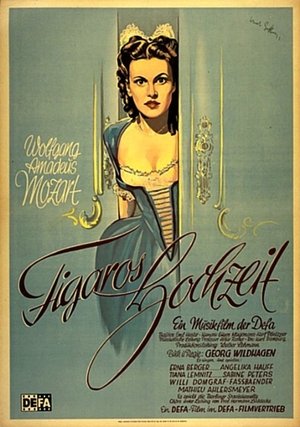
Shortly after WWII, the DEFA Studios produced a series of operas and operettas which belonged to the classical German musical heritage. This enchanting film, the very first opera production of DEFA, stands out because of its lavish decor and costumes, its outstanding actors and their masterful voices of that time.
The life and career of Italian opera singer Farinelli, considered one of the greatest castrato singers of all time.
Pious restraint comes face to face with sensuous hedonism in Camille Saint-Saëns’s grand-opera retelling of the Bible story of Samson and Delilah. Multi-Olivier Award winning director Richard Jones returns to The Royal Opera to stage this spectacular fin-de-siècle masterpiece, not performed at Covent Garden since 2004. Elina Garanca stars as the Philistine Dalila, SeokJong Baek as the inspiring Jewish hero Samson and Antonio Pappano conducts the full forces of the Orchestra of the Royal Opera House. With superb singing in solos and duets of great intimacy and fervour, gorgeous music with thrilling orchestral interludes, and splendid choral numbers for the Royal Opera Chorus – this is a performance to remember.
The tale of a quick-witted fox and her escape from confinement for a life in the forest.
At first glance, the title of Shostakovich’s opera seems to speak for itself: Katherina, neglected and unhappy in her marriage, commits the most heinous crime just like the Shakespearian Lady Macbeth. But Nikolai Leskov’s short novel, which portrays Katherina as a monster, was only the starting point for Shostakovich to elicit understanding for an oppressed woman whose pursuit for self-determination is suppressed by society. Through combining satiric, grotesque and tragic elements in his music, Shostakovich succeeds in striking the balance between repulsion at Katherina’s immoral acts and sympathy for her. Violence, eroticism and the paralysing boredom of Russian society in the 19th century are the founding elements of this composition. The choir and orchestra of the Maggio Musicale Fiorentino conducted by James Conlon accompany tremendous soloists such as Jeanne-Michèle Charbonnet, Vladimir Vaneev and Vsevolod Grivnov in the original language in this live recording.
2014 marks a year of celebration recognizing the 150th birthday year of the German late-Romantic orchestral, operatic and lied master composer, Richard Strauss (1864-1949). Arabella (premiered 1933, Dresden) was the last of the half dozen Strauss works to feature a libretto by the great Austrian writer Hugo von Hofmannsthal. This production, from the most recent Salzburg Easter Festival is, after Capriccio, the second of three Richard Strauss operas C Major is releasing in honor of the composers birth, life and work. The star-laden cast includes soprano Renèe Fleming, baritone Thomas Hampson, Albert Dohmen (Covent Garden, Wiener Staatsoper, MET) and Gabriela Beaková (Wiener Staatsoper, Covent Garden). With Christian Thielemann and the Staatskapelle Dresden, the music of Richard Strauss is in the best of hands. (ORF) Thielemann gets the best out of the cast...especially Renée Fleming with her luxurious soprano FAZ