Any given Sunday of 1974 in Spain, soccer games in several stadiums, the sarcastic voice of commentators, the inevitable presence of advertising. Goal! The victors and the defeated.
An exploration —manipulated and staged— of life in Las Hurdes, in the province of Cáceres, in Extremadura, Spain, as it was in 1932. Insalubrity, misery and lack of opportunities provoke the emigration of young people and the solitude of those who remain in the desolation of one of the poorest and least developed Spanish regions at that time.
Film made by activists who lived for a month in the Plaça de Catalunya in Barcelona after the start of a full-scale Russian invasion of Ukraine in 2022.
The human being feels generally as fascinated as fearful before death and the inevitable fact of dying. Workers at the cemetery of Palma de Mallorca, in Spain, face this harsh reality every day, so they have found a way to deal with it.
A particular reading of the hard years of famine, repression and censorship after the massacre of the Spanish Civil War (1936-39), through popular culture: songs, newspapers and magazines, movies and newsreels.
A documentary based on the book Umbanda no Brasil by the scholar Mata e Silva, who is interviewed by the director. The book studies the Brazilian religion known as spiritism, a syncretism of African beliefs and magical rites, Indian beliefs and images, and Catholic symbols.
In Garcia Lorca's mother tongue, death is a woman: "la muerte". Daniel slips into the role of "death as a female" and speaks before a video camera on the life and death of the famous Spanish poet. Then the story begins.
The documentary explore the intersection between humor, satire, and religion, analyzing how they mutually influence each other. Through interviews with comedians, artists, and scholars, we will discover irreverent jokes, clever parodies, and bold caricatures that challenge religious dogmas, exploring the power of comedy within the context of religions and opening new perspectives on cultural dynamics.
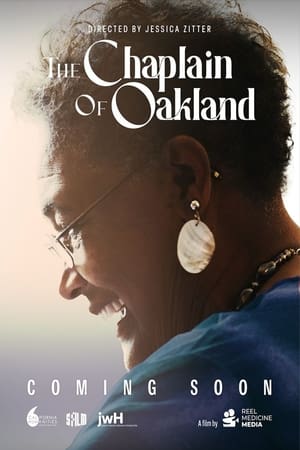
Frustrated by watching Black patients suffer due to end-of-life healthcare inequities, two determined allies – a chaplain and a doctor – work to transform a broken medical system, one patient at a time.
In this fascinating and unusual conversation, writer and physician Deepak Chopra talks to religion professor Robert Thurman about the connections and differences between two of India's most important philosophical beliefs: Vedanta and Buddhism. Chopra explores the foundation of Vedanta, while Thurman -- the father of actress Uma Thurman -- provides the Buddhist point of view in this meeting held in 1999 at New York City's Tibet House.
A walk through the golden age of Spanish exploitation cinema, from the sixties to the eighties; a low-budget cinema and great popular acceptance that exploited cinematographic fashions: westerns, horror movies, erotic comedies and thrillers about petty criminals.
Sven has a dream. Once in his life he wants to walk the Camino de Santiago - the Way of St. James. But that seems impossible, Sven has Usher syndrome, a disease which slowly, inexorably robs him of hearing and vision. Profoundly deaf and completely blind since 2010, he can only communicate using a special hearing aid in the spoken language.
A surrealist home movie, filmed by Luis Buñuel in Cadaqués in 1930, focusing on Salvador Dalí's father and his wife.
In BBC ONE's The Virgin Mary, dramatic reconstructions and stunning visual effects are combined with the latest findings from historians and New Testament scholars to recreate the story of this remarkable woman. Presented by actress Sue Johnston, The Virgin Mary explores the history behind the miraculous Bible story to reveal the living, breathing mother of Christianity. The picture that emerges is very different from that of popular belief – the serene young woman, dressed in blue silken robes, was largely a creation of later writers and Renaissance painters.
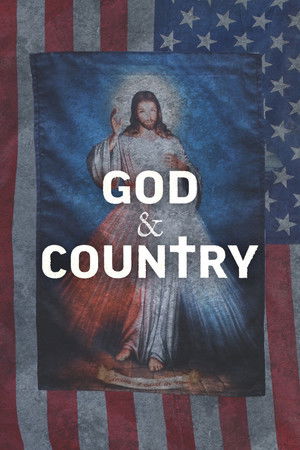
Examines the implications of Christian Nationalism, how it distorts not only our constitutional republic, but Christianity itself, and asks the question: What happens when a faith built on love, sacrifice, and forgiveness grows political tentacles, conflating power, money, and belief into hyper-nationalism?
An intimate portrait of a family coming to terms with decades of institutional abuse and the impact it has had and is still having on their lives.
"Our film is about the religious sect of Russian Pentecostals, one of the most reactionary and fanatical cults. Their actions are incompatible with the life and laws of our society. We testify that every frame of this film is documentary."
In this hour-long documentary, Dr Janina Ramirez tells the incredible story of a book hidden for centuries in the shadows of history, the first book ever written in English by a woman, Julian of Norwich, in 1373. Revelations of Divine Love dared to present an alternative vision of man's relationship with God, a theology fundamentally at odds with the church of Julian's time, and for 500 years the book was suppressed. It re-emerged in the 20th century as an iconic text for the women's movement and was acknowledged as a literary masterpiece.
Part documentary, part expose, this film follows one-time child evangelist Marjoe Gortner on the "church tent" Revivalist circuit, commenting on the showmanship of Evangelism and "the religion business", prior to the start of "televangelism". Preserved by the Academy Film Archive in 2005.
This intimate ethnographic study of Voudoun dances and rituals was shot by Maya Deren during her years in Haiti (1947-1951); she never edited the footage, so this “finished” version was made by Teiji Ito and Cherel Ito after Deren’s death.