This feature documentary takes us to the heart of the Jane-Finch "Corridor" in the early 1980s. Covering six square blocks in Toronto's North York, the area readily evokes images of vandalism, high-density subsidized housing, racial tension, despair and crime. By focusing on the lives of several of the residents, many of them black or members of other visible minorities, the film provides a powerful view of a community that, contrary to its popular image, is working towards a more positive future.
Gary's Story is part of a collective filmmaking project that looks at relationships between teenagers and their grandparents in families that have recently immigrated to the US from the former Soviet Union. Gary's family is from Moscow.
This Ukrainian-Jewish teenager immigrated to San Francisco as a young child. Now on the brink of adulthood, she interviews her grandparents about their new lives yearning to see her American world through their eyes. Yelena understands that life in the US has changed her profoundly.
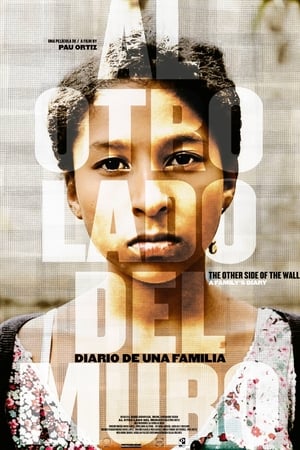
Honduran immigrants living in Mexico, teenage siblings Rocío and Ale must take over care of their two younger siblings after their mother is sentenced to prison on dubious grounds. Tensions grow between the pair as the decision must be made on whether to stay together in Mexico or split the family up to cross into the US to work.
A colorful and provocative survey of anarchism in America, the film attempts to dispel popular misconceptions and trace the historical development of the movement. The film explores the movement both as a native American philosophy stemming from 19th century American traditions of individualism, and as a foreign ideology brought to America by immigrants. The film features rare archival footage and interviews with significant personalities in anarchist history including Murray Boochkin and Karl Hess, and also live performance footage of the Dead Kennedys.
YouTube musician and Korean American adoptee Dan Matthews travels to South Korea to perform and reunite with his biological family, including a long lost twin he never knew he had.
Pikilina is a Dominican-born woman of Haitian descent. Racial and political violence erupts when the country of her birth, the Dominican Republic, reverses birthright citizenship and she and 200,000 others are left stateless.
Evaporating Borders is a poetically photographed and rendered film on tolerance and search for identity. Told through 5 vignettes portraying the lives of migrants on the island of Cyprus, it passionately weaves themes of displacement and belonging.
In America, we define ourselves in the superlative: we are the biggest, strongest, fastest country in the world. Is it any wonder that so many of our heroes are on performance enhancing drugs? Director Christopher Bell explores America's win-at-all-cost culture by examining how his two brothers became members of the steroid-subculture in an effort to realize their American dream.
Filmmaker Christopher Quinn observes the ordeal of three Sudanese refugees -- Jon Bul Dau, Daniel Abul Pach and Panther Bior -- as they try to come to terms with the horrors they experienced in their homeland, while adjusting to their new lives in the United States.
This film recreates the true story of Tom Sukanen, an eccentric Finnish immigrant who homesteaded in Saskatchewan in the 1920s and 1930s. Sukanen spent ten years building and moving overland a huge iron ship that was to carry him back to his native Finland. The ship never reached water.
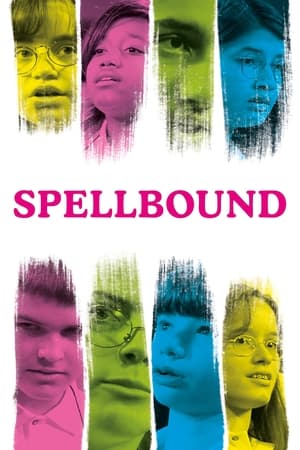
This documentary follows 8 teens and pre-teens as they work their way toward the finals of the Scripps Howard national spelling bee championship in Washington D.C.
The history of Europeans in North America, from the arrival of Columbus in 1492 to the business success of German immigrants such as Heinz, Strauss or Friedrich Trumpf, Donald Trump's grandfather. During the 19th century, thirty million people — Germans, Irish, Scots, Russians, Hungarians, Italians and many others — left the old continent, fleeing poverty, racism or political repression, hoping to make a fortune and realize the American dream.
Two countries, two restaurants, one vision. At Gabriela Cámara's acclaimed Contramar in Mexico City, the welcoming, uniformed waiters are as beloved by diners as the menu featuring fresh, local seafood caught within 24 hours. The entire staff sees themselves as part of an extended family. Meanwhile at Cala in San Francisco, Cámara hires staff from different backgrounds and cultures, including ex-felons and ex-addicts, who view the work as an important opportunity to grow as individuals. A Tale of Two Kitchens explores the ways in which a restaurant can serve as a place of both dignity and community.
A kaleidoscopic road trip through modern mystical Americana, revealing the hidden magic that’s happening all around us. A living tribute to the glimmering pockets of light beneath the crumbling facade of the American Dream, inviting viewers to slow down and engage with the unseen.
What does it mean to adopted and brought up far away from your country of birth? In “Given Away,” this week’s moving new Op-Doc by directors Glenn and Julie Morey, Korean adoptees who grew up in Western countries reflect on the complicated emotional terrain that they’ve navigated in their lives. Glenn Morey was himself adopted from Korea in the wake of the Korean war, and the directors have channeled that connection to create a beautifully nuanced and emotional film. As the Moreys write of Glenn’s experience interviewing adoptees, “He has needed others like him … to help him make sense of his life. They have also helped him make peace with the universe.”
Between reality and animation, the story of Nidhal is told, a young homosexual Tunisian who defended individual freedoms in Tunisia through his work in radio. He found himself under a lot of pressure which forced him to leave the country and seek asylum in the Netherlands.
In 1975, a seven-months pregnant Vietnamese refugee, Giap, escapes Saigon in a boat and, within weeks, finds herself working on an assembly line in Seymour, Indiana. 35 years later, her aspiring filmmaker son, Tony, decides to document her final day of work at the last ironing board factory in America.