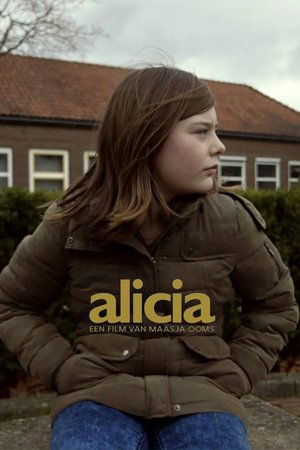
"It’s not easy to find a foster family for you," an orphanage supervisor explains to nine-year-old Alicia. "After all, you are a very special girl." Alicia is crying. "I’m not special. I’m just a girl." This disturbing scene sets the tone for this film about Alicia, who was taken away from her teenage mother by the Child Welfare Bureau when she was 12 months old. She’s been living in an orphanage since the age of five, and they have never managed to find a foster family for her. In Alicia, we watch as she becomes a teenager, still craving safety and love. Over the course of three years, filmmaker Maasja Ooms follows her daily life up close. Alicia's yearning and powerlessness are palpable in these observations, which painfully reveal the effects of having no prospects.
Albert Camus died at 46 years old on January 4, 1960, two years after his Nobel Prize in literature. Author of “L'Etranger”, one of the most widely read novels in the world, philosopher of the absurd and of revolt, resistant, journalist, playwright, Albert Camus had an extraordinary destiny. Child of the poor districts of Algiers, tuberculosis patient, orphan of father, son of an illiterate and deaf mother, he tore himself away from his condition thanks to his teacher. French from Algeria, he never ceased to fight for equality with the Arabs and the Kabyle, while fearing the Independence of the FLN. Founded on restored and colorized archives, and first-hand accounts, this documentary attempts to paint the portrait of Camus as he was.
A group of young men waltz in pairs, balancing with a glass between their foreheads. In this captivating setting, director Albert Rask crafts a new code of conduct - an allegory reflecting the experience of growing up. A playful yet poignant exploration that reframes the burdens of responsibility, expectations and the rules of adulthood.
This moving documentary chronicles the last year in the life of Robert Eads, a trans man dying of ovarian cancer. We're introduced to several prominent figures in Robert's life -- most importantly, his life partner and caretaker Lola Cola, who is also trans. The two prepare to lead a panel at the annual Southern Comfort conference, a yearly event created for transgender individuals.
Has the time of women finally come? Have their everyday lives truly changed over the past sixty years? Guided by Agnès Jaoui, women—famous and unknown—share their stories across generations. From childhood to retirement, the documentary traces shared experiences shaped by prejudice, but also by hope, strength, and humor. Blending personal archives, historic moments, and social media footage, the film places women at the center of their own story. Welcome to the Time of Women.
An inspirational speaker becomes reinvigorated after meeting a lively woman who shakes up his mundane existence.
Documentary about jazz great Chet Baker that intercuts footage from the 1950s, when he was part of West Coast Cool, and from his last years. We see the young Baker, he of the beautiful face, in California and in Italy, where he appeared in at least one movie and at least one jail cell (for drug possession). And, we see the aged Baker, detached, indifferent, his face a ruin. Includes interviews with his children and ex-wife, women companions, and musicians.
The first of a documentary serie about rural France.
Second documentary of a trilogy produced on the long term (together with Profils paysans: l'approche (2001) and Profils paysans: La vie moderne (2008)), showing the simple lives of farmers in contemporary Southern France.
Red Flags – c’est pas ça l’amour
12 Years of League of Legends in Brazil!
In 2022, when the economic crisis in her native country was at its peak, she decided to visit her family there. She turned her short trip into a collage-like diary in which she reflects on her relationship with her homeland, which is in a state of protracted decay. The film is composed of spontaneous snapshots capturing the author's stay, interspersed with inserted captions serving as personal, often poetically formulated comments and observations. As a result, the film does not hide its strongly subjective perspective, but at the same time builds on it to make an important statement that shows the transformation of Lebanese society in everyday details such as the appearance of the city itself or in the intimate sphere of the author's family life.
Between repetitive actions such as stocking shelves and scanning groceries, anonymous Brazilian supermarket employees reflect frankly on their lives, society, and the role they dream of playing in it.
Beside Bowie: The Mick Ronson Story is a documentary about the life and work of Michael "Mick" Ronson, the guitarist, songwriter, producer and arranger who, in the early part of his career, performed with David Bowie as one of the 'Spiders from Mars'.
“We were born in Liverpool but grew up in Hamburg”, John Lennon once said. This feature documentary seeks to find the truth in those words. The long and winding road that the Beatles took to worldwide fame passed through Hamburg, Germany in the early 1960s. Only a couple of years before they became household names, the former Quarrymen were cutting their musical teeth on nightclub stages in the city. Hamburg had become the vice capital of Europe after World War Two, its neon-lit streets home to sailors, sex workers, drug dealers, gangs and low life. Meanwhile, the English band was still developing, still young and virtually unknown. By the time of their last German visit in 1966, the Beatles were an international phenomenon. 'No Hamburg, No Beatles' explains how learning their trade in this fascinating city helped propel them to global stardom.
Somewhere in Myanmar is a forest rich in amber and controlled by the Kachin Independence Army (KIA). Most of its inhabitants work in a mine, digging the earth night and days in the hope of finding the precious ore that will get them out of poverty. But on top of the excruciating hardship of the work, they also have to fear an attack from the army.
Three teenagers — Amelio, Blake and Kira — each begin their gender transition, supported in different ways by their families. This deeply sensitive documentary follows them between ages 15 and 17 as they navigate the emotional and physical challenges of being transgender. For them, puberty brings intense distress, as their developing bodies do not align with their true gender identity. The film explores the difficult questions faced by parents and doctors: whether to medically delay puberty, start hormonal treatment, or wait and risk worsening the teens’ suffering. Through moments of doubt, upheaval and hope, the documentary offers an intimate look at three young people who want only one thing — for the outside world to see them as they know themselves to be.
This is one of the blind spots of the November 2015 attacks, a piece of history that has been ignored and never told: an invisible consequence of that fateful Friday the 13th is that dozens of childhoods and adolescences were also cut short. That night, as a result of the various attacks, 69 children were left orphaned. Most of them reject the term "victim," which is too heavy a burden to bear.
Why did the series "In Therapy" on ARTE break audience records? Does it reflect the truth of psychoanalysis? From personal quests to collective traumas, this sensitive documentary explores the reciprocal influences between fiction and reality.
Taking part in The Voice Kids is already quite something, but for 11-year-old Merna it’s really something special. Her parents had to flee Iraq because they are part of the Christian minority, and IS was threatening to kidnap Merna. They now live in Lebanon, where one in three people is a refugee. The family has been waiting for two years for permission to move on. FaceTiming with her older sister, who stayed behind in Iraq, and cooking her favorite dishes with her mother make the situation more bearable. But what also really helps is singing – this calms Merna and makes her less afraid. She used to sing only in church, but since The Voice her beautiful, melancholy voice touches everyone. Because of her status as a refugee, Merna isn’t allowed to attend the foreign performances with the other finalists, but she’s now a national celebrity in Lebanon.