A documentary of an expedition to Churchill, Manitoba to film the Northern Lights.
Modern Amazons are fierce heroines. They are ready to fight for what is important to them. Without explaining, without compromising, always persisting. They fight for victory in the ring for acceptance, and too, for fellow sufferers and humanity.
Geysir und Goliath
Greina
Ina, Amer & Elvis
Heritage, the Descendants of William Tell
Hotel Abyssinie
I Am Mariam Binladen
More than 10,000 street children live in magical, bustling St. Petersburg. But here's Larissa, with her Cirque Upsala: she takes these outcasts and catapults them to unsuspected heights. From the Streets to the Stars takes us on a fascinating journey, from the depths of the Russian slums to the limelight of the circus world, via the adventures of a Swiss tour. It follows 6-year-old Danja, the rising star of the circus; Mischa, who is taking on responsibility for the first time in her life; the enigmatic street child Nastja; and the troubled Igor, whose single mother is completely overwhelmed by her 4 children.
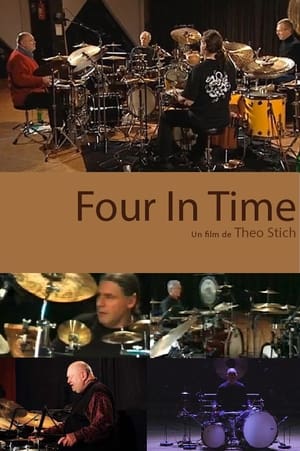
The film is the story of a musical encounter between drummers Pierre Favre, Fritz Hauser, Daniel Humair and Fredy Studer. The filmmaker brought them together in Zurich on January 6, 1997, and followed them over four days of rehearsals. The confrontation between these very different artists culminates in a concert.
Amidst the chaos of modern China, where megacities spring up at a dizzying pace, Swiss photographer Andreas Seibert has chosen to document the lives of the "mingong," the migrant workers who fuel the country's economic engine. Director Villi Hermann followed him in this endeavor for several years, immersing us in the photographer's eye and capturing the essence of his work on these forgotten souls. Seibert, with his lens, and Hermann, with his camera, weave together a poignant narrative that sheds light on the often-hidden reality of China's economic growth. "From Somewhere to Nowhere" is an ode to humanity in an ever-changing world, a reflection on the individual's place in the grand scheme of things, and a celebration of the power of photography as a means to capture the spirit of an era.
Irrécupérables ?
It's there, it's been Irène Schweizer's faithful companion for over 40 years, sharing her joys and sorrows, inspiring her and allowing her to live her dreams: her piano.
A true pioneer of Swiss cinema, Isa Hesse-Rabinovitch (1917-2003) followed an unusual path throughout her life. The daughter of Judeo-Russian immigrants, she grew up in Zurich. She married a son of Hermann Hesse, with whom she had three children. Influenced by the artistic work of her parents, she worked as an illustrator, then as a reporter and photographer, always mindful of her independence. At the age of fifty, she began making films. Her first experimental shorts immediately earned her invitations to various film festivals and a resounding response abroad.
L'usine
In 1906, Dr. Morgenthaler, a psychiatrist at Bern Psychiatric Hospital, started to collect and photograph the drawings, paintings and various objects designed by his patients. This collection of works by schizophrenic artists would later prove an important contribution to art history and the history of "Art Brut" or "Outsider Art": work by artists who have been deemed obsessive, mentally or psychologically ill, or otherwise "abnormal."
From August to October 1942, over 2250 Jews were deported from the internment camp of Rivesaltes to Auschwitz by way of Drancy. Among them were 110 children. Friedel Bohny-Reiter, a nurse with the Swiss Aid to Children, worked in this camp in the South of France. Like many others in the formerly unoccupied zone, it was run by the French. Once a military camp, it had been converted in 1941 into a transit camp regrouping Jewish, Gypsy and Spanish people living in the area or who had fled to the free zone as refugees. Thanks to the young nurse from Basel, many children were probably saved from certain death. The film follows the nurse on a visit to that still intact site as well as through the pages of the journal she wrote in those dark days, published by Editions Zoë, Geneva in 1993.
Pascal, Miranda, Jeremy and Franziska are real gypsies. They're between 17 and 25, love big powerful cars and have decided to live on the move. Like many other young Yenish people. They need freedom and fight for it. They show a world closed to the sedentary. A different but very Swiss life. Today's Romanis: disenchanted, close to reality.
Juntos, un retour en Argentine
L'autre versant de Gstaad