The tragic and shocking story of the notorious Magdalene Laundries, a shameful system, created by the Irish State but supported by all strata of Irish society, which enslaved more than ten thousand women between 1922 and 1996.
Radical feminist Andrea Dworkin's expose on the pornography industry.
Since the 1970s and the influx of European, Chinese, Russian, and Turkish trawlers, West African waters have been overexploited. Whether for fishing or fishmeal production, these foreign powers have endangered the livelihoods of local fishermen and artisans.
An in-depth look at the history of comic book shops and how they and the people that run them continue to make a difference. Through interviews with industry professionals and the shop owners themselves, Shopping For Superman, explores the cultural significance and ever evolving relevance of your friendly neighborhood comic shop.
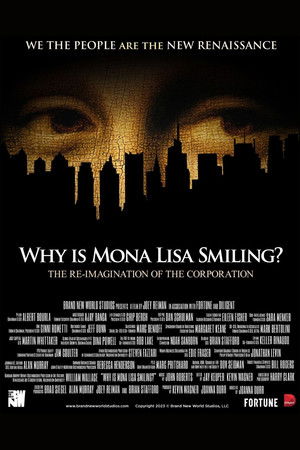
Why Is Mona Lisa Smiling? is a captivating documentary that connects the revolutionary spirit of the Renaissance with a modern reimagining of capitalism. Featuring a diverse cast of influential CEOs, visionaries, and historians, the film delves into the transformations reshaping companies.
The story of Bill McGowan, who took on the most powerful monopoly of his time - ATT, and its Bell System of local phone companies - and won against all odds.
Hilariously bogus "documentary on the film capital of the world" inspired by the Italian mondo movie genre. A look at adult book stores, grindhouses, strip joints, "Figure Model Photography Studios" and midnight pool parties. This is more cynical sexploitation from director Lee Frost and producer Bob Cresse, the loveable hucksters.
Documentary film revealing how the sudden death of a 21-year-old woman fuelled a police investigation that exposed a hidden criminal underworld operating in Northern Ireland.
With a magical new invention that promised to revolutionize blood testing, Elizabeth Holmes became the world’s youngest self-made billionaire, heralded as the next Steve Jobs. Then, overnight, her 10-billion-dollar company dissolved. The rise and fall of Theranos is a window into the psychology of fraud.
A documentary that examines whether a charity organized by Pat Robertson to aid Rwandan genocide refugees was a front for diamond mining.
A documentary that highlights the deadly combination of sleep deprivation and long days of work, focusing on the American film industry.
An intriguing historical film, demonstrating many expensive business machines found in modern offices of the era, including electromatic and Chinese typewriters and machines for filming, stenciling, folding and lithographing. Among the machines shown are Diebold's Flofilm microfiche recorder, the Fileomatic Desk, the Pierce Electronic Wire Recorder, the Soundscriber with plastic disk, the Elliott Stencil Machine with Graphotype machine, the Davidson Duplicator for litho printing, the Davidson Folder for letters, the Varityper, the Autotypist Perforator, the IBM Chinese character typewriter, and speed typist Stella Pajunas, using an IBM Model A Electric Typewriter, who set a one-hour typing speed record in 1946 of 140 net five-stroke words per minute.
The question of "who hunts virgins" and more will be stripped down and explored in the sexiest trailers hosted by Playboy's Nikki Leigh.
In the late sixties, Spanish cinema began to produce a huge amount of horror genre films: international markets were opened, the production was continuous, a small star-system was created, as well as a solid group of specialized directors. Although foreign trends were imitated, Spanish horror offered a particular approach to sex, blood and violence. It was an extremely unusual artistic movement in Franco's Spain.
In recent years, stories of older British women hooking up with younger Gambian men have made news headlines, from one-night stands to whirlwind weddings. But what's the truth behind the stories? Seyi Rhodes investigates.
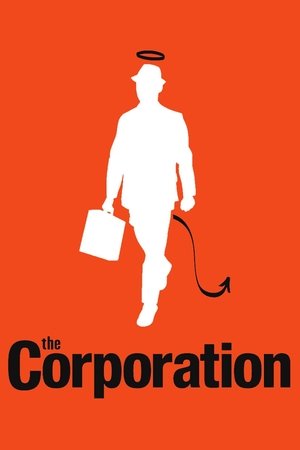
Since the late 18th century American legal decision that the business corporation organizational model is legally a person, it has become a dominant economic, political and social force around the globe. This film takes an in-depth psychological examination of the organization model through various case studies. What the study illustrates is that in the its behaviour, this type of "person" typically acts like a dangerously destructive psychopath without conscience. Furthermore, we see the profound threat this psychopath has for our world and our future, but also how the people with courage, intelligence and determination can do to stop it.
In the late 1960s, Haddon Salt built a fast-food empire. Then Kentucky Fried Chicken came knocking.
A pseudo-documentary, “Samarang” tells the story of lowly Ahmang (Captain A.V. Cockle) and his socially superior love, Sai-Yu (Theresa Seth). Both live in the village of Samarang in the Indian Ocean. Because Sai-Yu is the daughter of a chief and Ahmang is but a poor fisherman, he needs to increase his wealth before asking for her hand. Thus he accepts the perilous offer of the wily Chang-Fu, who seeks pearl divers. Ahmang must brave the treacherous waters of the Forbidden Lagoon of Sakai, home to bloodthirsty cannibals, killer sharks, and a monstrous grasping octopus. Sai-Yu and Ahmang’s younger brother Ko-Hai come along for kicks, too. Ahmang finds his pearl, but he and Sai-Yu are stranded on the island, where they befriend a local orangutan. When they return to the boat, a shark kills Ko-Hai, and Ahmang must get revenge.
Actor Ned Beatty hosts a look at the genre known as "exploitation" films. Interviews with some of the producers and directors of these films are shown, along with scenes from and trailers for some of these films.
American resort developers bear down on the wild west coast of Nicaragua, hoping to build the next tourist paradise. With lax labour and environmental regulations, some of the developers take full advantage of the situation, and the local fishermen start accusing them of exploitation and land thievery. Unexpectedly, in the midst of this conflict, firebrand Daniel Ortega and the Sandinistas sweep back into government, boldly empowering the local fishermen. The tables turn viciously on the American developers, who get much more than they bargained for. But when the local fishermen, corrupted by new found power, begin acting in the same manner as the American developers, questions are posed about human nature, morality, and ethics on a much larger scale.