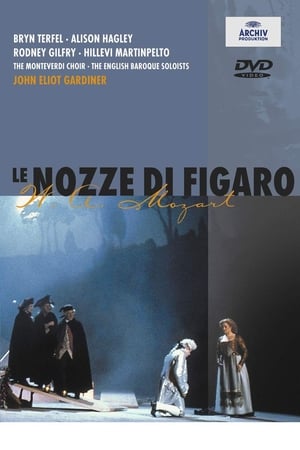
This is a good video of "Figaro", but there are a couple of better ones available. The Bohm and the Pappano are better still due to the female members of the casts. The reason for buying this one is the "Figaro", Bryn Terfel. No one can top him today in that role. John Eliot Gardiner also stands out. Many of us have voiced their opinion that If the Metropolitan Opera would release it's 1998 version, that would be the one to get.
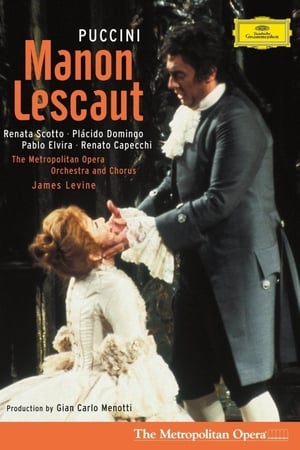
All the throbbing eroticism—and ultimate heartbreak—of Puccini’s youthful score is unleashed by James Levine and his top-flight cast. Plácido Domingo is Des Grieux, the handsome, headstrong young aristocrat who falls head over heels for the enticing, impetuous Manon Lescaut (Renata Scotto). Manon returns his love, but her obsession with luxury ruins them both. Gian Carlo Menotti’s opulent production, with sets and costumes by Desmond Heeley, superbly captures the colorful world of 18th century France.
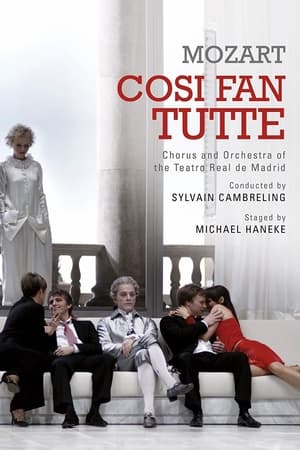
Who loves whom in Così fan tutte, Mozart’s and Da Ponte’s cruelly comic reflection on desire, fidelity and betrayal? Or have the confusions to which the main characters subject one another ensured that in spite of the heartfelt love duets and superficially fleetfooted comedy nothing will work any longer and that a sense of emotional erosion has replaced true feelings? Così fan tutte is a timeless work full of questions that affect us all. The Academy Award-winning director Michael Haneke once said that he was merely being precise and did not want to distort reality. In only his second opera production after Don Giovanni in 2006, he presents what ARTE described as a “disillusioned vision of love in an ice-cold, realistic interpretation”.
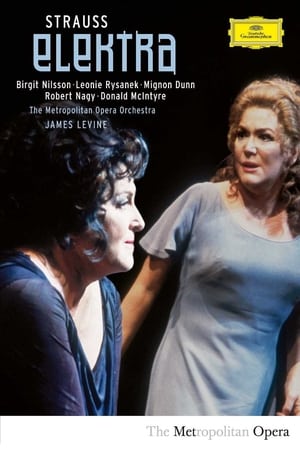
It's hard to imagine confirmed Straussians not wanting this starry Metropolitan Opera performance of Elektra. Strauss and his librettist, Hugo von Hofmannstahl, transformed Sophocles' take on Homer's tale into a harrowing opera noir. Elektra lives for one reason, to kill her mother, Klytämnestra, and her stepfather, Aegisth, the murderers of her father, Agamemnon. In contrast to Elektra's vengeful obsession, her sister Chrysothemis desires to get on with life. When their long-missing brother, Orestes, returns to do the deed, Elektra celebrates with a dance of death and, her sole purpose in life fulfilled, dies. Strauss joined the hermetic plot to music of the utmost opulence, violent and yearning by turns, evoking the cardinal principles of Greek tragedy - pity and terror.
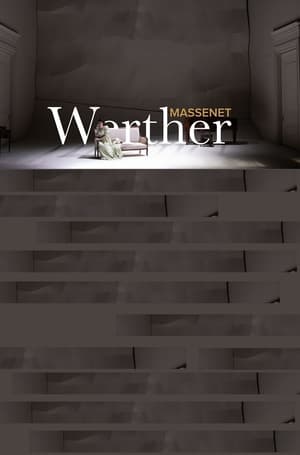
When a passionate poet falls for a young woman, she is stirred by his ardent declaration of love. Yet she is promised to another and ends up rejecting him, prompting him to make a fatal gesture.
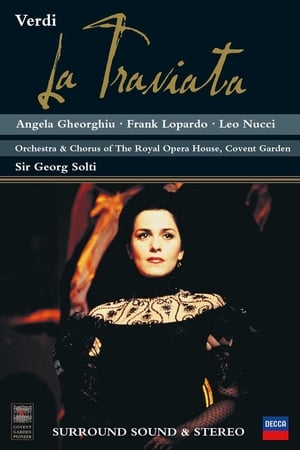
La traviata (Italian: [la traˈviaːta], "The Fallen Woman"[1][2]) is an opera in three acts by Giuseppe Verdi set to an Italian libretto by Francesco Maria Piave. It is based on La dame aux Camélias (1852), a play adapted from the novel by Alexandre Dumas, fils. The opera was originally entitled Violetta, after the main character. It was first performed on 6 March 1853 at the La Fenice opera house in Venice. Piave and Verdi wanted to follow Dumas in giving the opera a contemporary setting, but the authorities at La Fenice insisted that it be set in the past, "c. 1700". It was not until the 1880s that the composer and librettist's original wishes were carried out and "realistic" productions were staged.[3]
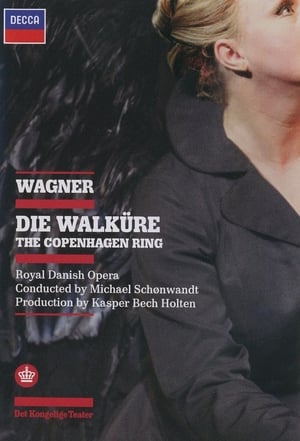
Die Walküre (The Valkyrie), WWV 86B, is an opera in three acts by Richard Wagner with a German libretto by the composer. It is the second of the four operas that form Wagner's cycle Der Ring des Nibelungen (The Ring of the Nibelung). The story of the opera is based on the Norse mythology told in the Volsunga Saga and the Poetic Edda.[1][2] In Norse mythology, a valkyrie is one in a group of female figures who decide which soldiers die in battle and which live. Die Walküre's best-known excerpt is the "Ride of the Valkyries". DVD release June 2009.
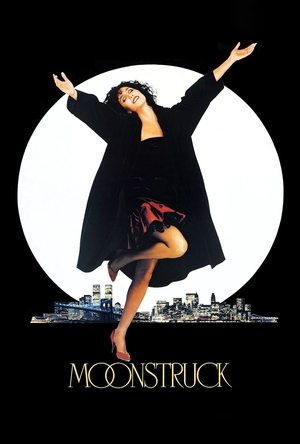
37-year-old Italian-American widow Loretta Castorini believes she is unlucky in love, and so accepts a marriage proposal from her boyfriend Johnny, even though she doesn't love him. When she meets his estranged younger brother Ronny, an emotional and passionate man, she finds herself drawn to him. She tries to resist, but Ronny, who blames his brother for the loss of his hand, has no scruples about aggressively pursuing her while Johnny is out of the country. As Loretta falls for Ronny, she learns that she's not the only one in her family with a secret romance.
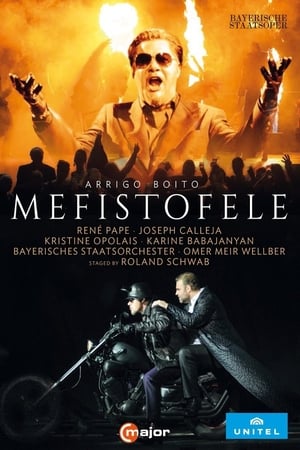
The director, Roland Schwab, has created his version of Hell. The set is like a high iron walled hanger and the stage is continually occupied with people who look like fugitives from Mad Max and who interact with Mefistofele. The orchestra and choir are wonderful. Rene Pape gives a nuanced interpretation with a certain amount of sardonic humour under the evil. His singing and acting are first rate, as is that of Kristine Opolais and Joseph Calleja.
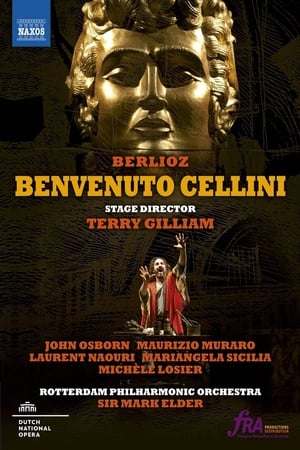
With his affinity for the 16th-century sculptor Benvenuto Cellini's advocacy of artistic and personal freedom, Hector Berlioz went straight for the grand gesture with his first completed opera. Returning to it years after initial production debacles, Berlioz stated that he would 'never again find such verve and Cellinian impetuosity, nor such a variety of ideas.' The plot revolves around Cellini's wooing of Teresa, a match frustrated at every opportunity by his rival, the cowardly Fieramosca. Benvenuto Cellini is a pithy work combining romance, excitement, violence, comedy and spectacle; the perfect stage for Terry Gilliam's stylishly colorful and larger than life directing.
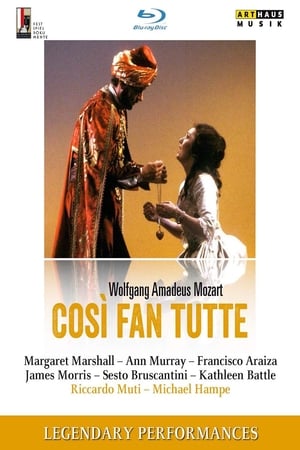
An excellent performance of this delightful opera. The principals are superb, especially the sisters. Bruscantini as Don Alfonso is past his prime, but he knows and understands the role inside out, so one does not even notice his vocal limitations. Araiza is in top form as Ferrando, and Morris makes virile Guglielmo. The only disappointment is Battle as Despina. Unlike her partners, she does not have feel for the Mozart ensemble, and her vocal mannerisms are totally unbecoming. How the producers allowed that to happen is a mystery. Muti's conducting is terrific, much better than on his La Scala video, where he is uninvolved.
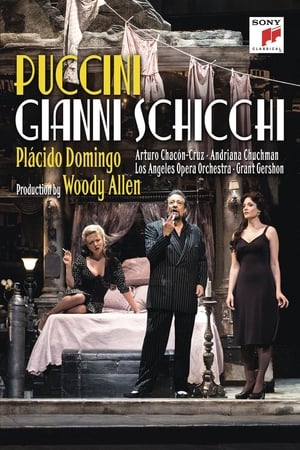
Woody Allen's production of the Puccini comic opera at LA Opera in 2015
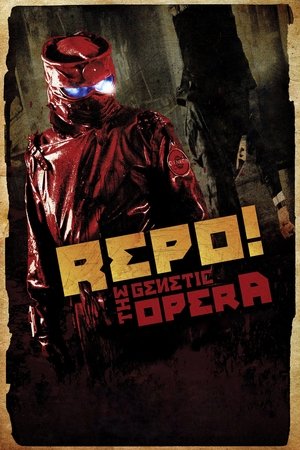
By the year 2056, an epidemic of organ failures has devastated the planet. The megacorporation GeneCo provides organ transplants on a payment plan — and those unable to fulfill their plans have their organs repossessed. In the midst of this, a sickly teenager discovers a shocking secret about herself, her father, and their connection to GeneCo.
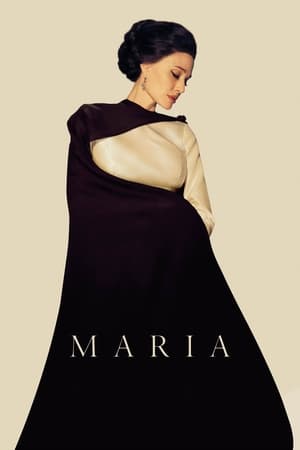
Maria Callas, the world's greatest opera singer, lives the last days of her life in 1970s Paris, as she confronts her identity and life.
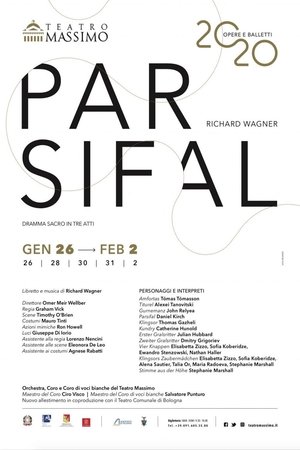
Richard Wagner's Parsifal, staged at the Teatro Massimo in Palermo in 2020, opened the opera season on January 26. The production, directed by Graham Vick and conducted by Omer Meir Wellber, featured staging with references to the imagery of war.
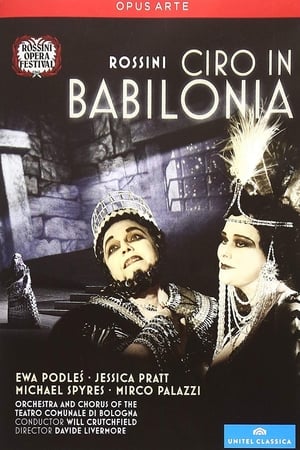
The Biblical story of Belshazzar's hubristic arrogance, set against the valour of the young warrrior-leader Cyrus, provided the 20-year-old Rossini with a dramatic story enriched by West-Eastern implications which still speak to us today. For the title role of Cyrus, Rossini wrote what would be his longest-ever contralto role, to which the great Rossini singer Ewa Podles´ is both naturally attracted and ideally suited. She is partnered by two young stars of Rossini singing, Jessica Pratt and Michael Spyres, and a conductor-scholar, Will Crutchfield, of great experience and sympathy. Filmed in High Definition and recorded in true Surround Sound.
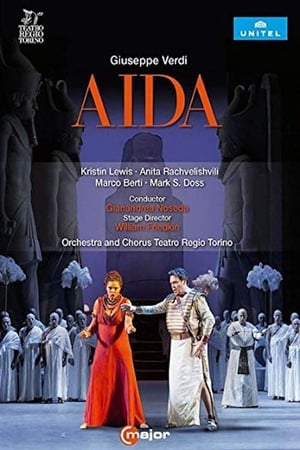
Originally commissioned to celebrate the completion of the Suez Canal and the opening of Cairos new opera house, Verdis Egyptian epic Aida is here seen in a spectacular new staging in the Teatro Regio Torino by the Oscar-winning American film director William Friedkin, creator of such famous movies as The Exorcist and The French Connection. The cast features American soprano Kristin Lewis who has been heralded for her remarkable voice, which she uses with powerful dramatic instinct, and Georgian mezzo-soprano Anita Rachvelishvili, whose Amneris dominates the stage with her dark, rounded, irresistible voice and extraordinary stage presence. Gianandrea Noseda leading the Orchestra and Chorus Teatro Regio Torino received accolaides from all: he controls everything- orchestra, singers, chorus, dancers, acrobats- with an all-encompassing overview. He knows exactly when its time to linger over a timbre, a color, an expressive chord.
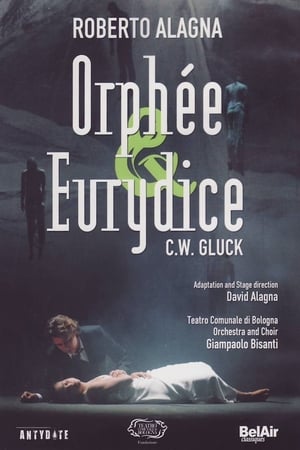
I usually don't like classic operas with modernized production and costumes. This one is an exception. The modernized twist is made to fit the story very well and makes watching this opera very enjoyable. Alagna as Orphee does a great job and and is more realistic than a female singer in the role. His impeccable french is an added bonus for french speakers like me. This is the version of this opera that you would want to watch without getting bored
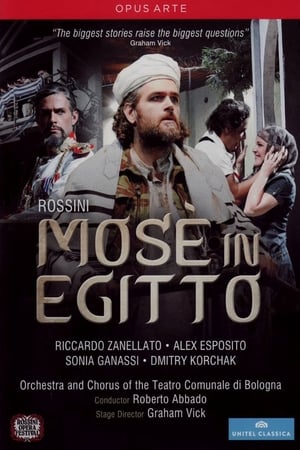
This thought-provoking, modern-day interpretation of Rossini's 'Mosè in Egitto' sets the scene for superior music-making at the prestigious Rossini Festival in Pesaro. For conductor Roberto Abbado, the transposition of the action to the present day releases the energy of Rossini's music. At his disposal is a cast of top-quality vocalists such as the “refined bel canto artist(Bresciaoggi) Sonia Ganassi as Elcia, and the “outstanding” Dmitry Korchak as the Pharaoh's son, two lovers fatefully drawn into the political turmoil and catastrophes of their time. Also among the protagonists are the “thoroughly brilliant” (DeutschlandRadio Kultur) baritone Alex Esposito as Faraone and, in his Rossini Festival debut, young, full-bodied bass Riccardo Zanellato as Moses. Conductor Roberto Abbado “inspired his musicians to deliver a spectacular performance” (Salzburger Nachrichten).
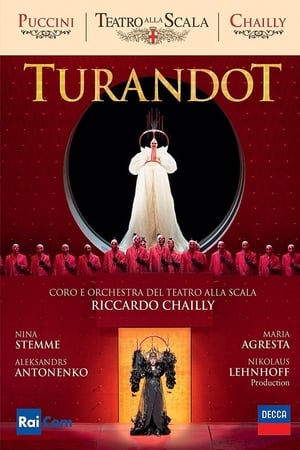
Visually this is a gripping production which captures the drama of this opera perfectly. It's downright exciting! and I found the singing, acting, and orchestral playing reasonably fine. I found only one major problem with it, a problem that kept Puccini for quite a few years. Turandot has been looking for an opportunity to kill Calif and Calif has singlemindedly tried to get Turandot to love and wed him focusing on her and ignoring a better looking girl who loves him truly. The problem is how to get the audience to applaud the match once Calif gets his wish. Puccini couldn't figure out how to do it. The traditional quick ending doesn't do it, and Berio's attempt is longer , tries its best, but ends up making it plain this is one wierd couple.