The four brothers Peter, Uwe, Manni and Günter live together in the German town of Dernbach and run what is probably the most chaotic car recycling business in Germany. Nothing is the same here as in other junkyards. Over four million spare parts lie in huge piles in the brothers' warehouse. Nevertheless, they manage to find just the right spare part time and time again and get a car back into shape.
What are we talking about when we talk about negotiations? About the state's concessions to the Mafia in exchange for ending the massacres? About who assassinated Falcone and Borsellino? Of the eternal coexistence between the Mafia and politics? Between the mafia and the church? Between the Mafia and law enforcement? Or is there more? A group of actors enacts the most relevant episodes of the affair known as the Mafia-state negotiation, impersonating mobsters, secret service agents, high officials, magistrates, victims and murderers, Freemasons, honest and courageous people, and courageous people up to a point. Thus one of the most intricate events in our history becomes an exciting tale.
A religious young man's identity is called into question when he visits a conversion therapist.
Raymond Roy is a 64-year-old idealist, an energetic social activist ready to give everything he has to those living on the edge: the alienated, impoverished and exploited members of society. Raymond is also a priest, doing what he has wanted to do ever since he was a teenager. Filmmaker Serge Giguère paints an intimate portrait of a man who has spent 30 years fighting for an alternative vision of life in his community. The film is a blend of cinema vérité and social history that provides a view of the man and his work from without and within, from the poetry of his personal diary laced with doubts and self-criticism, to the many achievements of the community groups he helped. Filming over several years, Giguère gives us a sense of the changes in values and attitudes of those who run our society, along with the role of the community groups who provide solutions, inspiration and a sense of renewal.
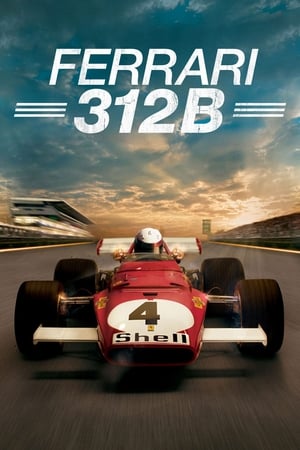
In a race against time and all odds, the revolutionary F1 racing car Ferrari 312B will get back on the Monaco circuit, 46 years later, under the wing of it’s creator, the genius engineer Mauro Forghieri.
Recreation of facts and stories of both experts and people who met Maximilian Kolbe and were shocked by his words and actions.
The countryside around the Po delta is dotted with abandoned houses and farmhouses. The landscape appears desertic, almost humanless. Some people shares stories about their bond with the land while the italian writer Gianni Celati documents the tragedy and the loss of values in this new landscape of desolation, with a superb narrative style.
A docu-film that traces the victorious ride of Mancini's Azzurri, from the debut match to the final against England. A troupe lived with the Azzurri for a month, to bring the spectators into the lives of the players and all the members of the staff, between training sessions, matches, travels and celebrations. An adventure told through the voices of the protagonists, who confided dreams, joys, pains and hopes to the cameras. "Blue Dream, the road to Wembley" is the completion of a project started a year ago together with the FIGC, to tell the national team's approach to the European Championships through the 4 episodes aired in the days immediately preceding the European Championship, bringing the new television language of the docu-series to one of the most important time slots of the first generalist network. "Blue Dream, the road to Wembley" is a project of the New Formats Development Department
In the United States, there is an active shooter incident every 12 days. In Memoriam shows the wrenching perspective of wounded survivors, grieving relatives, and heroes of the horrific attacks at the Las Vegas Route 91 Harvest Music Festival, the Sutherland Springs Baptist Church in Texas, and the Marjory Stoneman Douglas High School in Parkland, Florida.
Siddharta and Fabrizio, one of them nine years old, the other one 65, are the core of a community that renounces every civilising comfort. We are their guests – for one summer.
In 1845, the first Korean to ascend to priesthood was born. His first name is Andrew Kim Tae Gon. Despite all the persecution and suffering against Catholicism, he wanted to practice equality and philanthropy. Arrested during an expedition, he chooses martyrdom after bitter torture. He was 25 years old. Kim Tae Gon, a young man who took a journey toward hope until the last moment, asks young people in 2021. "Are you a Catholic?"
The intimate and passionate portrait of the late Max Croci in a documentary that recalls the human and cultural depth with the testimonies of friends and colleagues.
In a world losing itself to screens, teenage mystic Carlo Acutis saw beyond our social media-addicted society and offered an answer—if we’re willing to listen. Carlo Acutis: Roadmap to Reality explores the life of the first millennial saint while following teens on a phone-free pilgrimage to his tomb, immersing them in his story, his passion for Christ, and a search for meaning in a digital age.
Uli Köhler and Nick Golücke have visited the protagonists of the 1990 World Cup 20 years after their championship win and looked back together. The Writers Nick Golücke and Uli Köhler have, 20 years after World Cup triumph of the German national soccer team in Rome in 1990, visited the protagonists of back then once again and indulge with them together in memories.
Jesus Camp is a Christian summer camp where children hone their "prophetic gifts" and are schooled in how to "take back America for Christ". The film is a first-ever look into an intense training ground that recruits born-again Christian children to become an active part of America's political future.
Presenter and former England football captain Gary Lineker follows in the footsteps of his grandfather, Stanley Abbs, to explore a brutal but often overlooked chapter of World War Two.
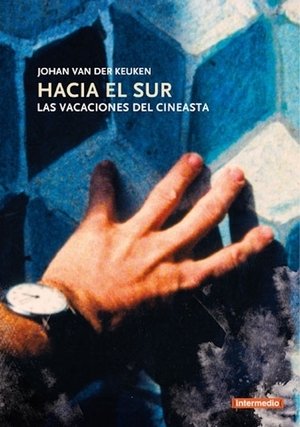
A documentary about German tourists on vacation in Italy and various activities at their Italian vacation destination.
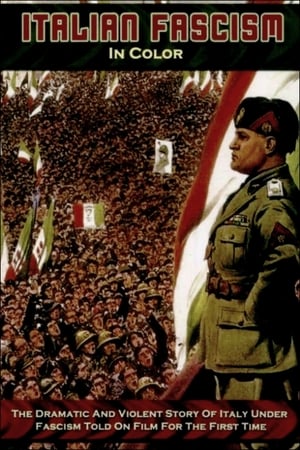
After the World War I, Mussolini's perspective on life is severely altered; once a willful socialist reformer, now obsessed with the idea of power, he founds the National Fascist Party in 1921 and assumes political power in 1922, becoming the Duce, dictator of Italy. His success encourages Hitler to take power in Germany in 1933, opening the dark road to World War II. (Originally released as a two-part miniseries. Includes colorized archival footage.)
An enormous shroud of white cement covers a hillside in the remote of western Sicily. It is both land art and a memorial to the town of Gibellina that was devastated by an earthquake in January 1968. It’s a work by the Italian artist Alberto Burri. He covered the ruins of the town with white cement and fissures function as pathways that wind through an area of roughly 20 acres. Petra Noordkamp captures Il Grande Cretto di Gibellina by Alberto Burri as an experentiental work of art filled with a sense of place and history.
William Friedkin attends an exorcism with Father Gabriele Amorth, as he treats an Italian woman named Cristina for the ninth time. Prior to filming, Cristina had purportedly been experiencing behavioural changes and “fits” that could not be explained by psychiatry, and which became worse during Christian holidays.