"La Gigue" (Gaumont #590) is part of the "Miss Lina Esbrard. Danseuse cosmopolite et serpentine" series of 4 films, and should not be confused with "Danse excentrique" (Gaumont #587), "Danse serpentine" (Gaumont #588, the only extant film in the series), or "Danse fantaisiste" (Gaumont #589).
A dramatized account of a great Russian naval mutiny and a resultant public demonstration, showing support, which brought on a police massacre.
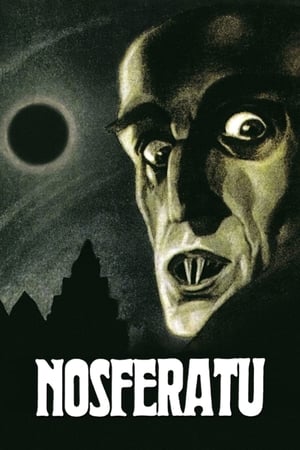
The mysterious Count Orlok summons a happily married real estate agent to his castle, located up in the Transylvanian mountains, to finalise a terrifying deal.
This pioneering documentary film depicts the lives of the indigenous Inuit people of Canada's northern Quebec region. Although the production contains some fictional elements, it vividly shows how its resourceful subjects survive in such a harsh climate, revealing how they construct their igloo homes and find food by hunting and fishing. The film also captures the beautiful, if unforgiving, frozen landscape of the Great White North, far removed from conventional civilization.
"Danse serpentine" (Gaumont #588) is part of the "Miss Lina Esbrard. Danseuse cosmopolite et serpentine" series of 4 films, and should not be confused with "Danse excentrique" (Gaumont #587), "Danse fantaisiste" (Gaumont #589) or "La Gigue" (Gaumont #590).
Two families, abolitionist Northerners the Stonemans and Southern landowners the Camerons, intertwine. When Confederate colonel Ben Cameron is captured in battle, nurse Elsie Stoneman petitions for his pardon. In Reconstruction-era South Carolina, Cameron founds the Ku Klux Klan, battling Elsie's congressman father and his African-American protégé, Silas Lynch.
A married farmer falls under the spell of a slatternly woman from the city, who tries to convince him to drown his wife.
Mad God is a fully practical stop-motion film set in a Miltonesque world of monsters, mad scientists, and war pigs.
The Mona Lisa Curse is a Grierson award-winning polemic documentary by art critic Robert Hughes that examines how the world's most famous painting came to influence the art world. With his trademark style, Hughes explores how museums, the production of art and the way we experience it have radically changed in the last 50 years, telling the story of the rise of contemporary art and looking back over a life spent talking and writing about the art he loves, and loathes. In these postmodern days it has been said that there is no more passé a vocation than that of the professional art critic. Perceived as the gate keeper for opinions regarding art and culture, the art critic has supposedly been rendered obsolete by an ever expanding pluralism in the art world, where all practices and disciplines are purported to be equal and valid. Robert Hughes, however, is one art critic who has delivered a message that must not be ignored.
Sergei M. Eisenstein's docu-drama about the 1917 October Revolution in Russia. Made ten years after the events and edited in Eisenstein's 'Soviet Montage' style, it re-enacts in celebratory terms several key scenes from the revolution.
Professor Barbenfouillis and five of his colleagues from the Academy of Astronomy travel to the Moon aboard a rocket propelled by a giant cannon. Once on the lunar surface, the bold explorers face the many perils hidden in the caves of the mysterious planet.
After Eve causes a cataclysmic event that sucks all apples into a dark void, the two surviving apples must recruit the help of Steve Jobs and Isaac Newton to save the Garden of Eden.
Takeda is a film about the universality of the human being seen thru the eyes of a Japanese painter that has adopted the Mexican culture.
The wife of sculptor Roger Heath is killed by a maniac because of Roger's madly jealous admirer Olivia Larkin. To care for his home and son Peter, Roger hires Irish immigrant Nora O'Hallahan as a nursemaid whom he realizes is possessed by the soul of his departed wife.
Two fragments of 8mm home-movie footage shot by the artist near Berlin weave together in repeating cycles of action, temporal manipulation, and colour distortion, heightening the viewer’s awareness of film-time and the film-image, and perception of colour in motion.
A warlord's nephew lusts for farmer Song Ke's sister. When Song refuses, the whole family is thrown into jail and the sister commits suicide. The father dies of grief and Song lives with his cousin abroad. The warlord's nephew loses power and also escapes to the same country.
Such a Girl
Mina Rogers (Mary MacLaren) is unfairly cast out into the cruel, cruel world by her crotchety old uncle. She searches for a new home, resorting to deception so that she will be taken in. Along the way she meets a doctor, certain mysteries surrounding her are solved, and the doctor asks her to marry him.
Dramatization of Genesis: titles with Biblical language combined with stock shots.
Between two Thanksgivings, Hannah's husband falls in love with her sister Lee, while her hypochondriac ex-husband rekindles his relationship with her sister Holly.