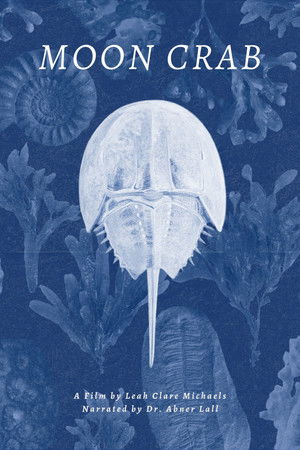
Moon Crab is a meditation on the horseshoe crab, one of Earth's oldest living species now struggling with extreme population decline. Blending reflections on nature's cycles with experimental visuals, the film employs an array of techniques, including eco-processed film developed with seaweed, to immerse the viewer in the crab's subaquatic world. Narrated with intimate depth by physiologist Dr. Abner Lall, the filmmaker’s neighbor, this documentary captures a timeless story of resilience and fragility, urging us to reconsider our connection to the natural world.
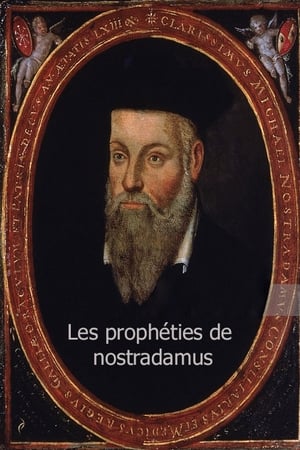
Debunking the mythology surrounding the 16th century French prophet, Nostradamus.
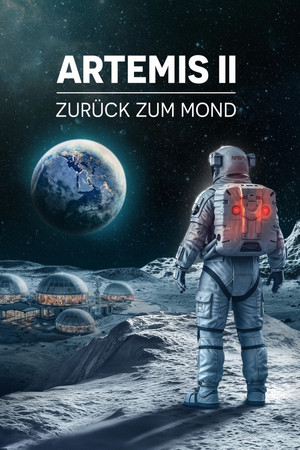
For the first time since the legendary Apollo missions over 50 years ago, humans are once again setting out for the Moon on April 1, 2026. NASA’s Artemis II mission marks the beginning of a new era in space exploration, and Germany will play a key role. This documentary follows the four astronauts during their preparations and offers exclusive insights into the Orion spacecraft. German astronauts Alexander Gerst and Matthias Maurer, along with other space experts, explain how the mission will proceed and why it is being undertaken. It's a journey that blends science, adventure, and the fundamental question: Why do people risk their lives to reach other celestial bodies and distant worlds?
The film discusses the evolution and potential of using light waves, particularly coherent light, for communication. It highlights the development of lasers at Bell Telephone Laboratories, explaining how they produce a highly controlled and intense beam of light that could revolutionize communication. The film emphasizes the vast possibilities of lasers, including applications in telecommunications, surgery, and exploring the universe, suggesting that this technology represents a significant step in humanity's understanding and use of light.
Here, where even monsters are political, the topography has its own memory. It has the mythological blues. Meanwhile, old gods are upset with us, and I am upset with my father.
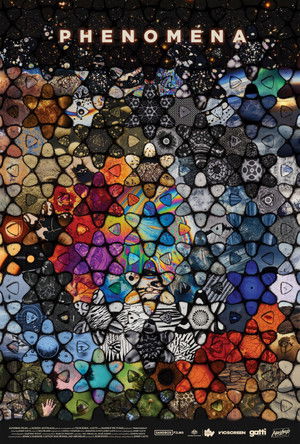
A psychedelic odyssey into the fabric of the universe, guided by a filmmaker’s immersive practical experiments that transcend into a deeply hypnotic audio-visual experience of awe and human connection to the natural world.
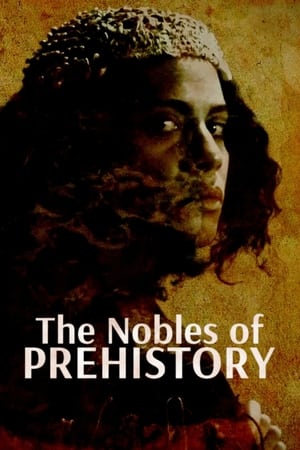
In 1872, in the cave of Cavillon in Monaco, archaeologist Émile Rivière (1835-1922) unearthed an apparently very old human skeleton, at least 24,000 years old, a discovery that changed the modern image of prehistoric men and women.
CERN and the University of California-Santa Barbara are collaborating in the search for the elusive substance that physicists and astronomers believe holds the universe together -- dark matter. Where is this search now in the realm of particle physics and what comes next?
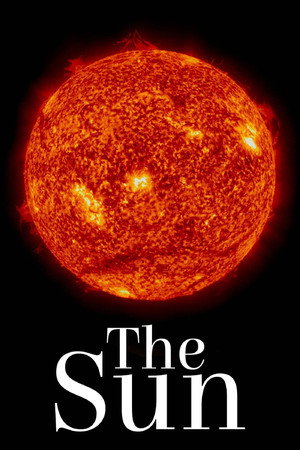
A giant ball of gas and raw energy with a temperature of up to 15 million degrees, the sun is the origin of life on earth and influences an infinite number of natural phenomena. This documentary is dedicated to the search for the significance of our home star for mankind, science and nature. Researchers at the American Space Agency NASA, the Canary Islands observatories, and the hottest and coldest places on earth share their insights. We can expect an emotional journey through science and history, peppered with human stories, at the end of which the complex bandwidth of life is revealed. Never before in the history of mankind has it been more important to uncover the secrets of the sun. Because for our earth, the sun is not just any star. It is the ultimate star.
A team of scientists search for the lost island of Testerep in front of the Belgian coast, venturing into artificial landscapes and virtual realities.
A large iron meteorite is found by two enthusiasts. But who owns it? A subtle film about property rights that develops into a philosophical and slightly absurd story.
Amazones, femmes guerrières de l'Antiquité
What would happen if a country of 97 million people were taught at a young age that the boogie man was real. In the Philippines for the last 400 years, the 'aswang' has been used as propoganda and social control by Spanish Colonizers, the Catholic Church, the Philippine Administration, and even the CIA.
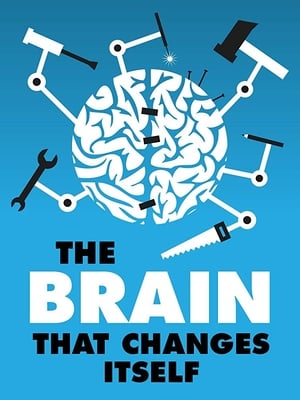
The discovery of neuroplasticity, the fact that thoughts can change the structure and function of our brains, even into old age, is one of the most important breakthroughs in our understanding of the brain in recent times. In The Brain That Changes Itself, Dr Norman Doidge explores the profound implications of the changing brain in a way that will permanently alter the way we look at human possibility and human nature. The documentary examines a blind man who sinks a basketball; a woman with half a brain who leads a normal life; learning disorders, strokes and brain traumas that are improved and cured; and chronic pain that is alleviated. The vast expanse of the brain's possibility is still unrealized.
We immerse ourselves in a quest for the origins of Art, among the very first modern humans. The prehistoric works, of incredible richness and diversity, tell a story of beauty and the species. Researchers, including archaeologists, but also art historians, philosophers and contemporary artists, enrich our view of prehistoric art with their different, but also complementary, points of view on the subject.
This compelling film represents a rare record of an original genius. In Jung on Film, the pioneering psychologist tells us about his collaboration with Sigmund Freud, about the insights he gained from listening to his patients' dreams, and about the fascinating turns his own life has taken. Dr. Richard I. Evans, a Presidential Medal of Freedom nominee, interviews Jung, giving us a unique understanding of Jung's many complex theories, while depicting Jung as a sensitive and highly personable human being.
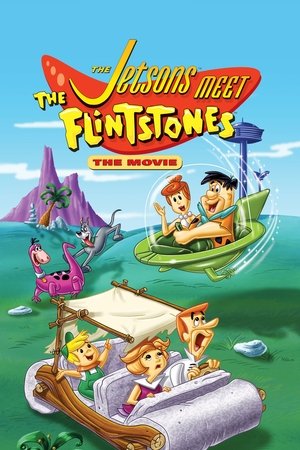
Elroy Jetson invents a time machine that takes him back to prehistoric times, where he meets the Flintstone family.
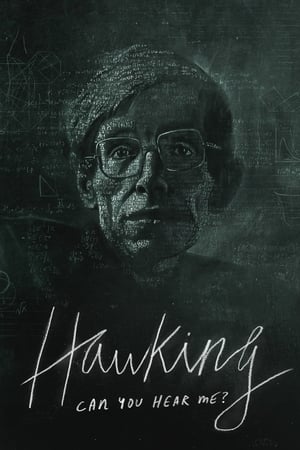
A documentary telling the remarkable human story of Stephen Hawking. For the first time, the personal archives and the testimonies of his closest family reveal both the scale of Hawking's triumphs and the real cost of his disability and success.
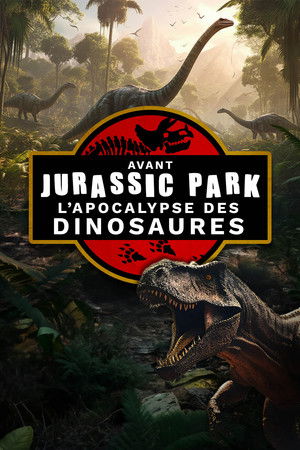
Avant jurassic park, L'apocalypse des dinosaures
Many people think of the dinosaurs as the first inhabitants of the earth, but this prequel to the acclaimed "Walking with Dinosaurs" puts viewers in the midst of a host of strange creatures that inhabited the earth millions of years before the dinosaurs ever existed.Starting from the Cambrian Period (530 MYA) and ending at the Early Triassic Period (248 MYA), Walking With Monsters shows the life and death struggles of the fantastic creatures that existed before the dinosaurs.