Based on true events, the film presents nearly all stages of national hero Sparapet Vazgen Sargsyan's life, intertwined with significant events in the modern history of our country.
A dying man in his forties recalls his childhood, his mother, the war and personal moments that tell of and juxtapose pivotal moments in Soviet history with daily life.
Ruthless silver miner, turned oil prospector, Daniel Plainview, moves to oil-rich California. Using his son to project a trustworthy, family-man image, Plainview cons local landowners into selling him their valuable properties for a pittance. However, local preacher Eli Sunday suspects Plainview's motives and intentions, starting a slow-burning feud that threatens both their lives.
As children in the loving Ekdahl family, Fanny and Alexander enjoy a happy life with their parents, who run a theater company. After their father dies unexpectedly, however, the siblings end up in a joyless home when their mother, Emilie, marries a stern bishop. The bleak situation gradually grows worse as the bishop becomes more controlling, but dedicated relatives make a valiant attempt to aid Emilie, Fanny and Alexander.
In the heart of 20th-century Ukraine, Andriy Voron embarks on an epic journey of survival, love, and healing-one that spans war, imprisonment, and solitude, ultimately transforming him from a young soldier into a wise elder whose spirit transcends time and space.
The film is a series of vignettes from Taiji Tonoyama's life and film clips, interspersed with a dialogue to camera by Nobuko Otowa, addressing the camera as if she is addressing Tonoyama himself, recollecting events in his life. The film focuses on Tonoyama's alcohol dependence and his various sexual relationships, as well as his film work with Shindo.
An aspiring actress crosses paths with a prolific serial killer in '70s LA when they're cast on an episode of "The Dating Game."
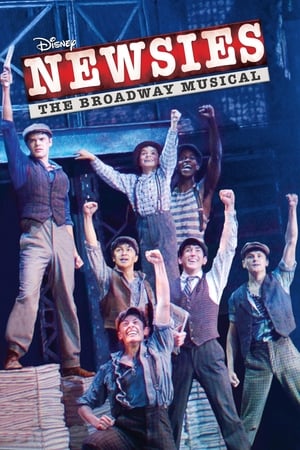
A week in the life of the exploited, child newspaper sellers in turn-of-the-century New York. When their publisher, Joseph Pulitzer, tries to squeeze a little more profit out of their labours, they organize a strike, only to be confronted with the Pulitzer's hard-ball tactics.
In the first decades of the 20th century, when life was being transformed by scientific innovations, researchers made a thrilling new claim: they could tell whether someone was lying by using a machine. Popularly known as the “lie detector,” the device transformed police work, seized headlines and was extolled in movies, TV and comics as an infallible crime-fighting tool. Husbands and wives tested each other’s fidelity. Corporations routinely tested employees’ honesty and government workers were tested for loyalty and “morals.” But the promise of the polygraph turned dark, and the lie detector too often became an apparatus of fear and intimidation. Written and directed by Rob Rapley and executive produced by Cameo George, The Lie Detector is a tale of good intentions, twisted morals and unintended consequences.
Jerzy Kosiński, author of The Painted Bird and Being There, sees his life and literary career unravel after having the authenticity of his work called into question by two reporters from The Village Voice.
Two different students—a successful but aloof academic and a rebellious but kindhearted delinquent—form a friendship through their love of jazz music.
In pre-WWII Vancouver, second-generation Japanese immigrants had it tough. Daily, they faced discrimination, hatred and injustice at the hands of their Caucasian counterparts. But one thing made their lives worth living: baseball. They may be the underdogs, but the Vancouver Asahi baseball team have a sense of fair play and smart tactics that set them apart from the brute force of their opponents. Under the guidance of new team captain Reggie Kasahara, can they be able to rise above all the negativity to win the tournament? This film is based on the true story of Vancouver Asahi, the Japanese-Canadian baseball team that was inducted into The Canadian Baseball Hall of Fame in 2003.
An ongoing experiment, evolving from a biopic about Soviet physicist Lev Landau into a large scale project – part cinematic cycle, part behavioral experiment – involving hundreds of participants from around the world. Combining elements of film, theatre, science, psychology, architecture, visual arts and performance, it has created a complex and absorbing world that has to be lived as much as seen.
Would-be writer Ryunosuke Chagawa is still living across the street from Norifumi Suzuki and his auto repair shop, though now he shares his home with Junnosuke, an orphan he's taken under his wing at the urging of pretty Hiroi, who continues to manage a nearby tavern. Chagawa dreams of publishing a successful novel and settling down with Hiroi and Junnosuke, but his day job running the candy store keeps him busy, and Hiroi mistakes his tight schedule for a lack of interest in her. Hiroi has also embarked on a secret career as a burlesque dancer, which isn't doing much to improve her opinion of men. At the Suzuki household, seven-year-old Ippei isn't happy to be sharing the house with a guest, his distant cousin Mika who is the same age but far more demanding. Mutsuko, the apprentice female auto mechanic, is still staying with the Suzukis, and she's becomes the object of the affections of Takeo, a downbeat young man who is studying cooking.
Teenage Mutsuko comes to Tokyo for work but ends up at a repair shop. She befriends the owner's family. Neighbors Hiromi, writer Chagawa with admirer Junnosuke strive alongside them in postwar Tokyo's evolution.
In 1912, the Titanic embarks on its inevitable collision course with history. In the wake of the over-spending required to build the largest luxury ship in the world, White Star Line executive Sir Bruce Ismay schemes to reverse the direction of his company's plummeting stock value. Onboard the Titanic, brave German 1st Officer Petersen struggles to convince his self-important British superiors not to overexert the ship's engines.
In early 1900s Surrey, fifty women labeled as typhoid carriers face unjust confinement at Long Grove Asylum. Isolated and stigmatized, they endure harsh conditions while fighting for their basic human rights against a cruel medical system. (Filming began in February 2025 and lasted 15 days before being halted indefinitely due to lack of funding; two months later, production company AITA Films Limited filed for bankruptcy.)
A-yuan and A-yun are both from the small mining town of Jio-fen. They move to Taipei, where A-yuan is an apprentice by day and goes to night school, and A-yun works as a helper at a tailors. Everyone thinks they are meant for each other, and so do they. They fail to see time and fate are beyond their control.
At an Austrian boys' boarding school in the early 1900s, shy, intelligent Törless observes the sadistic behavior of his fellow students, doing nothing to help a victimized classmate—until the torture goes too far. Adapted from Robert Musil's acclaimed novel, Young Törless launched the New German Cinema movement and garnered the 1966 Cannes Film Festival International Critics' Prize for first-time director Volker Schlöndorff.