His teachers, coaches, childhood friends and Barça teammates, together with journalists, writers and prominent figures from the history of football, come together in a restaurant to analyze and pick apart Messi's personality both on and off the field, and to look back at some of the most significant moments in his life. Viewed from Álex de la Iglesia's unique perspective, Messi recreates the player's childhood and teenage years, from his very first steps, with a football always at his feet, through to the decision to leave Rosario for Barcelona, the separation from his family, and the role played in his career by individuals such as Ronaldinho, Rijkaard, Rexach and Guardiola.
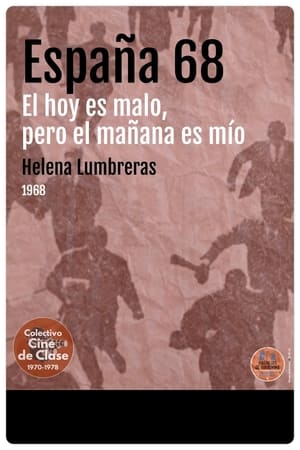
Spain, 1968. An analysis of the political and social situation of the country, suffocated by the boot of General Franco's tyrannical regime. (Filmed clandestinely in Madrid and Barcelona during the spring of 1968.)
Paco and Manolo are two Catalan photographers from the outskirts of Barcelona who have been working together for thirty years as if they were a single person, capturing their images in Kink magazine, a very personal photography fanzine with a homoerotic aesthetic of Mediterranean essence.
Global soccer hero Thierry Henry stars in this up-close sports documentary that covers his 2010 move from Barcelona to the New York Red Bulls.
The famous Spanish comedian Andreu Buenafuente, CEO of the production company El Terrat and prestigious TV host, tells how he and his numerous collaborators, both on set and behind the cameras, managed to carry on with their work despite the chaos and the several logistical and human problems caused by the global pandemic that began in early 2020.
The many faces of Barcelona are portrayed in this documentary, shot in a false sequence shot that goes across the streets, squares, markets and bars of a city that is presented as both conventional and law-breaking, exquisit and shameless, elegant and dispossessed.
A sincere portrait, and in first person, of the multifaceted Andalusian artist José Pérez Ocaña.
Upon the outbreak of the Spanish Civil War in July 1936, the anarchist union CNT socialized the film industry in Spain, so in Madrid and Barcelona film workers took over the production assets and, between 1936 and 1938, numerous films on a wide variety of topics were released, composing a varied mosaic that gives rise to one of the most unusual and original moments of Spanish cinematography.
Maria, the last member of a good provincial family of long tradition, wants to live the atmosphere of these musical groups that proliferate all over the world. He meets Ricardo, a former partner in the advertising world, who has self-marginalized because he got to the point where he felt disgusted by this false world. Maria tries to leave him, but has just integrated into this chaotic environment.
At the beginning of 2020 and for more than two years, at least four agents of the National Police Corps infiltrated various social movements in the Catalan Countries. They are part of the 33rd promotion of the Ávila Police School and act under the orders of the General Information Police Station. The documentary exposes the modus operandi and patterns of the police officers and reveals some of the mistakes that were key to discovering them.
Cabina Relax
Joan Ximénez el Petitet is a Catalan gypsy who pursues a dream. A former musician now —a percussionist, son of Ramón el Huesos who worked with the mythical singer Peret—, and affected by a rare chronic disease, he wants to accomplish the promise he made to his mother before she died: to celebrate a rumba concert on the stage of the Liceu, a great theater in Barcelona, along with a big symphony orchestra.
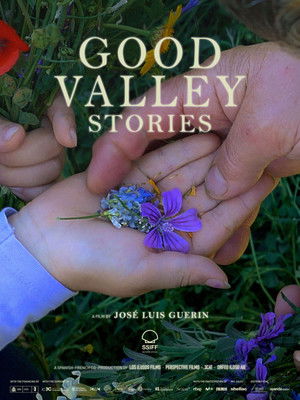
In a peripheral neighbourhood, where the rural and urban worlds meet, the houses of the first migrants who arrived after the post-war period coexist with the new blocks of the dormitory city, where the latest wave of migration is concentrated. This humble corner is now an authentic global village. Good Valley Stories is a sum of constructs, of social, generational and identity, urban and ecological conflicts, but it is also a calm and humanistic look at today’s world.
Six women stand before the camera to shape a unique film: it is unclear whether it is a documentary or a comedy, perhaps an LGBTQ+ statement or a film about sex work. What is certain is that it is a celebration of friendship and resilience, of communal life and solidarity. Add to this the boldness of the women involved, along with the freedom of an unabashed camera, and the result is irresistible.
The life of Paco Martínez Soria (1902-1982), one of the most famous and beloved Spanish actors, both on stage and screen; a comedian, a theatrical producer, an idol for the masses. A celebration of the uncommon gift of making people laugh.
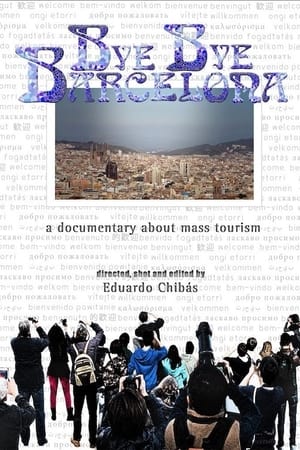
Tourists eating and taking photos. Tourists strolling and taking photos. Tourists bathing on the beach and taking more photos. Barcelona has become an overexploited photocall to the point of paroxysm, and this is what this film shows by turning the camera and pointing towards the visitors. A small gesture that, added to a powerful sound contrast and a caustic sense of humour, exposes without subterfuge a grotesque normality.
Thomas Pesquet : Objectif France
Take the Ball, Pass the Ball is the definitive story of the greatest football team ever assembled. For four explosive years, Pep Guardiola's Barça produced the greatest football in history, seducing fans around the world. In this exclusive, first-hand account of events between 2008 and 2012, the players themselves reveal the tension of the bitter Guardiola-Mourinho rivalry, the emotion of Abidal's fight back from cancer to lift the European Cup and how Messi, the best footballer the world's ever seen, was almost rejected by Barça as a 13-year-old.
On the occasion of awarding the Cervantes Prize to the Catalan writer Juan Marsé on 23 April 2009, family members, friends and writers offer a sincere portrait of the best chronicler of life in Barcelona, Catalonia, during the post-war period and the worst days of the General Franco dictatorship, in the forties and fifties, and during the economic development and the hard conquest of freedom, in the sixties and seventies.
A joyful tale filled with music. The rise of radio. The jazz big bands. The legendary clubs and ballrooms. The soundtracks of the great musical films and TV shows. Sex and romance, gangsters, luxury cars and palm trees. From Barcelona to New York, with a stop in Cuba. The birth of Las Vegas. The sound of the maracas. Chihuahuas everywhere. The incredible life story of Xavier Cugat (1900-90).