A devoted group of entrepreneurs and activists believe they see the writing on the wall, and they're determined to add a new chapter.
The story of a young boy forced to spend all five years of his short life in hospital while the federal and provincial governments argued over which was responsible for his care, as well as the long struggle of Indigenous activists to force the Canadian government to enforce “Jordan’s Principle” — the promise that no First Nations children would experience inequitable access to government-funded services again.
Elliot Page brings attention to the injustices and injuries caused by environmental racism in his home province, in this urgent documentary on Indigenous and African Nova Scotian women fighting to protect their communities, their land, and their futures.
Finding love is never easy. For Ravi Patel, a first generation Indian-American, the odds are slim. His ideal bride is beautiful, smart, funny, family-oriented, kind and—in keeping with tradition—Indian (though hopefully raised in the US). Oh, and her last name should be Patel because in India, Patels usually marry other Patels. And so at 30, Ravi decides to break up with his American girlfriend (the one who by all accounts is perfect for him except for her red hair and American name) and embark on a worldwide search for another Patel longing to be loved. He enlists the help of his matchmaker mother, attends a convention of Patels living in the US and travels to wedding season in India. Witty, honest and heartfelt, this comedy explores the questions with which we all struggle: What is love? What is happiness? And how in the world do we go about finding them?
Pensioners, lawyers, married couples and teenagers are all customers at the Angel Love Hotel in Osaka Japan. With unprecedented access into one of the most private and anonymous spaces in Japanese society, this film follows the love hotel's struggling manager and staff as the try to keep their hotel running, as well as revealing the intimate and private lives of the customers who visit.
$avy investigates the historical, cultural, and societal norms around women and money.
Rosa is a Mexican woman who, at the age of 17, migrated illegally to Austin, Texas. Some years later, she was jailed under suspicion of murder and then taken to trial. This film demonstrates how the judicial process, the verdict, the separation from her family, and the helplessness of being imprisoned in a foreign country make Rosa’s story an example of the hard life of Mexican migrants in the United States.
Paul Grignon's 47-minute animated presentation of "Money as Debt" tells in very simple and effective graphic terms what money is and how it is being created
This documentary analyses the perverse monetary policies initiated before the euro inception. It focuses on the case of Spain and the terrible housing bobble that developed there.
Per Persson left Sweden 40 years ago. In Pakistan he fell in love and became the father of two daughters. Trouble starts when the girls grow up and the family decides to emigrate to Sweden. When they end up living in a caravan outside Hässleholm, all their expectations are dashed.
Michael Moore comes home to the issue he's been examining throughout his career: the disastrous impact of corporate dominance on the everyday lives of Americans (and by default, the rest of the world).
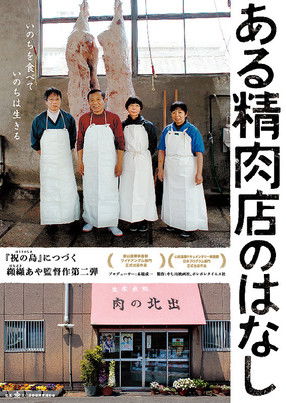
The Kitades run a butcher shop in Kaizuka City outside Osaka, raising and slaughtering cattle to sell the meat in their store. The seventh generation of their family's business, they are descendants of the buraku people, a social minority held over from the caste system abolished in the 19th century that is still subject to discrimination. As the Kitades are forced to make the difficult decision to shut down their slaughterhouse, the question posed by the film is whether doing this will also result in the deconstruction of the prejudices imposed on them. Though primarily documenting the process of their work with meticulous detail, Aya Hanabusa also touches on the Kitades' participation in the buraku liberation movement. Hanabusa's heartfelt portrait expands from the story of an old-fashioned family business competing with corporate supermarkets, toward a subtle and sophisticated critique of social exclusion and the persistence of ancient prejudices.
"Trouble the Water" takes you inside Hurricane Katrina in a way never before seen on screen. The film opens the day before the storm makes landfall--just blocks away from the French Quarter but far from the New Orleans that most tourists knew. Kimberly Rivers Roberts, an aspiring rap artist, is turning her new video camera on herself and her Ninth Ward neighbors trapped in the city. Weaving an insider's view of Katrina with a mix of verité and in-your-face filmmaking, it is a redemptive tale of self-described street hustlers who become heroes--two unforgettable people who survive the storm and then seize a chance for a new beginning.
Recaptures the lives and times of Ma Rainey, Bessie Smith, Ida Cox, Alberta Hunter, Ethel Waters, and the other legendary women who made blues music a vital part of American culture. The film brings together for the first time dozens of rare, classic renditions of the early blues.
The Beastie Boys are among the most influential groups of the last two decades. As their music has opened hip-hop to a wider audience and changed the parameters of its sound, their ambitious music videos have carried the medium to new levels of artistic expression. This groundbreaking two-disc anthology showcases eighteen videos containing alternate visual angles and multiple audio tracks. Loaded with never-before-seen footage and unreleased music tracks, this special edition also contains a trove of rare still photos and exclusive audio commentary by the band and the video directors.
Ydessa Hendeles' exhibition entitled "The living and the Artificial" (consisting of works of art all comprising a photograph of living persons in the company of one or several teddy bears) had puzzled Agnès Varda so much that she decided to go to Toronto where the artist lives and interview her. In front of Agnes Varda's DV camera, Ydessa tells about the singularity of her artistic approach. She also expresses herself about the Holocaust, which both her parents survived.
A chronological look at films by, for, or about gays and lesbians in the United States, from 1947 to 2005, Kenneth Anger's "Fireworks" to "Brokeback Mountain". Talking heads, anchored by critic and scholar B. Ruby Rich, are interspersed with an advancing timeline and with clips from two dozen films. The narrative groups the pictures around various firsts, movements, and triumphs: experimental films, indie films, sex on screen, outlaw culture and bad guys, lesbian lovers, films about AIDS and dying, emergence of romantic comedy, transgender films, films about diversity and various cultures, documentaries and then mainstream Hollywood drama. What might come next?
Will Cubans be able to safeguard their heritage of pristine Nature and preserved ecological treasures under this new era, as they are facing the combined pressure of money and tourism? What policies can be implemented to maintain the island’s spectacular wilderness?
This raw, gutsy portrait of New York's Chinatown captures the early days of an emerging consciousness in the community. We see a Chinatown rarely depicted, a vibrant community whose young and old join forces to protest police brutality and hostile real estate developers. With bold strokes, it paints an overview of the community and its history, from the early laborers driving spikes into the transcontinental railroad to the garment workers of today.
GENTLY DOWN THE STREAM is constructed from fourteen dreams taken from eight years' worth of my journals. The text is scratched directly on to the film so that you hear your own voice as you read. The accompanying images of women, water, animals and saints were chosen for their indirect but potent correspondence to the text.