The young Austrian princess Marie Antoinette is arranged to marry Louis XVI, future king of France, in a politically advantageous marriage for the rival countries. The opulent Marie indulges in various whims and flirtations. When Louis XV passes and Louis XVI ascends the French throne, his queen's extravagant lifestyle earns the hatred of the French people, who despise her Austrian heritage.
Witty narration follows the history of Versailles Palace; founded by Louis XIII, enlarged by autocratic Louis XIV, whose personal affairs and amours, and those of his two successors, are pursued in more detail to the start of the Revolution, after which the story is brought rapidly up to date.
Year 1969 - in Turkey. 60s youth were living the most excited days. There was a great effort to make a bridge in Istanbul, on the Bosphorus. Meanwhile, on the eastern border of Turkey, in a Kurdish city between the borders of Iran and Iraq that is left to its destiny, in Hakkari, Zap River was taking lives since there were no passage on it.
Summer 1936: young unemployed communist David Carr leaves Liverpool to join the fight against fascism in Spain. He joins an international group of Militia-men and women, the POUM (Partido Obrero de Unificación Marxista). After being wounded, he goes to Barcelona, where he joins another group of fighters.
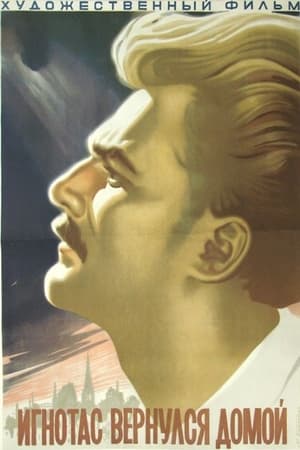
Based on the novel by the famous Lithuanian writer A. Gudaitis-Guzevičius “The Truth of Blacksmith Ignotas” about the revolutionary events of 1918-1919. in Lithuania, about the struggle of workers for Soviet power, for the freedom of their homeland.
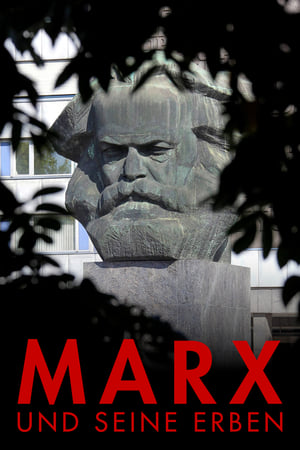
Over the past hundred years, dramatic social upheavals have taken place in the name of Karl Marx's theories. In Western Europe, the student movement of 1968 and the Eurocommunists were inspired. And in recent times, the thinker has experienced a renaissance.
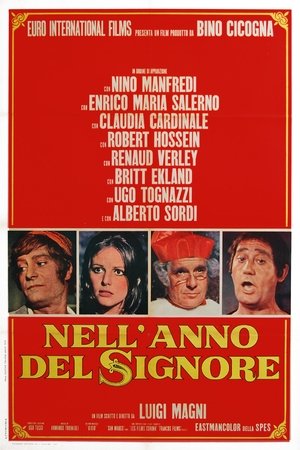
Rome, 1825. Bishop Rivarola and Colonel Nardoni are in charge of suppressing the liberal revolution. Shoemaker Cornacchia got the information that the liberal Filippo Spada is a spy and is going to denounce his revolutionary companions.
Observing the first years of the formation of Soviet power, about the life and work of Feliks Dzerzhinsky from 1918-1925; in July 1918, as a result of a revolt of the Left Socialist Revolutionaries, German ambassador Mirbach is killed. Feliks Dzerzhinsky alone goes to the headquarters of the Left Socialist Revolutionaries and Anarchists, he manages to persuade ordinary soldiers and sailors, participants in the rebellion, who are now cracking down on their leaders.
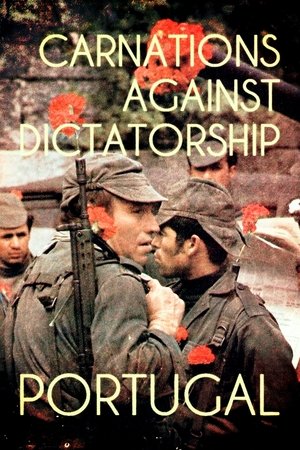
In Portugal, during the night of April 24-25, 1974, a peaceful uprising put an end to the last government of the Estado Novo, the authoritarian regime established in 1933 by dictator António de Oliveira Salazar (1889-1970), paving the way for full democracy: a chronicle of the Carnation Revolution.
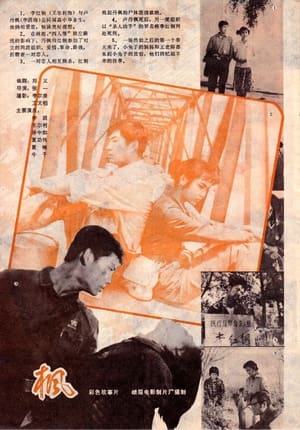
A Chinese drama set in 1966, during the Cultural Revolution.
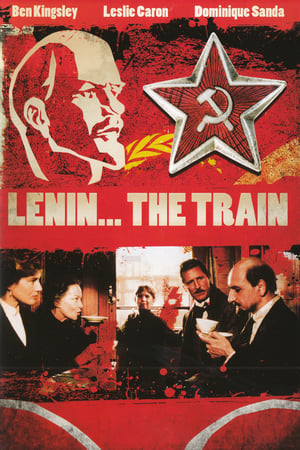
March/April 1917. The first world war is already a couple year to pace. A sealed train with Russian emigrants keeps on driving from Zürich Germany and Sweden to Sint-Petersburg. The outlaws stand under the guidance of Vladimir J. Lenin. Two senior officers support the revolutionary bomb "to ensure that everything runs smoothly. Yet there are some unpleasant clashes between Socialists and enthusiastic workers who are worried about the war. During train travel there comes an end to Lenin's affair with the gracious Inessa, and his wife Nadja is prepared take back him. The triumphant entrance in St. Petersburg will exceed all expectations....
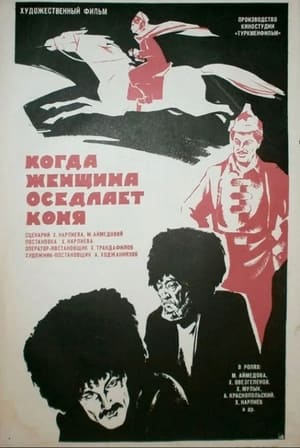
Biographical film about Eyne Kuliyeva, who was the first woman to be the head of a local governance in 1920s Soviet Turkmenistan.
In this short film directed in the style of Andrei Tarkovsky, eternity and the downfall of the Soviet empire are explored in a deeply symbolic and poetic way. The film follows a protagonist as they traverse a desolate landscape, reflecting on the transient nature of life and the inevitability of death. Through a series of dreamlike sequences, the audience is presented with a powerful meditation on the idea of eternity, and how it can be seen in the rise and fall of empires. The film culminates in a powerful scene of the protagonist standing atop a hill, looking out at the ruins of the Soviet empire, and contemplating the eternal cycle of life and death.
Everyone knows the story of Paul Revere and his famous midnight ride to warn colonial forces of the British approach. But history books don't tell of the man who sent Revere on his mission: Joseph Warren, America's least remembered founding father. Uncover the forgotten history of Warren and stories of other unsung heroes in our fight for independence in The American Revolution.
During the ill-fated Hungarian revolution of 1956, Karcsi Szabo, star player on the water polo team, is torn between his love for a revolutionary student and his training for the Melbourne Olympics.
In a dystopian America dominated by a tyrannical police state, a stirring revolution clashes with a forbidden romance.
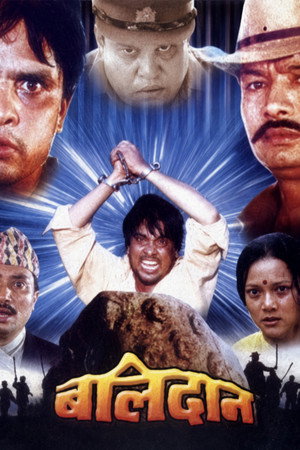
A group of brave rebels and an ordinary leader fight against an oppressive regime for democracy and freedom during Nepal's Panchayat era.
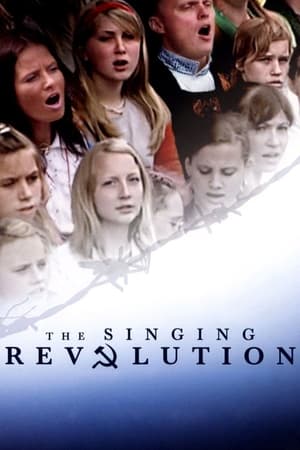
Most people don't think about singing when they think about revolutions. But song was the weapon of choice when, between 1986 and 1991, Estonians sought to free themselves from decades of Soviet occupation. During those years, hundreds of thousands gathered in public to sing forbidden patriotic songs and to rally for independence. "The young people, without any political party, and without any politicians, just came together ... not only tens of thousands but hundreds of thousands ... to gather and to sing and to give this nation a new spirit," remarks Mart Laar, a Singing Revolution leader featured in the film and the first post-Soviet Prime Minister of Estonia. "This was the idea of the Singing Revolution." James Tusty and Maureen Castle Tusty's "The Singing Revolution" tells the moving story of how the Estonian people peacefully regained their freedom--and helped topple an empire along the way.
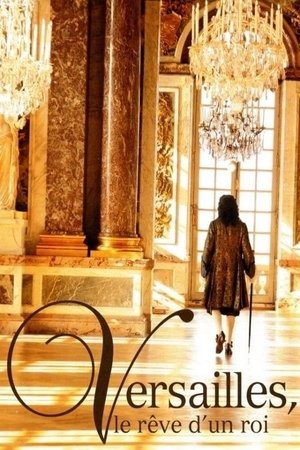
Docudrama about the life of Louis XIV nicknamed "the Sun King", the King of France who ran a glamorous court, expanded the borders of France, loved women and parties and built an incredible palace for himself - the Versailles.
Lesson in History was produced when Peters was a student at the West Surrey School of Art and Design. Having read The People Could Fly by Virginia Hamilton, she was inspired to make what she describes as 'the stories of black achievement and how stories had not been told.' The animated film was subsequently screened on the BBC as part of the series 10X10. It was shot on 16mm using cutouts, photography and masks.