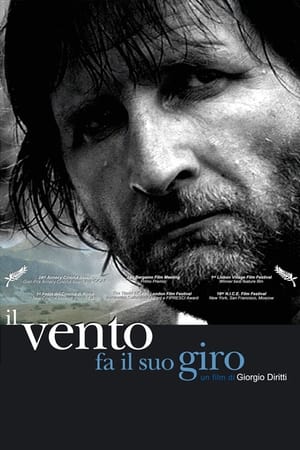
The aging, conservative population of a small, sleepy village in the Italian Alps are surprised to see that a former French professor has settled there with his young wife and their three children to produce goat cheese, in order to escape the wrongs of civilization. At first they are suspicious of his unconventional ideas and lifestyle, then are conquered by the enthusiasm, kindness, helpfulness of the young family and start to see in them a possible rebirth of the place. But little by little misunderstandings, envy and conflicts take over.
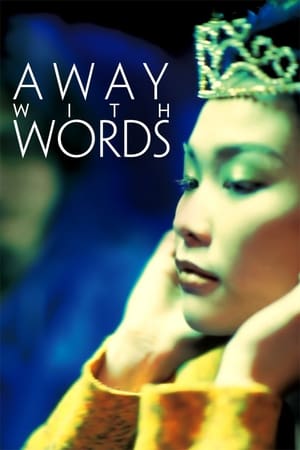
A Japanese man and a gay bar-owner in Hong Kong drink beer as they talk about their childhood and experiences.
After an unprecedented global pandemic has turned the majority of humankind into violent infected beings, Morgan, a man gifted with the ability to speak the infected's new language, leads the last survivors on a hunt for patient zero and a cure.
dadme la muerte que me falta
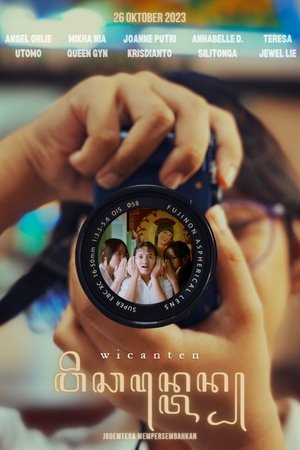
In a world embracing change, Ajeng distances herself from her Javanese roots. She explores the consequences as she grapples with the clash between tradition and modernity. "Wicanten" is a poignant reflection on the evolving dynamics of language and its profound impact on personal and cultural connections.
Taking place after alien crafts land around the world, an expert linguist is recruited by the military to determine whether they come in peace or are a threat.
An exiled poet returns to his native homeland of Pangasinan province after many years of absence. Through a mystical soul journey, he reclaims his primal connection to the water (danum), to the land (dalin), and to the people (katooan) where in the end he finds a home to anchor his wandering soul.
Robert Brammel, a private English teacher who develops an unusual relationship with a new student.
"Randi Pua Ananta" follows the journey of Ananta, a notorious troublemaker who undergoes a remarkable transformation into a selfless hero. When a devastating flood threatens his village, Ananta makes the ultimate sacrifice to save his people, proving that redemption can come in the most unexpected ways.
This year will be the one! I swear! I'm going to make my short film for real!
Osman can understand his mother tongue, Kurdish, but cannot speak it, and he speaks Turkish, which happens to be his second language, but cannot understand it. As a result of this condition of his, Osman starts to fail at handling two concurrent tasks. Just like he cannot respond to his patrons while he is working, he cannot engage in a conversation with his friends whilst they are having coffee together. Even though he wants to get married, he fails at sustaining a long-term relationship with women whom he meets. Osman’s life starts to change after a customer tells him that she could help him with his obsession.
It Ain't Necessarily So captures a budding Japanese jazz singer and her biracial vocal instructor who struggle to agree on the proper way to sing Gershwin’s “I Loves You Porgy.” Humor is no stranger to jazz singers Eiko Katayama and Kazue Hiraoka who star alongside Masa Fox, their English teacher. "Master at capturing hyper-awkward moments... brilliantly explore how representations of culture and identity ain’t necessarily how they appear." --Wilda Wong, San Diego Asian Film Festival
She was born in a cave, more than 60 years ago. Now she lives in a village, with many children and grandchildren to look after. Sometimes, she dreams of her dead mother calling her home – to the cave.
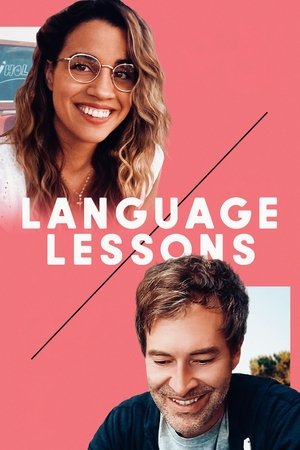
For his 45th birthday, wealthy Californian Adam receives a surprise gift from his choreographer partner: 100 weekly Spanish lessons with Cariño, a vivacious expat who teaches virtually from her home in Costa Rica. Adam's unconvinced at first; a self-described “creature-of-habit”, he’s unsure about where or how this new element will fit into his carefully-structured routine.
In the middle of a French exam, 17 year old Charlie struggles to find the words to be true to himself…and his best friend.
Musamoni Panigrahi (1920s–2017), fondly called “Nani Ma” by her neighbours, appears in the centre of this first film in the Baleswari dialect of India's Odia language. The story revolves around folklore and folk songs narrated by Nani Ma. Born in the 1920s in pre-independent rural India in a coastal village in the Balasore district of Odisha, she never got to go beyond the first few days of school. The film is an alternate history of a society broken through colonization, Brahminical patriarchy and a post-famine (Orissa famine of 1866, killing nearly 5 million people, one-third of the population), and the dominance of formal writing over spoken tongues. Three academics -- Damayanti Beshra, PhD (recipient of India’s fourth civilian award, “Padma Shri”), Panchanan Mohanty, PhD (noted linguist), and Laxmikanta Tripathy, PhD, DLitt (anthropologist and author) -- also appear in the film to provide contextual commentary on patriarchy, oral history and the sociolinguistic diversity.
The movie explores the origin of the Ukrainian language and persecution of those who defended its authenticity. Using examples of other countries, creators of the film prove that a nation cannot exist without a language.
A TV-hour length documentary film depicting the relationship between language, culture, place, music, tradition, and magic on an active volcano, in the Pacific nation of Vanuatu, on the island of Ambrym.
How do German couples communicate in private? What are they arguing about? Is the way to a man’s heart really through his stomach? This docu-fictional hybrid production discusses such questions with the help of authentic interview snippets that were edited under the staged plot. We get an insight into the life of an animal couple, who experience typical everyday situations on behalf of us humans. At first, our fox is emotionally contained, while the penguin lady may get wild as hell. With a wink, the filmmakers hold up a mirror to the audience in the cinema.
Victor Klemperer (1881-1960), a professor of literature in Dresden, was Jewish; through the efforts of his wife, he survived the war. From 1933 when Hitler came to power to the war's end, he kept a journal paying attention to the Nazis' use of words. This film takes the end of 1945 as its vantage point, with a narrator looking back as if Klemperer reads from his journal. He examines the use of simple words like "folk," "eternal," and "to live." Interspersed are personal photographs, newsreel footage of Reich leaders and of life in Germany then, and a few other narrative devices. Although he's dispassionate, Klemperer's fear and dread resonate