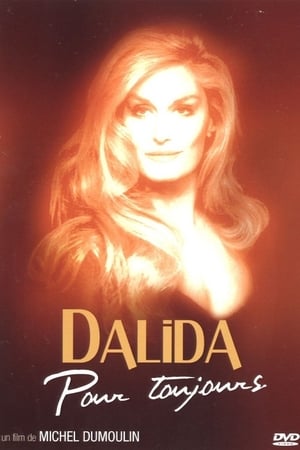
French pop diva Dalida candidly discusses a number of the songs that made her a phenomenal success across Europe, the Middle East and Japan in this celluloid chronicle of the beguiling singer. Dalida -- who earned 45 gold records -- talks about "J'attendrai," "Besame Mucho," "Paroles Paroles" and other hits. The video also includes previously unreleased pictures shot in exotic locales and footage spanning the singer's 30-year career.
A feature-length documentary about the film Galaxy Quest and its legacy, celebrating its milestone 20th anniversary.
A walk through the golden age of Spanish exploitation cinema, from the sixties to the eighties; a low-budget cinema and great popular acceptance that exploited cinematographic fashions: westerns, horror movies, erotic comedies and thrillers about petty criminals.
The chronicle of the mind-blowing journey that was Hollywood during the seventies; the true and gripping story of the last golden age of American cinema, an exalted celebration of creativity and experimentation; but also of sex, drugs and rock 'n' roll: a turbulent and dark tale of ambition, envy, betrayal, hatred and self-destruction.
The Death of 'Superman Lives': What Happened? feature film documents the process of development of the ill fated "Superman Lives" movie, that was to be directed by Tim Burton and star Nicolas Cage as the man of steel himself, Superman. The project went through years of development before the plug was pulled, and this documentary interviews the major filmmakers: Kevin Smith, Tim Burton, Jon Peters, Dan Gilroy, Colleen Atwood, Lorenzo di Bonaventura and many many more.
A portrait of film critic Carlos Boyero, one of the most followed and feared figures in Spanish cinema, surrounded by controversy and both love and hate.
Born into a family of actors, Françoise Dorléac, Catherine Deneuve's older sister, began her career at the age of 15. She shone a few years later alongside Jean-Paul Belmondo in "L'Homme de Rio". From there, a great international career is announced to the young actress. But in 1967, a few months after filming the "Demoiselles de Rochefort" with her sister, she died tragically in a road accident, at the age of 25. Nevertheless, she leaves behind an abundant career and thus continues to be present in the minds of cinephiles.
Atlantic Ocean, off the coast of Iceland, July 9, 2016. The surprising discovery of a canister —containing four reels of The Village Detective (Деревенский детектив), a 1969 Soviet film—, caught in the nets of an Icelandic trawler, is the first step in a fascinating journey through the artistic life of film and stage actor Mikhail Ivanovich Zharov (1899-1981), icon and star of an entire era of Russian cinema.
Fokking hell!
Key decision makers reveal the inside story of how the West was drawn ever deeper into the Afghan war. Reporter John Ware charts the history of a decade of fighting and looks at when the conflict may end.
Local filmmaker Woo Ming Jin and his crew traversed across Peninsular Malaysia and Singapore to find 'Seruan Merdeka' (1947) - the first film made in Malaya post-WWII, and also the first film in the history of Malaysian cinema to feature a biracial cast of Malays and Chinese. While tracking the film's whereabouts, Woo met many locals along the way, whom he interviewed in an effort to find out more about the country's history.
In 1948, French singer Charles Aznavour (1924-2018) receives a Paillard Bolex, his first camera. Until 1982, he will shoot hours of footage, his filmed diary. Wherever he goes, he carries his camera with him. He films his life and lives as he films: places, moments, friends, loves, misfortunes.
Brilliant composer and violinist George Enescu is at the peak of his career and wants to compose an opera. He falls in love with a princess, Maruca, who inspires and challenges him. She is fascinated by Enescu and his music, she loves him passionately, but has a duty towards her husband and her two children. Destiny will release her from the chains of marriage, but will that be enough for the genius and the princess to live happily ever after?
A portrait of the famous French actress Fanny Ardant, who has worked with great figures of cinema such as Agnès Varda, Alain Resnais, Michelangelo Antonioni, Sydney Pollack and, above all, François Truffaut (1932-84), with whom she had a sentimental relationship and whose death marked the rest of her life.
A group of people are standing along the platform of a railway station in La Ciotat, waiting for a train. One is seen coming, at some distance, and eventually stops at the platform. Doors of the railway-cars open and attendants help passengers off and on. Popular legend has it that, when this film was shown, the first-night audience fled the café in terror, fearing being run over by the "approaching" train. This legend has since been identified as promotional embellishment, though there is evidence to suggest that people were astounded at the capabilities of the Lumières' cinématographe.
As Hong Kong's foremost filmmaker, Johnnie To himself becomes the protagonist of this painstaking documentary exploring him and his Boundless world of film. A film student from Beijing and avid Johnnie To fan, Ferris Lin boldly approached To with a proposal to document the master director for his graduation thesis. To agreed immediately and Lin's camera closely followed him for over two years, capturing the man behind the movies and the myths. The result is Boundless, a candid profile of one of Hong Kong's greatest directors and a heartfelt love letter to Hong Kong cinema.
An immersion into the diverse filmography of René Clément, a rare popular filmmaker also loved by critics, famous in particular for "Purple Noon".
In the year following the 9/11 terrorist attacks, young journalist Claude Baechtold finds himself in the war zone of Afghanistan. Not entirely voluntarily, the avowed anti-militarist is dragged by two fearless reporters on a round trip through the entire country.
Jakob Yzermans is an American salesman looking for his roots in Rotterdam. He thinks his father (Hendrik Yzermans) has left Holland with the money he took from his collegues. Jakob is trying to get the money together to repay the money. While doing so he encounters more and more problems.
Born in Berlin in 1896, Lotte Eisner became famous for her passionate involvement in the world of both German and French cinema. In 1936, together with Henri Langlois, she founded the Cinémathèque Française with the goal of saving from destruction films, costumes, sets, posters, and other treasures of the 7th Art. A Jew exiled in Paris, she became a pillar of the capital's cultural scene, where she promoted German cinema.