Riding Giants is story about big wave surfers who have become heroes and legends in their sport. Directed by the skateboard guru Stacy Peralta.
Working men and women leave through the main gate of the Lumière factory in Lyon, France. Filmed on 22 March 1895, it is often referred to as the first real motion picture ever made, although Louis Le Prince's 1888 Roundhay Garden Scene pre-dated it by seven years. Three separate versions of this film exist, which differ from one another in numerous ways. The first version features a carriage drawn by one horse, while in the second version the carriage is drawn by two horses, and there is no carriage at all in the third version. The clothing style is also different between the three versions, demonstrating the different seasons in which each was filmed. This film was made in the 35 mm format with an aspect ratio of 1.33:1, and at a speed of 16 frames per second. At that rate, the 17 meters of film length provided a duration of 46 seconds, holding a total of 800 frames.
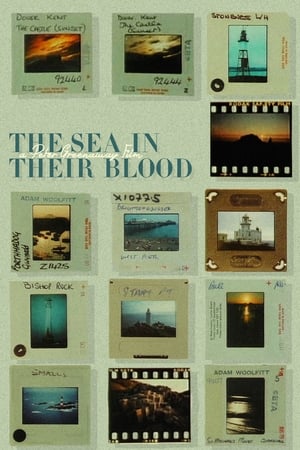
A trip that the author makes to a distant beach trying to find the place where his grandfather made a painting years ago.
Anna Osborn and Sonia Rockhouse were forever changed when the Pike River Mine Disaster stole their loved ones, but instead of sitting down, they stood up! But They Did tells Anna and Sonia's story, following them through the period of time before and during the re-entry of the mine.
Ceschi and Stamm's documentary tells the incredible story of Monika Krause, a former East German citizen, who became Fidel Castro's Sexual Education Minister. After 20 years in Cuba, Krause set the Cuban sexual revolution in motion: in favor of a woman's right to sexual fulfillment and legal abortion, and against exclusion of homosexuals, she acquired the title "Queen of Condoms". A film about potent female agitators, staunch macho men and Caribbean love lives.
A riveting expose about the personalities of murderers and their motives. This 72 minute film covers the McDonalds' restaurant massacre, President Reagan's assassination attempt, serial murderer Henry Lee Lucas and others.
In January 1961, a new generation in the guise of John F. Kennedy moved into the White House. All of a sudden politics were youthful, dynamic and sexy. During the brief period in which he was in office, the first pop star of politics accompanied America through the darkest days of the Cold War. At the same time, his signal to embark in new directions was eagerly welcomed by younger generations all around the world. Later on, Jackie Kennedy was to compare his presidency with Camelot - the legendary court of King Arthur. Yet, there were also dark sides to this popular president's life.
The filmmakers and lead actors of The Remains of the Day (1993) discuss how they came to make the film, and the subtle power of its execution.
A panorama of Brazilian popular music from the 60s and 70s through the musical group Novos Baianos. A retrospective of the community lifestyle adopted by its members and the influence inherited from singer João Gilberto.
Light Upon Light: A Documentary on Hijab is an intimate and deeply personal exploration of the diverse, raw, and untold stories of hijabi women. Through open and vulnerable conversations with 7 women, the film dismantles stereotypes, highlights the challenges imposed by society, and celebrates the profound beauty of the hijab beyond a mere clothing choice. It captures the individuality of each woman’s story—how they came to wear the hijab, the struggles they’ve faced, and the strength they’ve found in it. More than just fabric, the hijab is a journey, often misunderstood, and influenced by the way the world perceives it. By amplifying voices that are often unheard, the documentary creates a space for empathy, challenges misconceptions, and invites a deeper understanding of what it truly means to wear the hijab; inspiring everyone to see hijab in a new light.
This films reveals the extraordinary variety of life found in the vast blue expanses of the open ocean. Here, all the action takes place in a 10 metre deep band of water, just under the surface. Many species use this section of water to migrate and hunt while others use ingenious ways to stay hidden where there appears to be no shelter.
This documentary takes the viewer on a deeply personal journey into the everyday lives of families struggling to fight Goliath. From a family business owner in the Midwest to a preacher in California, from workers in Florida to a poet in Mexico, dozens of film crews on three continents bring the intensely personal stories of an assault on families and American values.
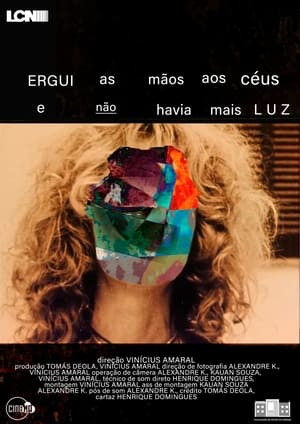
Within the video, two screens coexist. On the primary screen, a repetitive action takes place - the photo in the hands is periodically blurred. The focus of the viewer's attention is shifted to the secondary screen, which is more dynamic. The face in front of the camera, resembling clay, tries to take on images from archival photographs and video recordings.
What happened after Einstein fled Nazi Germany? Using archival footage and his own words, this docudrama dives into the mind of a tortured genius.
Young boys going into the sea water by Brighton's West Pier in the UK to pick up pennies thrown in by people on the pier.
HISTORY brings you an all-encompassing documentary event cantered around the 25th anniversary of the LA Riots, the most destructive riot in American history that left 53 people dead and caused over a billion dollars in damage.
A group of young architects, confined to a forest in Barcelona during the COVID crisis, explore the problems generated by the ambition of wanting to be completely self-sufficient.
This film is an attempt to disclose if Raul Brandão has left any trace, in Nespereira, Gumarães.
Deep Blue is a major documentary feature film shot by the BBC Natural History Unit. An epic cinematic rollercoaster ride for all ages, Deep Blue uses amazing footage to tell us the story of our oceans and the life they support.
Once upon a time there was a garden, a refuge, a safe haven - 'The Garden of the Finzi Continis'. It came to life in Giorgio Bassani's 1962 semi-autobiographical novel recounting an unfulfilled love story between two young Jews in Ferrara, while fascism was raging in Italy in the late 1930's. In 1972, Vittorio De Sica's film adaptation of the book won the Oscar for Best Foreign Language Film. Since then, the fictional space of the garden became so tangible that people from all over the world come to Ferrara to look for it. Fifty years after winning the Oscar, reality and fiction come together once more, as we walk through an imaginary garden and bring to life the book, its author, its main protagonists, history, love, friendships and betrayals.