Connection | Isolation presents eight intimate portraits of trans and post-gender individuals navigating the challenges of the COVID-19 pandemic. Amidst moments of connection and isolation, these participants reveal a deepening awareness of gender, their bodies, and trans community. Created by an all trans and queer crew, this hybrid documentary film interlaces portraits with reenactments, integrating archival material documenting what so many experienced and many still do.
7-year-old Sasha has always known that she is a girl. Sasha’s family has recently accepted her gender identity, embracing their daughter for who she truly is while working to confront outdated norms and find affirmation in a small community of rural France.
Born on a sharecropping plantation in Northern Florida, Ray Charles went blind at seven. Inspired by a fiercely independent mom who insisted he make his own way, He found his calling and his gift behind a piano keyboard. Touring across the Southern musical circuit, the soulful singer gained a reputation and then exploded with worldwide fame when he pioneered coupling gospel and country together.
The Finnish modern dancer Noora Hannula dances through this documentary film in her own explosive style. Noora’s life has always been very connected to the artist environment with her grandfather, Simo Hannula, who throughout his entire life dedicated him fully to his art. Noora and her grandfather crossed paths when Noora used a picture of his dead body in her show and now we meet Noora working on her newest show: The Era of No Talent Rising, while she is trying to figure out where her own limits are.
When the world was on fire, they called Hans Blix. This is how the Swedish diplomat is introduced in ‘Blix Not Bombs’. And if there is one fire he is particularly associated with, it is the 2003 invasion of Iraq. Prior to the invasion, Blix led the delegation of UN officials to find out whether weapons of mass destruction were present in Iraq. And it is the invasion and its consequences that we get Blix’s formidably insightful analysis of in a thorough and honest conversation with director Greta Stocklassa. Few others understand the complexities of international politics on the world stage like Blix, and none can explain it with his intellectual elegance. But Stocklassa’s film is also a portrait of the man himself, now an elderly gentleman, writing his memoirs, walking with a cane and watching birds through the window of his apartment. His outlook and commitment is as urgent as ever, as Blix takes stock of the invasion of Iraq and the state of the world today.
At the close of Jacques Chirac's life, politician Jean-Louis Debré has wished to make a film to celebrate his friend, to tell the story of their friendship and professional understanding, and to make an intimate portrait of the former President of France through the accounts of a few very close friends. Thanks to Jean-Louis Debré's presence, Claude Chirac and some of Jacques Chirac's closest friends, famous or unknown, agreed to talk to the camera, sometimes for the first time, to evoke their untold-before memories and tell about the moments that bonded the two men for a lifetime.
Albert Camus died at 46 years old on January 4, 1960, two years after his Nobel Prize in literature. Author of “L'Etranger”, one of the most widely read novels in the world, philosopher of the absurd and of revolt, resistant, journalist, playwright, Albert Camus had an extraordinary destiny. Child of the poor districts of Algiers, tuberculosis patient, orphan of father, son of an illiterate and deaf mother, he tore himself away from his condition thanks to his teacher. French from Algeria, he never ceased to fight for equality with the Arabs and the Kabyle, while fearing the Independence of the FLN. Founded on restored and colorized archives, and first-hand accounts, this documentary attempts to paint the portrait of Camus as he was.
A look behind the scenes of the film Un p'tit truc en plus, with interviews with Artus, Clovis Cornillac, and Ludovic Boul, as well as exclusive footage from the making-of.
In this short documentary, five black women talk about their lives in rural and urban Canada between the 1920s and 1950s. What emerges is a unique history of Canada’s black people and the legacy of their community elders. Produced by the NFB’s iconic Studio D.
Ten years ago, Volodymyr Zelensky was just one of the many faces on Ukrainian television screens. He became a star thanks to the 2015 satirical series Servant of the People, in which he played a history teacher who becomes president. Four years later, what began as fiction became a reality. This French documentary follows the transformation of a popular TV comedian into a statesman on the front lines of the Russian invasion. Archival footage, family photos, television appearances, and interviews with Zelensky and those closest to him create a multi-layered portrait of a man who always longed for a large audience. At the same time, the film places his personal development in the broader context of post-Soviet Ukraine, which is also searching for its own identity.
The 1960s opened with La Dolce Vita by Federico Fellini and its unforgettable lead: Marcello Mastroianni. The actor seemed to glide effortlessly through his roles — and through life — as if to say that life is not all that serious, or perhaps that it is far too serious not to be laughed at. But what kind of man was hiding behind the actor with the handsome, boyish looks, who appeared so gentle and nonchalant?
Singer-songwriter Winslow Leach seeks revenge on the nefarious music producer Swan, who steals both Winslow's music and his favorite singer for the grand opening of Swan's new rock palace, the Paradise.
About the creative career of People's Artist of the USSR N.K. Cherkasov. The film uses footage from movies of the 1920s and 1930s.
Is the city of Zurich suffering from ‘density stress’? What is it like to live in mega cities such as São Paulo, Mexico City and Tiflis? Filmmaker Thomas Haemmerli broaches the topics of city development, architecture, density, housing market, xenophobia and gentrification from an autobiographical perspective. The path of his life has led him from a childhood in the villa district of Zürichberg, through his teenage years as squatter to flat shares, yuppie apartments and finally second homes in various cities. Only recently having become a dad, he plans to further enhance Zurich’s price appreciation by purchasing a huge, extended city apartment… This multifaceted essay not only humorously questions the filmmaker’s decisions, but also those of the right-wing conservatives, who are afraid of losing their space to immigrants, and the political left, who fail to embrace modern-age architecture.
This critically acclaimed Vietnamese documentary portrays the claustrophobic struggles against COVID-19, led by a group of doctors and nurses, in an effort to save the lives of COVID infected pregnant women. Produced by national news channel VTV, "Ranh Giới", meaning "borderline", refers to the line between life and death.
A self-narrated portrait of a Polish immigrant in Winnipeg whose unglamorous job keeping streetcar switches working reveals dignity, resilience, and pride in everyday labor.
Images, voices, and interrupted silences that evoke the intangible losses caused by COVID-19.
While the whole world has stopped during the coronavirus pandemic, the residents of the Kolochava Transcarpathian mountain village are living their normal lives. Only ambulance workers know what is really going on.
After consolidating itself as a tourist destination in the mid-1960s, this small coastal village has become the dormitory town for the workers of a Nuclear Power Plant. With the liberal promise of prosperity and socioeconomic wellfare, many workers left their homes to move to the small city and started working at the new Nuclear Power Plant. The collective unrest and the silence, cut off by the great gusts of wind, articulate the landscape of the village that is now under the aid of the Nuclear Power Plant.
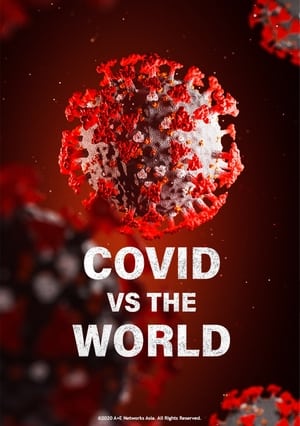
With the drama of a scientific thriller, this documentary reveals—through the eyes of the scientists on the frontline—how Covid-19 spread, and the race to develop a vaccine