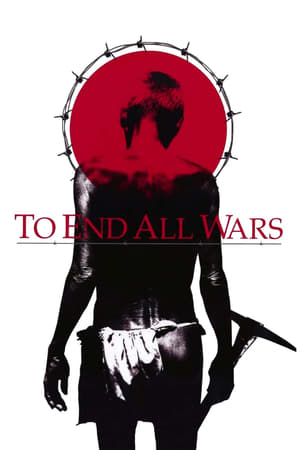
In this debut narrative short film, colonial relationships and land politics are discussed. An investigative piece that peers through ideals of retribution and questions the dynamics of the colonized person and the colonized.
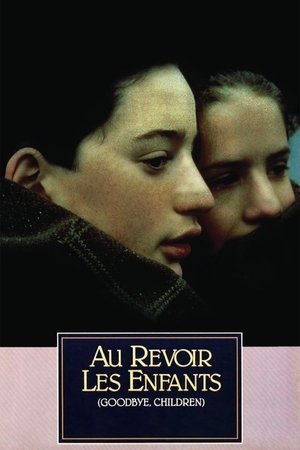
April, 1940. Manolo, 16 years old, and Jesus, who is just 8, are taken by their older brother Pepe, a lieutenant in the Army, to a sanatorium for children suffering from tuberculosis, situated on the border with Portugal. Once in the sanatorium, Manolo, surrounded by boys all much younger than he is, feels a bit like the cock of the walk since the only other man around is the handyman Emilio who looks after the gardens and does whatever needs to be done about the place. His wife, Rafaela, is the cook. Manolo meets Irene, a falangist who runs the sanatorium, and the school teacher, Miss Transito, a crabby spinster. He has his first sexual experience, albeit as a voyeur, with his nurse Vicenta. When she has to leave, her place is taken by a girl from the village, Maria Jesus, with whom Manolo falls hopelessly in love. A relationship grows up between them which will mark them both for ever.
A Russian flag bearer in World War II questions his will to fight. With a Russian flag as his weapon, he charges into machine guns. As war engulfs him, he must ask himself why he continues to wave his flag.
What happens when man's reason is used as a weapon to slice through the accumulated detritus of ignorant and benighted ages and into the glorious new world of Enlightenment? The old is cleared away and the space is created for the new, but at what cost? Does reason itself have sufficient capacity to create a comprehensive world for man to exist as man, or does he become something else?
A heroic guerilla group fights back against impossible odds during the 1941 Nazi invasion of Russia.
A young woman has spent her life tormented by the death of her mother, who was on a ship torpedoed during World War II. When her father hires an investigator to look into the circumstances of the mother's death 30 years prior, it triggers a new rash of emotional turmoil for the young woman and uncovers a heinous crime.
In Nazi-occupied Czechoslovakia, a doctor-turned-warehouse employee reluctantly agrees to treat a gravely wounded political fugitive, putting himself and everyone living in his building complex in danger.
Arts documentary, first broadcast before Ai Weiwei's arrest by the Chinese authorities in April 2011, and his subsequent release after being detained for 11 weeks. Architect, photographer, curator and blogger, Ai Weiwei is China's most famous and politically outspoken contemporary artist. Alan Yentob explores the story of Ai Weiwei's life and art, and reveals how this most courageous and determined of artists continues to fight for artistic freedom of expression while living under the restrictive shadows of authoritarian rule.
Poslední revoluce
La Vache et le Député
This movie is about the love and protection of a man from another culture for the lowly horsemen of the the plains in Hungary during World War II.
LENIN’S PAWN is a hybrid documentary with dark humor following actor Sergiu Voloc, a modern-day Don Quixote whose lonely fight against Lenin monuments across Moldova turns into an absurd confrontation with a system that rebuilds them overnight.
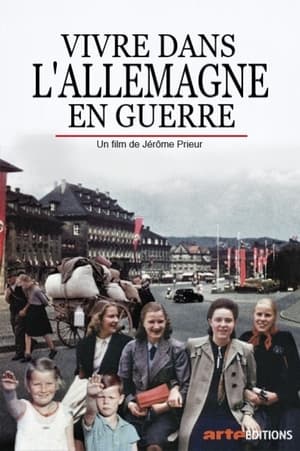
In late summer 1939, the French learned that Adolf Hitler had attacked Poland. On September 3, France entered the war, twenty years after the carnage of World War I. Although France was considered the world’s leading military power, with a vast empire and a powerful ally in the United Kingdom, everyone was overcome with a sense of dread. Yet the fighting would not begin until May 1940 and would end with France’s defeat in June. How did the French people experience those few months—among the most decisive and darkest in the country’s history?
Kamala Harris: the USA’s Next President?
50 years ago, assemblyman George Michaels cast a single vote on New York's abortion bill that changed the course of American history but destroyed his political career in the process.
A mix of fiction and documentary, "Evita Capitana" takes place in the final of the 1951 Argentina's soccer championship, where Banfield faced the then imposing Racing Club. An important political figure sides with Banfield, representing the humble and needed, but power thinks otherwise.
Avenoir
May 1945. Victory. Triumph over Nazi Germany. And already, history is being rewritten. The story of a France liberated by its people, resistant at heart, united against oppression. In our memories, we see the faces of heroes: Gaullists and Communists. We forget the origins of the struggle. That of the very first men and women, left-wing, right-wing, communists, far-right, apolitical... who, individually and from June 17, 1940, said "no." A visceral and spontaneous "no" in a France that said "yes," rallying behind Pétain. A "no" from the heart and courage, fueled by the will to act in the name of freedom. They started from nothing, had to invent everything, risk their lives and those of their loved ones. They are the heroes, those who, in isolation, stood up at once and chose to disobey, whatever the cost, even to the point of self-sacrifice. Alone against all...
Plan for Destruction is a 1943 American short propaganda film directed by Edward Cahn. It looks at the Geopolitik ideas of the ex-World War I professor, General Karl Haushofer, who is portrayed as the head of a huge organization for gathering information of strategic value and the mastermind behind Adolf Hitler's wars and plans to enslave the world. The film was nominated for an Academy Award for Best Documentary Short.
Jo Jones, a young defense plant worker whose husband is in the military during World War II, shares a house with three other women in the same situation.