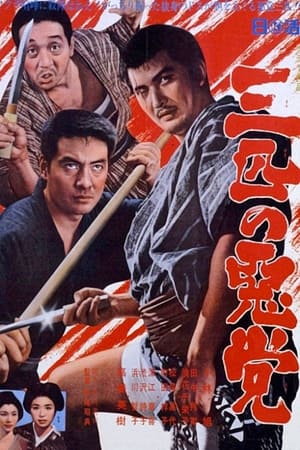
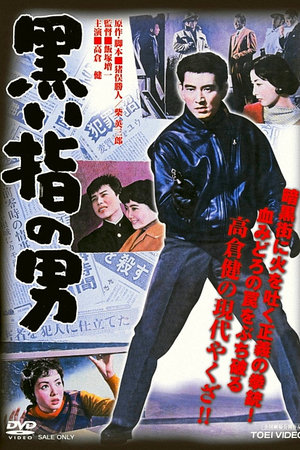
A unique action drama in which a ruthless yakuza encounters a woman and realizes his true love as the conflict between the yakuza intensifies.
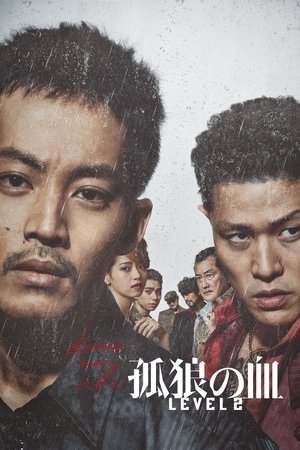
President of the territorial yakuza organization is being manipulated by a crooked leader in the military and some capitalists Ishikiri. The plan is to get multiple family of the organized crime groups based in Osaka to war it out and order the Shima to the Onishi group of the branch to expand the territory. Now members of the same yakuza gang are forced to fight each other over territory and honor.
Follows the final days of the shogunate and Shinsengumi's Vice-Comander Hijikata Toshizo along with his fellow anti-imperialist group.
In this film, Hibari plays a dual role as brother and sister. The story involves a journey to Hanagasa for an incognito Lord (Kotaro Satomi) to overthrow an attempted usurpation of his domain, while being harassed by vassals of the usurper (Kensaku Hara). There's also a mysterious ronin played by Jushiro Konoe. The songs are seamlessly woven into the narrative and don't overwhelm the action. While the plot is derivative it is good example of its type and quite enjoyable. Note that there are some flashback sequences in black and white.
Sea Raiding Unit
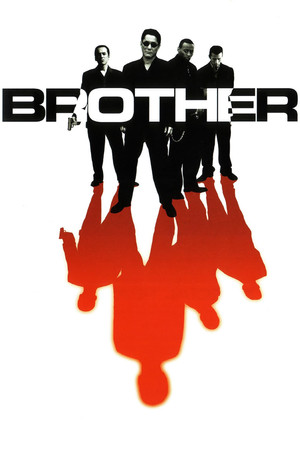
A Japanese Yakuza gangster's deadly existence in his homeland gets him exiled to Los Angeles, where he is taken in by his little brother and his brother's gang.
A samurai answers a village's request for protection after he falls on hard times. The town needs protection from bandits, so the samurai gathers six others to help him teach the people how to defend themselves, and the villagers provide the soldiers with food.
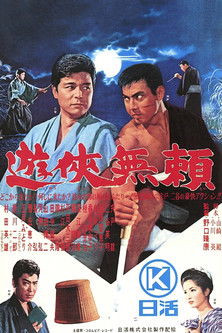
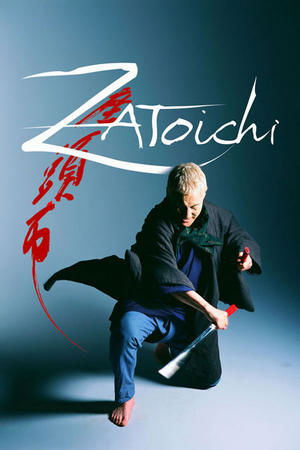
Blind traveler Zatoichi is a master swordsman and a masseur with a fondness for gambling on dice games. When he arrives in a village torn apart by warring gangs, he sets out to protect the townspeople.
In feudal Japan, during a bloody war between clans, two cowardly and greedy peasants, soldiers of a defeated army, stumble upon a mysterious man who guides them to a fortress hidden in the mountains.
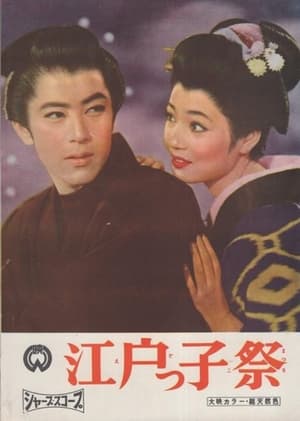
The Color Print of Edo is a 1939 black and white Japanese silent film with benshi accompaniment directed by Kazuo Mori. It is a cheerful period drama, sprinkled with comical scenes and tells the story of a loyal and handsome Edo period servant who fights to help his older brother marry the woman he loves. The star of this film, Utaemon Ichikawa, gained enormous popularity for his portrayal of a cheerful and chivalrous man.
The rise of the famed gambler.
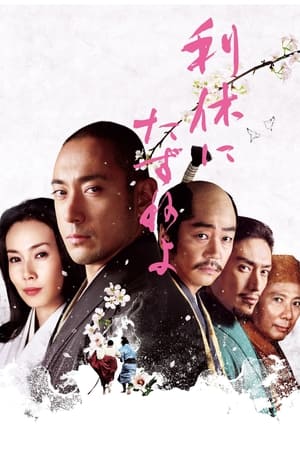
During the Edo period, a gifted swordsman was exiled from his clan when he questioned the misconduct of his leader. Years after, his dying wife wish was for him to go back to his clan.
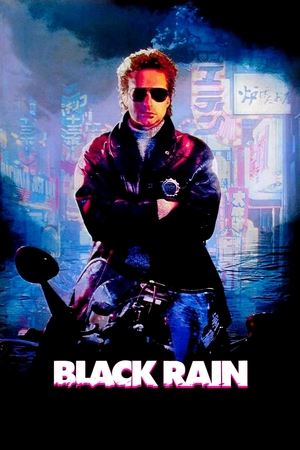
Two New York cops get involved in a gang war between members of the Yakuza, the Japanese Mafia. They arrest one of their killers and are ordered to escort him back to Japan. However, in Japan he manages to escape, and as they try to track him down, they get deeper and deeper into the Japanese Mafia scene and they have to learn that they can only win by playing the game—the Japanese way.
Murakawa, an aging Tokyo yakuza tiring of gangster life, is sent by his boss to Okinawa along with a few of his henchmen to help end a gang war, supposedly as mediators between two warring clans. He finds that the dispute between the clans is insignificant and whilst wondering why he was sent to Okinawa at all, his group is attacked in an ambush. The survivors flee and make a decision to lay low at the beach while they await further instructions.
When the boss of the Nakano Family decides to retire and makes a loyal follower the new boss instead of his own son, it causes strife in the family. Sides are taken and lines are drawn. Meanwhile, a rival family with a land dispute with the Nakano starts pulling strings behind the scenes...
The fate of Tokugawa’s world hangs in the balance as Yagyu Jubei is sent on a mission to discover what happened to 10 of the shogun’s spies that never returned. Matsukata Hiroki, one of the last surviving members of the Golden Age of Japanese Cinema proves that he has not lost a step as he portrays an older and wiser Yagyu Jubei in a movie that brings the best of samurai filmmaking into the 21st century. Summoned from semi-retirement by Shogun Iemitsu, Jubei is asked to take to the road and investigate a clan rumored to be preparing explosives for a rebellion. With help from a beautiful female ninja they head into the Shirakawa domain where the fighting skills of both are tested time and again as they strive to destroy a conspiracy that could bring a new Warring States Era. In the 1960's Yagyu Jubei was the signature role of the great Konoe Jushiro, father of Matsukata Hiroki. This brings the character full circle.
After a group of girls get murdered, they come back as ghosts and seek revenge.
Akemi ( Mizuna Rei ), the only daughter of the Kozakura family in the Kanto region, hates yakuza and lives in a dormitory at a girls' school in Tokyo, but returns to her parents' home after hearing the news that her father has suddenly passed away. Seeing the Kozakura family for the first time in a long time, they are deserted, and the only henchmen are Pinkichi and Sutematsu. They call Akemi their sister. Meanwhile, the Gouda-gumi, who have been growing their power on behalf of the Kozakura family, repeatedly harass the Kozakura family in order to take over their territory. Akemi's younger sister Chie ( Maria Wakatsuki ) , who adores Akemi, also falls prey to the Gota group. Akemi, furious with her, takes the name of her second generation. She wears her sailor uniform and holds a Japanese sword and attacks the Gota group.
One evening, when the monk Saito Musashibo Benkei was luring for his sword number 1000 at Gojo bridge, Shanao (later Yoshitsune), a young man of small and fragile stature passed by. He wore a nice sword and played the flute.
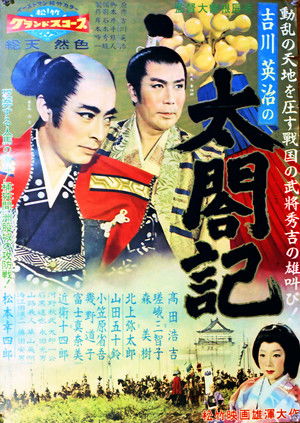
Drama set in the historical Warring States Era of Japan. Tokaido name Imagawa Yoshimoto personally led his army to invade Owari Province territory, now in Aichi Prefecture Nagoya City area, was the leader Nobunaga of this surprising burst of death. After the war, the Imagawa clan who originally dominated the Tokaido region fell away, and the victorious Oda Nobunaga quickly expanded his power in Central Japan and the Kinki region, laying the foundation for his future control of the central government of Japan.