A dramatic history of Pu Yi, the last of the Emperors of China, from his lofty birth and brief reign in the Forbidden City, the object of worship by half a billion people; through his abdication, his decline and dissolute lifestyle; his exploitation by the invading Japanese, and finally to his obscure existence as just another peasant worker in the People's Republic.
In 2001, Jimmy Wales published the first article on Wikipedia, a collaborative effort that began with a promise: to democratize the spreading of knowledge, monopolized by the elites for centuries. But is Wikipedia really a utopia come true?
Based on a true story of a meeting in June 1945 between two powerful men with very opposite philosophies and perspectives on the future of their country.
In 1924, Oskar Matzerath is born in the Free City of Danzig. At age three, he falls down a flight of stairs and stops growing. In 1939, World War II breaks out.
An analysis of the rise of the European far-right, increasingly present in both politics and everyday life: an inquisitive journey through France, Germany and Belgium.
Documentary on Les Charlots, known as The Crazy Boys in the English-speaking world, a group of French musicians, singers, comedians and film actors who were popular in the 1960s, 1970s, and early 1980s.
As World War II rages, the elite Sixth Ranger Battalion is given a mission of heroic proportions: push 30 miles behind enemy lines and liberate over 500 American prisoners of war.
A Russian and a German sniper play a game of cat-and-mouse during the Battle of Stalingrad in WWII.
1940, Kawamoto Akiko lives in Hiroshima with her father and mother, Genkichi and Shizuko, as well as her two younger brothers. Akiko loves playing her favourite piano. As the war situation worsens, she is busy helping out the war efforts. On the morning of August 6, 1945, she disobeys her father and heads into the centre of town for work. In Hiroshima 75 years later, her favourite piano remains, restored and playable following its survival of the atomic bombing
This first co-production between the GDR and Great Britain is intended to contribute to an understanding of the situation and attitudes of millions of working people in opposing social orders. Using the example of shipyard workers, fishermen, the brigade and family of a trade union active cook and unemployed person of various ages and professions in Newcastle on the one hand and a brigade of crane operators of the Warnowwerft and fishermen of the Warnemünde cooperative on the other hand, insights into the way of life and attitudes of people of our time are to be conveyed.
In the years before World War II, a penniless Japanese child is torn from her family to work as a maid in a geisha house.
Between 1944 and 1953, 170,000 Estonians, Latvians, and Lithuanians put up fierce resistance to the Soviet invasion, hiding deep in the vast Baltic forests. Driven by a dream of freedom, they defied a ruthless empire with few resources but unwavering determination. Through previously unseen archives and the poignant accounts of the last survivors, this documentary reveals their clandestine struggle, their heroic sacrifices, and their legacy, timeless symbols of a desperate fight to escape the Soviet stranglehold and preserve the flame of independence.
Following in his father's footsteps, Albert Pierrepoint becomes one of Britain's most prolific executioners, hiding his identity as a grocery deliveryman. But when his ambition to be the best inadvertently exposes his gruesome secret, he becomes a minor celebrity & faces a public outcry against the practice of hanging. Based on true events.
Betrayed by an informant, Philippe Gerbier finds himself trapped in a torturous Nazi prison camp. Though Gerbier escapes to rejoin the Resistance in occupied Marseilles, France, and exacts his revenge on the informant, he must continue a quiet, seemingly endless battle against the Nazis in an atmosphere of tension, paranoia and distrust.
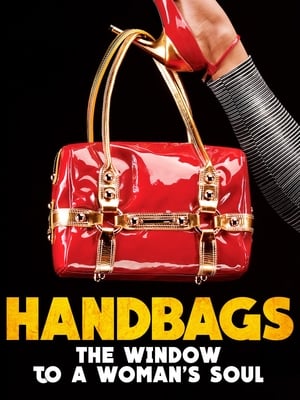
A feature-length documentary about our complex relationship with manufactured objects and, by extension, the people who design them.
In barely a century, French peasants have seen their world profoundly turned upside down. While they once made up the vast majority of the country, today they are only a tiny minority and are faced with an immense challenge: to continue to feed France. From the figure of the simple tenant farmer described by Emile Guillaumin at the beginning of the 20th century to the heavy toll paid by peasants during the Great War, from the beginnings of mechanization in the inter-war period to the ambivalent figure of the peasant under the Occupation, From the unbridled race to industrialization in post-war France to the realization that it is now necessary to rethink the agricultural model and invent the agriculture of tomorrow, the film looks back at the long march of French peasants.
Apollonie, les dieux avaient raison
Women are sexually insulted and threatened by men every day. Experts around the world are registering an anti-feminist backlash that seems to be on the verge of becoming socially acceptable. Particularly affected: women in publicly visible positions – such as politicians, actresses or entrepreneurs. Who is behind the attacks and what are the motives?
A 1965 BBC adaptation of William Shakespeare's first historical tetralogy (1 Henry VI, 2 Henry VI, 3 Henry VI and Richard III), which deals with the conflict between the House of Lancaster and the House of York over the throne of England, a conflict known as the Wars of the Roses. It was based on the 1963 theatre adaptation by John Barton, and directed by Peter Hall for the Royal Shakespeare Company.
In the summer of 1941, the United States and Japan seem on the brink of war after constant embargos and failed diplomacy come to no end. "Tora! Tora! Tora!", named after the code words used by the lead Japanese pilot to indicate they had surprised the Americans, covers the days leading up to the attack on Pearl Harbor, which plunged America into the Second World War.