It is possible that only one per cent of the wonders of ancient Egypt have been discovered, but now, thanks to a pioneering approach to archaeology, that is about to change. Dr. Sarah Parcak uses satellites to probe beneath the sands, where she has found cities, temples and pyramids. Now, with Dallas Campbell and Liz Bonnin, she heads to Egypt to discover if these magnificent buildings are really there.
Égypte, un charme éternel
From the exile of King Farouk in 1952 to the departure of Hosni Mubarak in 2011, this three-part documentary revisits Egypt's contemporary history, focusing on four recurring pillars: the army, civil society, the Muslim Brotherhood and the country's interactions with foreign powers.
Today we cut the granite with diamond-cut blade as is one of the most difficult rocks to cut due to its hardness.How could the egyptians, if it was them, have achieved those shapes in the sculpture sphinx of Sénousret made of Migmatite material, which is harder than granite? What was that extraordinary tool that made this possible? This example is what disputes all the official theories of egyptology. Dozen of questions now arise. Did the egyptians really have an advance technology that was losted over time? The answer is in this movie.Lucky is to understand that in 2019, we have a chance to learn how the Great Pyramid was built, who built it, and what its hidden behind it. Let yourself go and come discover the biggest mystery of humanity, the New Great Story!
Documentary about the Egyptian club Al-Ahly achieving the title of the African Champions League for the ninth time (2020) after failing to achieve the title since 2013, and the film revolves in several chapters between failure and fear until we reach the title.
The Scorpion King: The King before Pharaohs. Learn more about the king who likely united ancient Egypt, organized the world’s earliest phonetic writing system, and inspired the creation of the pyramids. Mace heads, a stone mounted on a wooden shaft, were an early weapon of war. They were used like a club to strike enemies on the head. The scorpion mace head was too large to have been used as a weapon, and was clearly reserved for ceremonial purposes. Archaeologists believe they have found the tomb of the Scorpion King at the ancient burial site of Abydos. He was buried with 700 wine jars, several of which had come from as far away as ancient Palestine. The Scorpion King may have presided over the birth of phonetic writing earlier than any other civilization in the world—200 years before the first pharaohs.
In the beginning was sex. To the ancient cultures, sexuality, love and sex were inextricably connected with the creation of the earth, the heavens and the underworld. To the citizens of the ancient civilizations that gave birth to ours, sensuality and sexuality were an integral part of society. This series exploration of Egyptian and Roman sexual practice allows viewers the opportunity to see how attitudes and beliefs about sexuality functioned in the early civilizations, and how those attitudes reveal the unspoken rules that defined public and private behavior. Episodes cover human sex and sexuality from a historical perspective, and examines in detail different texts and images which provide us with evidence about sexual practices, beliefs and ideologies in the ancient world – from erotica on pots to legal texts, phallic votive objects, fertility ceremonies, prostitution, female and hermaphroditic creator deities, from religious rituals to sex manuals.
Who built the Pyramids? Were they designed only as royal tombs? How were they built to such precise measurements? The Great Pyramids of Giza remain the world's most perplexing enigma. For over 4,000 years they have withstood the sands of time, casting a spell that even science cannot break. Through stunning film, interviews with experts and vivid reenactments, you'll witness the actual step-by-step process Egyptian embalmers used in the preparation of mummies to ensure immortality. You'll discover the journey of the Pharaohs into the afterlife and probe the obsessions that led the greatest kings of this powerful ancient civilization to build monuments designed to last for eternity.
Travel to ancient Egypt to see how science was used to tell time, make a workable calendar, and align huge buildings. You'll learn about the connection the ancient Egyptians felt with the stars and various astronomical phenomena, and experience some of the most spectacular temples and tombs of the ancient world recreated in all of their original splendor. Telly Award winner. Narrated by John Rhys-Davies, of the Indiana Jones films and The Lord of the Rings films.
A BBC News investigation has revealed how violent criminal gangs are finding, abusing and extorting people from the LGBT community they meet online in Egypt. Using masking technology to hide the identities of the people he meets, Ahmed Shihab-Eldin navigates the complex online and real-life world of people who identify as queer and who have been repeatedly targeted by a gang with violent viral video humiliations and police arrests.
Egyptians were famed for their extravagant building techniques and extraordinary gods, but what about the ordinary citizens? How did they lead their day to day lives? What did they do for entertainment? Did they believe in their gods? Discover astonishing facts that throw new light on our understanding of the Ancient Egyptians.
Rome was famed for the decadence of its ruling class, however, what about the ordinary citizens of these ancient cultures? How did they lead their day to day lives in an age when the average life expectancy was little more than forty? Did they believe in the Pagan Gods? What were their sex lives like? What did they do for entertainment? How ordinary Romans lived is, for the most part ...
The destiny of women is irrevocably linked to blood. Between tradition and modernity, the female body has been marketed, honored, and mutilated.
This documentary offers a women’s picture of the Egyptian revolution. We are in Egypt, between Cairo and Ismailia, two revolutionary cities. Four women taking part in the revolution tell us their experiences. The film empathize the role of the women in such a changing period.
Ahmed is a simple man who lives in a village which called Beidif, 200 km from Cairo in Egypt. His job is to make up the sewer system. All houses in Beidif have cesspits to get rid of waste water. A cesspit is a large underground tank to hold sewage. They need to be emptied regularly or the household will face problems. The film shows how Ahmed does his work everyday and how this work affects his life.
Johan van der Keuken went against the grain in 1980: from Amsterdam (on April 30 with the coronation riots and squatting actions) via Paris, southern France and Italy to Egypt. He made his personal travelogue in three parts for VPRO television. Later, he fused the three parts into one long movie.
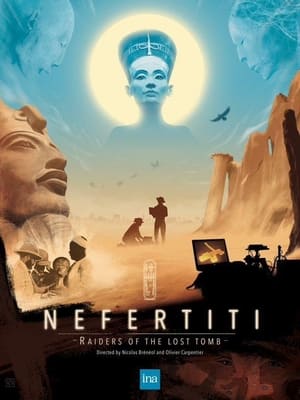
It is one of Egypt's enduring mysteries. What happened to Nefertiti and her husband, Akhenaten - the radical king, and likely father of King Tut? In a dark and mysterious tomb located in the Valley of the Kings, there is a small chamber with two mummies without sarcophagi or wrappings. At times, both have been identified as Queen Nefertiti by scholars, filmmakers and historians. But the evidence has been circumstantial at best.
Prof. Robert Michelson takes you on a journey to a time when the Watchers roamed the Earth, corrupting it for their own pleasure and as an affront to its creator. So massive was this premeditated interference in God’s created order, that the Almighty used His creation to obliterate the monstrous works of corruption as well as the hands that created them. Learn why God would bring a great flood upon his world, and how such a flood of global impact might have been accomplished by God using only the forces of His own creation. See the physical evidence of the Great Flood and how it was recorded in eyewitness accounts. See the likely landing place of the Ark of Noah in the mountains of Urartu along the border between Turkey and Iran based not only on the ancient accounts of eyewitnesses, but on the physical evidence (actual artifacts) existing today. Finally, learn how ancient Egypt played a central role in the events just prior to, and immediately after the Great Flood.
A warm, attentive chronicle of everyday life in a small Algerian town, with the backdrop of the inhabitants' development and beautification of one of the neighborhoods. We meet an amateur mechanic, a retired man from France, a doctor, old women and young men. Everyone plays... in front of the camera of one of the youngsters. Even when the riots in Kabylia disrupt the course of daily life in the Cité des Martyrs.
Go beyond the lost human history! A profile and examination of the recent findings of a highly advanced human settlement submerged at the end of the Ice Age when the sea level rose. The story of Atlantis has its roots in actual historical events!