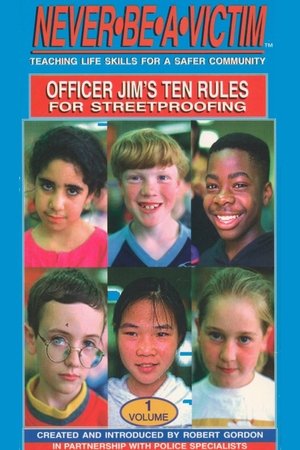
POLICE OFFICER JIM BYRNE, Canada's most honoured Safety Education Specialist brings you his famous TEN RULES, with which he has personally tested more than 25,000 students. Learn key strategies now taught in many schools and used by police working with the full NEVER BE A VICTIM Institutional Study Program. Develop your own personal streetproofing skills so you can train and test your family. Robert Gordon, who created this remarkable program in partnership with Metropolitan Police introduces this family video library against a backdrop of today's troubled society. TEACHING LIFE SKILLS FOR A SAFER COMMUNITY OFFICER JIM'S TEN RULES FOR STREETPROOFING • STRANGER MYTHS • ABDUCTION • BEING FOLLOWED • DANGEROUS PLACES • AVOIDING CARS AND VANS • GOOD TOUCHING-BAD TOUCHING
A road safety film for pedestrians in city traffic. Demonstrates typical unsafe practices.
Shot with a big cowboy nod to the Western genre, this road safety film shows the danger of speeding on an unknown country road at night.
They were 27 and 35 years old. They were both killed in the same spot, within the same month. The same botched work killed them. Eighteen people are called to provide an answer to a simple question: Why don't we do what we should? The answer might lie in the missing piece - the unknown story of the pothole, a trademark of Greek roads infrastructure.
Investigating deadly truck accidents and the fight over measures that could save lives.
Intercuts scenes from Jack London's To build a fire with modern urban and rural winter scenes to point out the dangers of winter storms and low temperatures. Designed to stimulate discussion on civil preparedness for winter storms.
Portrays the challenges of creating a film about nuclear disaster amid public apathy. It captures behind-the-scenes moments as the crew discusses the gravity of nuclear threats, the importance of preparation, and the emotional impact of a nuclear attack. The narrative emphasizes the need for individuals to take responsibility for their safety and community in the event of an attack, blending factual information with a call to action.
A surrealistic look at the future if man does not learn to control pollution.
This 1974 film is dedicated by the Chlorine Institute to the public interest. It is specifically intended to assist firefighters and other emergency services. The techniques demonstrated are appropriate for emergency use; different circumstances might require modified or additional procedure. The information is drawn from sources believed to be reliable. The Institute, its members any organizations cooperating in the development of this film, jointly or severally, cannot be responsible for how the information is used and must make this legal disclaimer. This is a 1960s era, color movie about Chlorine and emergency workers… specifically, firefighters. The film is intended to show firefighters what chlorine is, what a chlorine emergency might involve, how a company can plan ahead and how an emergency can be handled safely.
The film highlights the dangers of extreme heat and the importance of staying hydrated and cool. It portrays a conversation between two friends, one of whom insists on playing basketball despite the oppressive heat. The narrative emphasizes that heat-related illnesses can be avoided by recognizing the body's signals and taking necessary precautions, such as drinking water and staying indoors. The film concludes with a report of record-breaking temperatures, underscoring the seriousness of heat exposure.
How can children communicate with other road users as pedestrians and cyclists? A pantomime also explains sign language.
In the new world of high-speed highway driving, there are a host of new dangers to take into account.
Presents three case histories which illustrate how children were accidentally killed or injured by the schoolbus from which they had disembarked.
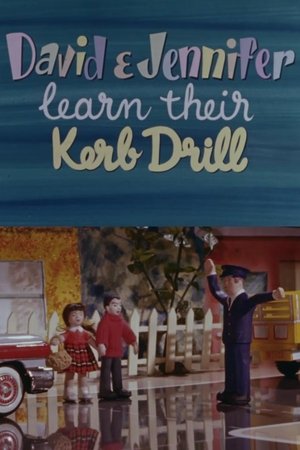
A road safety lesson using puppets and animation kindergarten age children.
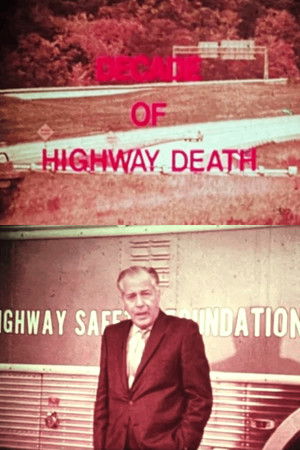
This highway scare film produced by the Highway Safety Foundation in 1971, "Decade of Death", is a retrospective of the organization's 10 years of gory, shocking social guidance films which aimed to promote traffic safety and driver responsibility through the display of bloody and horrific footage of traffic crashes.The Highway Safety Foundation made driver scare films such as "Signal 30," "Mechanized Death," and "Highways of Agony" that intended to encourage drivers to drive responsibly and with consideration of the risks and consequences. It was the organization's belief that crash footage, while horrific, was the best way to convey the importance of driving safely.
A doctor talks about the number of injuries and deaths resulting from automobile accidents.
Non-theatrical government - war short Produced for Coordinator of Inter-American Affairs
An animated Derek Griffiths teaches kids to cross the road safely by using the titular acronym
Jon Pertwee (the third Doctor Who) stars in one of the most (in)famous Central Office of Information films, using the mnemonic 'SPLINK' to educate kids in the correct way to cross the road.
The U.S. Navy teaches workers how to safely work in offices.